

Brovi Pigment Collection
BROVI REGULAR PIGMENTS - 10ml

ROASTED CHESTNUT
Universal brown pigment with a warm colour temperature. Suitable for work with Fitzpatrick III.
Colour - Warm Brown
Area - Eyebrows
Retention - 80-90%
Type - Hybrid
Base - Orange
Colour Temperature - Warm
INGREDIENTS (CI NUMBERS)
Aqua, Rosin, Glycerin, Hamamelis Virginiana Extract, Alcohol, CI 21160, CI 12477, CI 21108, CI 77891, CI 77266
WHAT IS THE DIFFERENCE BETWEEN THE BROVI & BROVI+ LINES?
All pigments from the basic Brovi brow line have aqua, Hamamelis virginiana extract, glycerin, and alcohol in their formulas. The only difference between the mixes is colorants.
In the Brovi+ line formula, there is no alcohol and no glycerin, only deionized water, Hamamelis extract, and various colorants.
Besides differences in ingredients, in the Brovi+ line, pigments have a warmer formula, and colour particles are much smaller than in the basic Brovi line.
The Brovi+ line pigments are more liquid than the regular Brovi line, which makes them perfect for the hair strokes technique and for the powder brows technique when you want to achieve natural and airy results.
HOW TO MIX COLORS FROM BROVI AND BROVI+ LINES
If regular Brovi pigments are too cool and saturated for your client, you can mix them with Brovi+ in a 50/50 proportion.
However, that rule doesn't apply to Gray Harbor and Freckle. These pigments won't change colour when mixed with their Brovi+ correspondent pigments.
If Brovi+ pigments are very light for your client, you can add a corresponding colour from the Brovi line and mix them together. For example, you can add 7 drops of regular Roasted Chestnut to 3 drops of Roasted Chestnut+ (you may adjust the proportions depending on the desired saturation).
You can mix the opposite colours from the Brovi+ line. For example, Gray Harbor+ & Bitter Chocolate+. When mixing these colours, you will receive a neutral brown colour that will look natural when healed.
There is no sense in mixing Roasted Chestnut+ & Bitter Chocolate+ because both colours have a warm orange base. Also, you shouldn’t mix any colour from Brovi+ line with Freckle+ or add the corrector, because this line is already very warm.
ORGANIC OR INORGANIC?
Brovi Regular Organic Hybrid pigments are a hybrid range. This means that they consist of both organic and inorganic components. It is wrong to think that organic is good and non-organic is bad, or vice versa. Organic components are produced as a result of organic synthesis, and inorganic components are natural and mineral components that are produced as a result of their processing and enrichment. Hybrid pigments are contemporary types of pigments that most pigment companies manufacture nowadays.
ARE THERE IRON OXIDES IN BROVI PIGMENTS?
Since Regular Organic Hybridpigments are hybrid (they have both organic and inorganic components ), iron oxides are present in them.
But don’t get scared of that! Iron oxides are absolutely safe and can be found in many other pigments, as well as in perfumes and some food. For example, yellow iron oxide is one of the ingredients in face foundations.
In Brovi pigments, we use red iron oxide CI7491.

CINNAMON STICKS
A light yellow-based blond shade. Warm in colour temperature. Make sure to add orange corrector when handling cool skin. It is used as the first, basic colour for the hair stroke technique on Fitzpatrick I. The pigment is suitable for the shading technique.
Colour - Light Warm Brown
Area - Eyebrows
Retention - 60-80%
Type - Hybrid
Base - Yellow-Orange
Colour Temperature - Warm
INGREDIENTS (CI NUMBERS)
Aqua, Rosin, Glycerin, Hamamelis Virginiana Extract, Alcohol, CI 21095, CI 12477, CI 77491, CI 21160, CI 77266, CI 77891
WHAT IS THE DIFFERENCE BETWEEN THE BROVI & BROVI+ LINES?
All pigments from the basic Brovi brow line have aqua, Hamamelis virginiana extract, glycerin, and alcohol in their formulas. The only difference between the mixes is colorants.
In the Brovi+ line formula, there is no alcohol and no glycerin, only deionized water, Hamamelis extract, and various colorants.
Besides differences in ingredients, in the Brovi+ line, pigments have a warmer formula, and colour particles are much smaller than in the basic Brovi line.
The Brovi+ line pigments are more liquid than the regular Brovi line, which makes them perfect for the hair strokes technique and for the powder brows technique when you want to achieve natural and airy results.
HOW TO MIX COLORS FROM BROVI AND BROVI+ LINES
If regular Brovi pigments are too cool and saturated for your client, you can mix them with Brovi+ in a 50/50 proportion.
However, that rule doesn't apply to Gray Harbor and Freckle. These pigments won't change colour when mixed with their Brovi+ correspondent pigments.
If Brovi+ pigments are very light for your client, you can add a corresponding colour from the Brovi line and mix them together. For example, you can add 7 drops of regular Roasted Chestnut to 3 drops of Roasted Chestnut+ (you may adjust the proportions depending on the desired saturation).
You can mix the opposite colours from the Brovi+ line. For example, Gray Harbor+ & Bitter Chocolate+. When mixing these colours, you will receive a neutral brown colour that will look natural when healed.
There is no sense in mixing Roasted Chestnut+ & Bitter Chocolate+ because both colours have a warm orange base. Also, you shouldn’t mix any colour from Brovi+ line with Freckle+ or add the corrector, because this line is already very warm.
ORGANIC OR INORGANIC?
Brovi Regular Organic Hybrid pigments are a hybrid range. This means that they consist of both organic and inorganic components. It is wrong to think that organic is good and non-organic is bad, or vice versa. Organic components are produced as a result of organic synthesis, and inorganic components are natural and mineral components that are produced as a result of their processing and enrichment. Hybrid pigments are contemporary types of pigments that most pigment companies manufacture nowadays.
ARE THERE IRON OXIDES IN BROVI PIGMENTS?
Since Regular Organic Hybridpigments are hybrid (they have both organic and inorganic components ), iron oxides are present in them.
But don’t get scared of that! Iron oxides are absolutely safe and can be found in many other pigments, as well as in perfumes and some food. For example, yellow iron oxide is one of the ingredients in face foundations.
In Brovi pigments, we use red iron oxide CI7491.
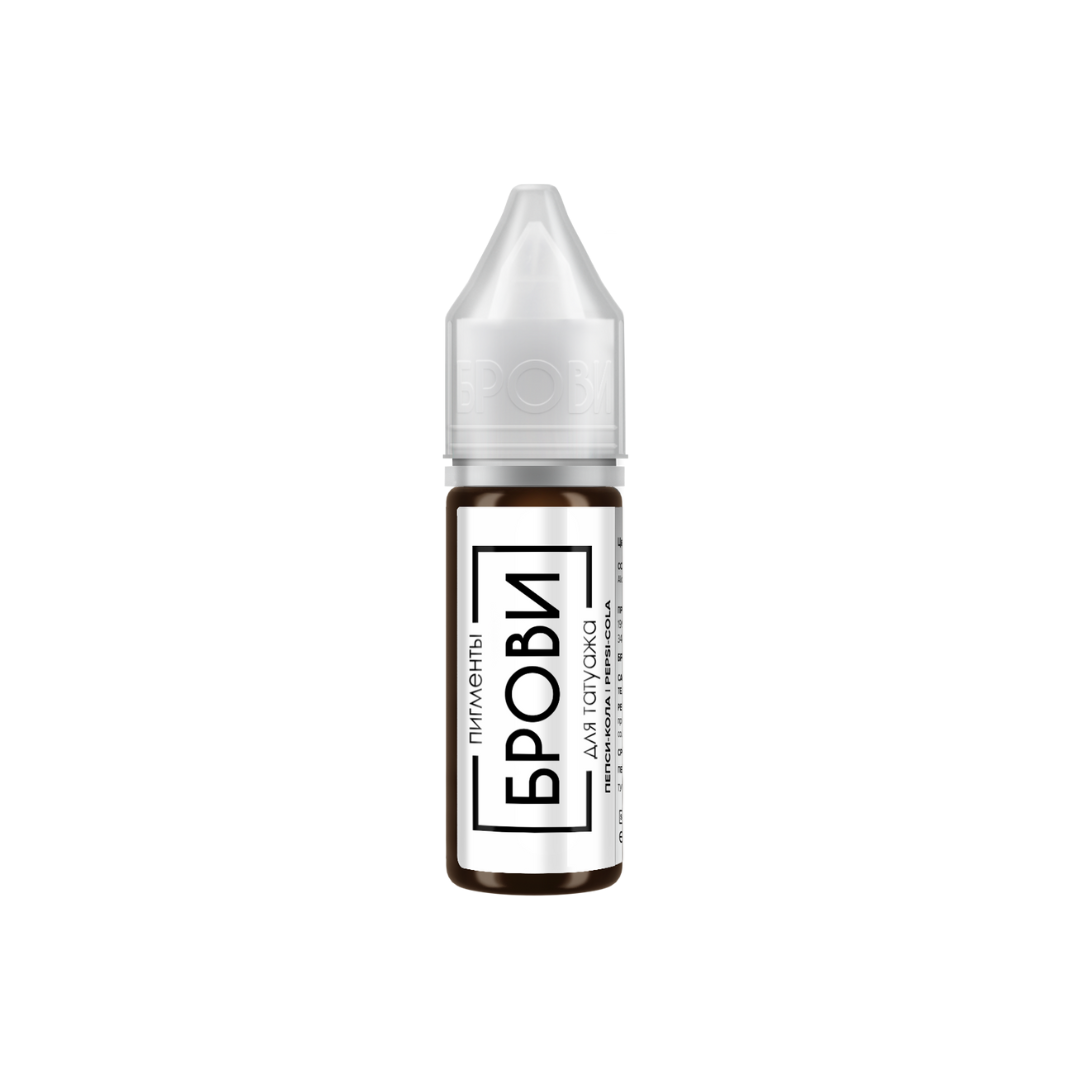
PEPSI COLA
The darkest shade in the series of inks designed for the hair stroke technique. Temperature-neutral colour. Used only for accents in the hair stroke technique, as a second colour for Fitzpatrick III.
Colour - Dark Brown
Area - Eyebrows
Retention - 60-80%
Type - Hybrid
Base - Yellow-Orange
Colour Temperature - Neutral
INGREDIENTS (CI NUMBERS)
Aqua, Rosin, Glycerin, Hamamelis Virginiana Extract, Alcohol, CI 21160, CI 12477, CI 77266, CI 77891, CI 21095, CI 77491
WHAT IS THE DIFFERENCE BETWEEN THE BROVI & BROVI+ LINES?
All pigments from the basic Brovi brow line have aqua, Hamamelis virginiana extract, glycerin, and alcohol in their formulas. The only difference between the mixes is colorants.
In the Brovi+ line formula, there is no alcohol and no glycerin, only deionized water, Hamamelis extract, and various colorants.
Besides differences in ingredients, in the Brovi+ line, pigments have a warmer formula, and colour particles are much smaller than in the basic Brovi line.
The Brovi+ line pigments are more liquid than the regular Brovi line, which makes them perfect for the hair strokes technique and for the powder brows technique when you want to achieve natural and airy results.
HOW TO MIX COLORS FROM BROVI AND BROVI+ LINES
If regular Brovi pigments are too cool and saturated for your client, you can mix them with Brovi+ in a 50/50 proportion.
However, that rule doesn't apply to Gray Harbor and Freckle. These pigments won't change colour when mixed with their Brovi+ correspondent pigments.
If Brovi+ pigments are very light for your client, you can add a corresponding colour from the Brovi line and mix them together. For example, you can add 7 drops of regular Roasted Chestnut to 3 drops of Roasted Chestnut+ (you may adjust the proportions depending on the desired saturation).
You can mix the opposite colours from the Brovi+ line. For example, Gray Harbor+ & Bitter Chocolate+. When mixing these colours, you will receive a neutral brown colour that will look natural when healed.
There is no sense in mixing Roasted Chestnut+ & Bitter Chocolate+ because both colours have a warm orange base. Also, you shouldn’t mix any colour from Brovi+ line with Freckle+ or add the corrector, because this line is already very warm.
ORGANIC OR INORGANIC?
Brovi Regular Organic Hybrid pigments are a hybrid range. This means that they consist of both organic and inorganic components. It is wrong to think that organic is good and non-organic is bad, or vice versa. Organic components are produced as a result of organic synthesis, and inorganic components are natural and mineral components that are produced as a result of their processing and enrichment. Hybrid pigments are contemporary types of pigments that most pigment companies manufacture nowadays.
ARE THERE IRON OXIDES IN BROVI PIGMENTS?
Since Regular Organic Hybridpigments are hybrid (they have both organic and inorganic components ), iron oxides are present in them.
But don’t get scared of that! Iron oxides are absolutely safe and can be found in many other pigments, as well as in perfumes and some food. For example, yellow iron oxide is one of the ingredients in face foundations.
In Brovi pigments, we use red iron oxide CI7491.

FLAT WHITE
Warm orange-based brown pigment. Used as the second, darker colour for accents when working with Fitzpatrick phototypes I; or as the first, primary colour when working with Fitzpatrick IV. When using it as the main colour, make sure to add orange or yellow corrector. Recommended to use with diluent.
Colour - Warm Brown
Area - Eyebrows
Retention - 80-90%
Type - Hybrid
Base - Yellow-Orange
Colour Temperature - Warm
INGREDIENTS (CI NUMBERS)
Aqua, Rosin, Glycerin, Hamamelis Virginiana Extract, Alcohol, CI 21160, CI 12477, CI 77891, CI 21095, CI 77491, CI 77266
WHAT IS THE DIFFERENCE BETWEEN THE BROVI & BROVI+ LINES?
All pigments from the basic Brovi brow line have aqua, Hamamelis virginiana extract, glycerin, and alcohol in their formulas. The only difference between the mixes is colorants.
In the Brovi+ line formula, there is no alcohol and no glycerin, only deionized water, Hamamelis extract, and various colorants.
Besides differences in ingredients, in the Brovi+ line, pigments have a warmer formula, and colour particles are much smaller than in the basic Brovi line.
The Brovi+ line pigments are more liquid than the regular Brovi line, which makes them perfect for the hair strokes technique and for the powder brows technique when you want to achieve natural and airy results.
HOW TO MIX COLORS FROM BROVI AND BROVI+ LINES
If regular Brovi pigments are too cool and saturated for your client, you can mix them with Brovi+ in a 50/50 proportion.
However, that rule doesn't apply to Gray Harbor and Freckle. These pigments won't change colour when mixed with their Brovi+ correspondent pigments.
If Brovi+ pigments are very light for your client, you can add a corresponding colour from the Brovi line and mix them together. For example, you can add 7 drops of regular Roasted Chestnut to 3 drops of Roasted Chestnut+ (you may adjust the proportions depending on the desired saturation).
You can mix the opposite colours from the Brovi+ line. For example, Gray Harbor+ & Bitter Chocolate+. When mixing these colours, you will receive a neutral brown colour that will look natural when healed.
There is no sense in mixing Roasted Chestnut+ & Bitter Chocolate+ because both colours have a warm orange base. Also, you shouldn’t mix any colour from Brovi+ line with Freckle+ or add the corrector, because this line is already very warm.
ORGANIC OR INORGANIC?
Brovi Regular Organic Hybrid pigments are a hybrid range. This means that they consist of both organic and inorganic components. It is wrong to think that organic is good and non-organic is bad, or vice versa. Organic components are produced as a result of organic synthesis, and inorganic components are natural and mineral components that are produced as a result of their processing and enrichment. Hybrid pigments are contemporary types of pigments that most pigment companies manufacture nowadays.
ARE THERE IRON OXIDES IN BROVI PIGMENTS?
Since Regular Organic Hybridpigments are hybrid (they have both organic and inorganic components ), iron oxides are present in them.
But don’t get scared of that! Iron oxides are absolutely safe and can be found in many other pigments, as well as in perfumes and some food. For example, yellow iron oxide is one of the ingredients in face foundations.
In Brovi pigments, we use red iron oxide CI7491.
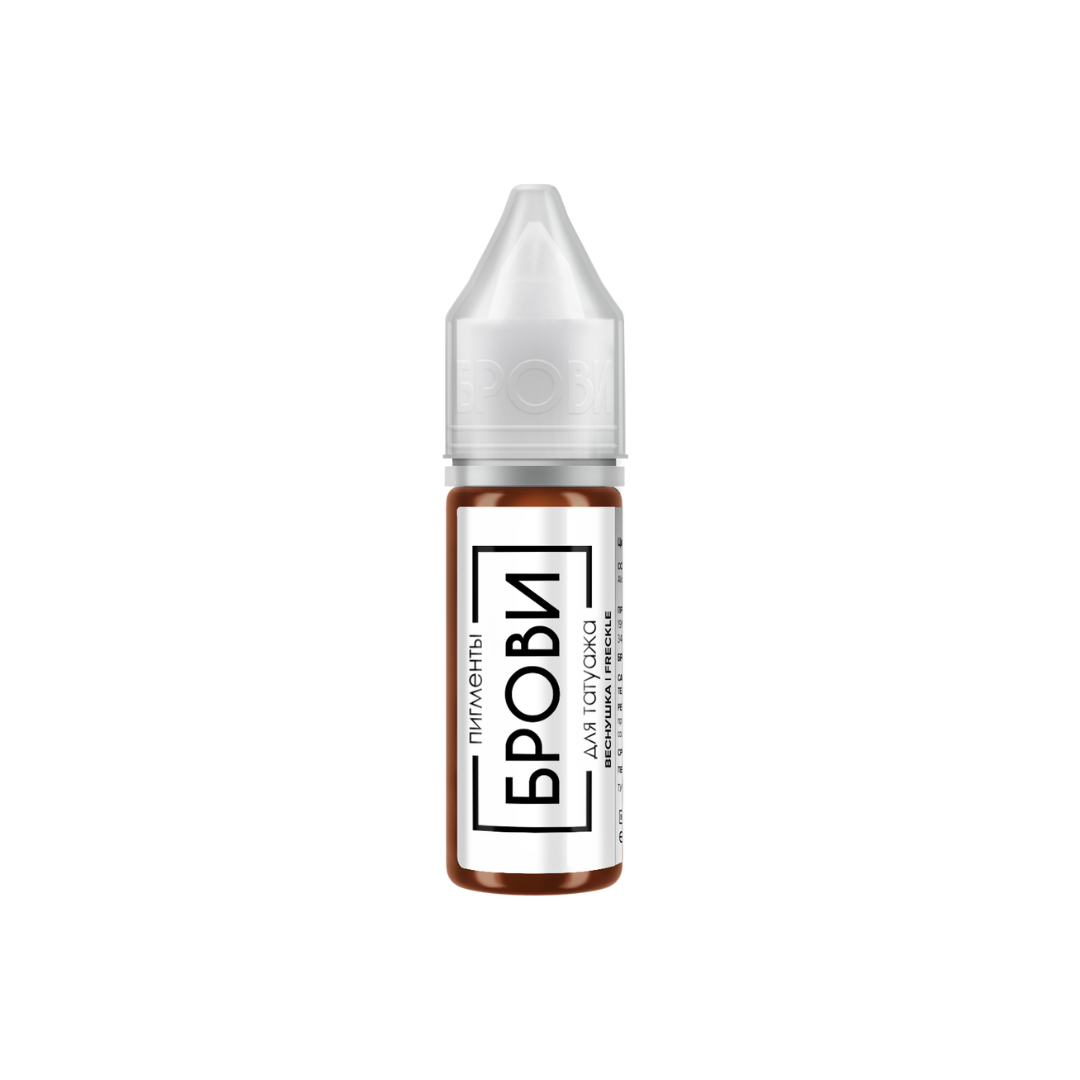
FRECKLE
The brown-red pigment created specifically for treatment of Fitzpatrick I. Suitable for very light / pale skin and pale skin with freckles. Perfect for red-haired girls. Can be used as a corrector.
Colour - Brown-Red
Area - Eyebrows
Retention - 80-90%
Type - Hybrid
Base - Red
Colour Temperature - Warm
INGREDIENTS (CI NUMBERS)
Aqua, Rosin, Glycerin, Hamamelis Virginiana Extract, Alcohol, CI 21160, CI 12477, CI 21108, CI 77266, CI 77891
WHAT IS THE DIFFERENCE BETWEEN THE BROVI & BROVI+ LINES?
All pigments from the basic Brovi brow line have aqua, Hamamelis virginiana extract, glycerin, and alcohol in their formulas. The only difference between the mixes is colorants.
In the Brovi+ line formula, there is no alcohol and no glycerin, only deionized water, Hamamelis extract, and various colorants.
Besides differences in ingredients, in the Brovi+ line, pigments have a warmer formula, and colour particles are much smaller than in the basic Brovi line.
The Brovi+ line pigments are more liquid than the regular Brovi line, which makes them perfect for the hair strokes technique and for the powder brows technique when you want to achieve natural and airy results.
HOW TO MIX COLORS FROM BROVI AND BROVI+ LINES
If regular Brovi pigments are too cool and saturated for your client, you can mix them with Brovi+ in a 50/50 proportion.
However, that rule doesn't apply to Gray Harbor and Freckle. These pigments won't change colour when mixed with their Brovi+ correspondent pigments.
If Brovi+ pigments are very light for your client, you can add a corresponding colour from the Brovi line and mix them together. For example, you can add 7 drops of regular Roasted Chestnut to 3 drops of Roasted Chestnut+ (you may adjust the proportions depending on the desired saturation).
You can mix the opposite colours from the Brovi+ line. For example, Gray Harbor+ & Bitter Chocolate+. When mixing these colours, you will receive a neutral brown colour that will look natural when healed.
There is no sense in mixing Roasted Chestnut+ & Bitter Chocolate+ because both colours have a warm orange base. Also, you shouldn’t mix any colour from Brovi+ line with Freckle+ or add the corrector, because this line is already very warm.
ORGANIC OR INORGANIC?
Brovi Regular Organic Hybrid pigments are a hybrid range. This means that they consist of both organic and inorganic components. It is wrong to think that organic is good and non-organic is bad, or vice versa. Organic components are produced as a result of organic synthesis, and inorganic components are natural and mineral components that are produced as a result of their processing and enrichment. Hybrid pigments are contemporary types of pigments that most pigment companies manufacture nowadays.
ARE THERE IRON OXIDES IN BROVI PIGMENTS?
Since Regular Organic Hybridpigments are hybrid (they have both organic and inorganic components ), iron oxides are present in them.
But don’t get scared of that! Iron oxides are absolutely safe and can be found in many other pigments, as well as in perfumes and some food. For example, yellow iron oxide is one of the ingredients in face foundations.
In Brovi pigments, we use red iron oxide CI7491.

RIPE WHEAT
A warm blond pigment, designed for treatment of Fitzpatrick I. Recommended for clients with warm or neutral hair colour. It is not recommended to implant the pigment tightly to avoid cooler shades during healing.
Colour - Warm Blonde
Area - Eyebrows
Retention - 80-90%
Type - Hybrid
Base - Yellow
Colour Temperature - Warm
INGREDIENTS (CI NUMBERS)
Aqua, Rosin, Glycerin, Hamamelis Virginiana Extract, Alcohol, CI 21160, CI 12477, CI 21108, CI 77891, CI 21095, CI 77491, CI 77266
WHAT IS THE DIFFERENCE BETWEEN THE BROVI & BROVI+ LINES?
All pigments from the basic Brovi brow line have aqua, Hamamelis virginiana extract, glycerin, and alcohol in their formulas. The only difference between the mixes is colorants.
In the Brovi+ line formula, there is no alcohol and no glycerin, only deionized water, Hamamelis extract, and various colorants.
Besides differences in ingredients, in the Brovi+ line, pigments have a warmer formula, and colour particles are much smaller than in the basic Brovi line.
The Brovi+ line pigments are more liquid than the regular Brovi line, which makes them perfect for the hair strokes technique and for the powder brows technique when you want to achieve natural and airy results.
HOW TO MIX COLORS FROM BROVI AND BROVI+ LINES
If regular Brovi pigments are too cool and saturated for your client, you can mix them with Brovi+ in a 50/50 proportion.
However, that rule doesn't apply to Gray Harbor and Freckle. These pigments won't change colour when mixed with their Brovi+ correspondent pigments.
If Brovi+ pigments are very light for your client, you can add a corresponding colour from the Brovi line and mix them together. For example, you can add 7 drops of regular Roasted Chestnut to 3 drops of Roasted Chestnut+ (you may adjust the proportions depending on the desired saturation).
You can mix the opposite colours from the Brovi+ line. For example, Gray Harbor+ & Bitter Chocolate+. When mixing these colours, you will receive a neutral brown colour that will look natural when healed.
There is no sense in mixing Roasted Chestnut+ & Bitter Chocolate+ because both colours have a warm orange base. Also, you shouldn’t mix any colour from Brovi+ line with Freckle+ or add the corrector, because this line is already very warm.
ORGANIC OR INORGANIC?
Brovi Regular Organic Hybrid pigments are a hybrid range. This means that they consist of both organic and inorganic components. It is wrong to think that organic is good and non-organic is bad, or vice versa. Organic components are produced as a result of organic synthesis, and inorganic components are natural and mineral components that are produced as a result of their processing and enrichment. Hybrid pigments are contemporary types of pigments that most pigment companies manufacture nowadays.
ARE THERE IRON OXIDES IN BROVI PIGMENTS?
Since Regular Organic Hybridpigments are hybrid (they have both organic and inorganic components ), iron oxides are present in them.
But don’t get scared of that! Iron oxides are absolutely safe and can be found in many other pigments, as well as in perfumes and some food. For example, yellow iron oxide is one of the ingredients in face foundations.
In Brovi pigments, we use red iron oxide CI7491.

BITTER CHOCOLATE
A rich dark pigment temperature. Recommended for treatment of Fitzpatrick IV.
Colour - Rich Dark Brown
Area - Eyebrows
Retention - 60-80%
Type - Hybrid
Base - Yellow
Colour Temperature - Neutral
INGREDIENTS (CI NUMBERS)
Aqua, Rosin, Glycerin, Hamamelis Virginiana Extract, Alcohol, CI 21160, CI 12477, CI 21095, CI 77491, CI 77891, CI 21110, CI 77266
WHAT IS THE DIFFERENCE BETWEEN THE BROVI & BROVI+ LINES?
All pigments from the basic Brovi brow line have aqua, Hamamelis virginiana extract, glycerin, and alcohol in their formulas. The only difference between the mixes is colorants.
In the Brovi+ line formula, there is no alcohol and no glycerin, only deionized water, Hamamelis extract, and various colorants.
Besides differences in ingredients, in the Brovi+ line, pigments have a warmer formula, and colour particles are much smaller than in the basic Brovi line.
The Brovi+ line pigments are more liquid than the regular Brovi line, which makes them perfect for the hair strokes technique and for the powder brows technique when you want to achieve natural and airy results.
HOW TO MIX COLORS FROM BROVI AND BROVI+ LINES
If regular Brovi pigments are too cool and saturated for your client, you can mix them with Brovi+ in a 50/50 proportion.
However, that rule doesn't apply to Gray Harbor and Freckle. These pigments won't change colour when mixed with their Brovi+ correspondent pigments.
If Brovi+ pigments are very light for your client, you can add a corresponding colour from the Brovi line and mix them together. For example, you can add 7 drops of regular Roasted Chestnut to 3 drops of Roasted Chestnut+ (you may adjust the proportions depending on the desired saturation).
You can mix the opposite colours from the Brovi+ line. For example, Gray Harbor+ & Bitter Chocolate+. When mixing these colours, you will receive a neutral brown colour that will look natural when healed.
There is no sense in mixing Roasted Chestnut+ & Bitter Chocolate+ because both colours have a warm orange base. Also, you shouldn’t mix any colour from Brovi+ line with Freckle+ or add the corrector, because this line is already very warm.
ORGANIC OR INORGANIC?
Brovi Regular Organic Hybrid pigments are a hybrid range. This means that they consist of both organic and inorganic components. It is wrong to think that organic is good and non-organic is bad, or vice versa. Organic components are produced as a result of organic synthesis, and inorganic components are natural and mineral components that are produced as a result of their processing and enrichment. Hybrid pigments are contemporary types of pigments that most pigment companies manufacture nowadays.
ARE THERE IRON OXIDES IN BROVI PIGMENTS?
Since Regular Organic Hybridpigments are hybrid (they have both organic and inorganic components ), iron oxides are present in them.
But don’t get scared of that! Iron oxides are absolutely safe and can be found in many other pigments, as well as in perfumes and some food. For example, yellow iron oxide is one of the ingredients in face foundations.
In Brovi pigments, we use red iron oxide CI7491.

GRAY HARBOUR
Neutral blond pigment, for ash blondes. Handles ageing skin very well. Designed to treat Fitzpatrick II. Recommended for clients with cool hair colour.
Colour - cool blond for ash blondes, senior clients, and those who ask for grey eyebrows
Area - Eyebrows
Retention - 60-80%
Type - Hybrid
Base - Yellow
Colour Temperature - Neutral
INGREDIENTS (CI NUMBERS)
Aqua, Rosin, Glycerin, Hamamelis Virginiana Extract, Alcohol, CI 21095, CI 77891, CI 12477, CI 77266
WHAT IS THE DIFFERENCE BETWEEN THE BROVI & BROVI+ LINES?
All pigments from the basic Brovi brow line have aqua, Hamamelis virginiana extract, glycerin, and alcohol in their formulas. The only difference between the mixes is colorants.
In the Brovi+ line formula, there is no alcohol and no glycerin, only deionized water, Hamamelis extract, and various colorants.
Besides differences in ingredients, in the Brovi+ line, pigments have a warmer formula, and colour particles are much smaller than in the basic Brovi line.
The Brovi+ line pigments are more liquid than the regular Brovi line, which makes them perfect for the hair strokes technique and for the powder brows technique when you want to achieve natural and airy results.
HOW TO MIX COLORS FROM BROVI AND BROVI+ LINES
If regular Brovi pigments are too cool and saturated for your client, you can mix them with Brovi+ in a 50/50 proportion.
However, that rule doesn't apply to Gray Harbor and Freckle. These pigments won't change colour when mixed with their Brovi+ correspondent pigments.
If Brovi+ pigments are very light for your client, you can add a corresponding colour from the Brovi line and mix them together. For example, you can add 7 drops of regular Roasted Chestnut to 3 drops of Roasted Chestnut+ (you may adjust the proportions depending on the desired saturation).
You can mix the opposite colours from the Brovi+ line. For example, Gray Harbor+ & Bitter Chocolate+. When mixing these colours, you will receive a neutral brown colour that will look natural when healed.
There is no sense in mixing Roasted Chestnut+ & Bitter Chocolate+ because both colours have a warm orange base. Also, you shouldn’t mix any colour from Brovi+ line with Freckle+ or add the corrector, because this line is already very warm.
ORGANIC OR INORGANIC?
Brovi Regular Organic Hybrid pigments are a hybrid range. This means that they consist of both organic and inorganic components. It is wrong to think that organic is good and non-organic is bad, or vice versa. Organic components are produced as a result of organic synthesis, and inorganic components are natural and mineral components that are produced as a result of their processing and enrichment. Hybrid pigments are contemporary types of pigments that most pigment companies manufacture nowadays.
ARE THERE IRON OXIDES IN BROVI PIGMENTS?
Since Regular Organic Hybridpigments are hybrid (they have both organic and inorganic components ), iron oxides are present in them.
But don’t get scared of that! Iron oxides are absolutely safe and can be found in many other pigments, as well as in perfumes and some food. For example, yellow iron oxide is one of the ingredients in face foundations.
In Brovi pigments, we use red iron oxide CI7491.

BLACK SQUARE
Fine-particle black pigment for treatment of eyelid and waterline areas. Suitable for treatment of all Fitzpatrick phototypes. Should be used in a pure form; correctors are not required. To perform waterline filling or to draw a clear eyeliner, addition of diluent is not required. The manufacturer recommends adding 1 drop of diluent per 2 drops of pigment for shading on eyelids. For shading on eyelids, Black Square combines perfectly with the Roasted Chestnuts and Bitter Chocolate. When working with two colours on the eyes, do not mix the inks together: keep them in different caps.
Colour - Black colour for eyeliners and shading
Area - Eyeliner
Retention - 80-90%
Type - Hybrid
Base - Black
Colour Temperature - Cool
INGREDIENTS (CI NUMBERS)
Aqua, Hamamelis Virginiana Extract, CI77266
WHAT IS THE DIFFERENCE BETWEEN THE BROVI & BROVI+ LINES?
All pigments from the basic Brovi brow line have aqua, Hamamelis virginiana extract, glycerin, and alcohol in their formulas. The only difference between the mixes is colorants.
In the Brovi+ line formula, there is no alcohol and no glycerin, only deionized water, Hamamelis extract, and various colorants.
Besides differences in ingredients, in the Brovi+ line, pigments have a warmer formula, and colour particles are much smaller than in the basic Brovi line.
The Brovi+ line pigments are more liquid than the regular Brovi line, which makes them perfect for the hair strokes technique and for the powder brows technique when you want to achieve natural and airy results.
HOW TO MIX COLORS FROM BROVI AND BROVI+ LINES
If regular Brovi pigments are too cool and saturated for your client, you can mix them with Brovi+ in a 50/50 proportion.
However, that rule doesn't apply to Gray Harbor and Freckle. These pigments won't change colour when mixed with their Brovi+ correspondent pigments.
If Brovi+ pigments are very light for your client, you can add a corresponding colour from the Brovi line and mix them together. For example, you can add 7 drops of regular Roasted Chestnut to 3 drops of Roasted Chestnut+ (you may adjust the proportions depending on the desired saturation).
You can mix the opposite colours from the Brovi+ line. For example, Gray Harbor+ & Bitter Chocolate+. When mixing these colours, you will receive a neutral brown colour that will look natural when healed.
There is no sense in mixing Roasted Chestnut+ & Bitter Chocolate+ because both colours have a warm orange base. Also, you shouldn’t mix any colour from Brovi+ line with Freckle+ or add the corrector, because this line is already very warm.
ORGANIC OR INORGANIC?
Brovi Regular Organic Hybrid pigments are a hybrid range. This means that they consist of both organic and inorganic components. It is wrong to think that organic is good and non-organic is bad, or vice versa. Organic components are produced as a result of organic synthesis, and inorganic components are natural and mineral components that are produced as a result of their processing and enrichment. Hybrid pigments are contemporary types of pigments that most pigment companies manufacture nowadays.
ARE THERE IRON OXIDES IN BROVI PIGMENTS?
Since Regular Organic Hybridpigments are hybrid (they have both organic and inorganic components ), iron oxides are present in them.
But don’t get scared of that! Iron oxides are absolutely safe and can be found in many other pigments, as well as in perfumes and some food. For example, yellow iron oxide is one of the ingredients in face foundations.
In Brovi pigments, we use red iron oxide CI7491.
BROVI REGULAR MINI PIGMENTS - 5ml

PEPSI COLA
The darkest shade in the series of inks designed for the hair stroke technique. Temperature-neutral colour. Used only for accents in the hair stroke technique, as a second colour for Fitzpatrick III.
Colour - Dark Brown
Area - Eyebrows
Retention - 60-80%
Type - Hybrid
Base - Yellow-Orange
Colour Temperature - Neutral
INGREDIENTS (CI NUMBERS)
Aqua, Rosin, Glycerin, Hamamelis Virginiana Extract, Alcohol, CI 21160, CI 12477, CI 77266, CI 77891, CI 21095, CI 77491
WHAT IS THE DIFFERENCE BETWEEN THE BROVI & BROVI+ LINES?
All pigments from the basic Brovi brow line have aqua, Hamamelis virginiana extract, glycerin, and alcohol in their formulas. The only difference between the mixes is colorants.
In the Brovi+ line formula, there is no alcohol and no glycerin, only deionized water, Hamamelis extract, and various colorants.
Besides differences in ingredients, in the Brovi+ line, pigments have a warmer formula, and colour particles are much smaller than in the basic Brovi line.
The Brovi+ line pigments are more liquid than the regular Brovi line, which makes them perfect for the hair strokes technique and for the powder brows technique when you want to achieve natural and airy results.
HOW TO MIX COLORS FROM BROVI AND BROVI+ LINES
If regular Brovi pigments are too cool and saturated for your client, you can mix them with Brovi+ in a 50/50 proportion.
However, that rule doesn't apply to Gray Harbor and Freckle. These pigments won't change colour when mixed with their Brovi+ correspondent pigments.
If Brovi+ pigments are very light for your client, you can add a corresponding colour from the Brovi line and mix them together. For example, you can add 7 drops of regular Roasted Chestnut to 3 drops of Roasted Chestnut+ (you may adjust the proportions depending on the desired saturation).
You can mix the opposite colours from the Brovi+ line. For example, Gray Harbor+ & Bitter Chocolate+. When mixing these colours, you will receive a neutral brown colour that will look natural when healed.
There is no sense in mixing Roasted Chestnut+ & Bitter Chocolate+ because both colours have a warm orange base. Also, you shouldn’t mix any colour from Brovi+ line with Freckle+ or add the corrector, because this line is already very warm.
ORGANIC OR INORGANIC?
Brovi Regular Organic Hybrid pigments are a hybrid range. This means that they consist of both organic and inorganic components. It is wrong to think that organic is good and non-organic is bad, or vice versa. Organic components are produced as a result of organic synthesis, and inorganic components are natural and mineral components that are produced as a result of their processing and enrichment. Hybrid pigments are contemporary types of pigments that most pigment companies manufacture nowadays.
ARE THERE IRON OXIDES IN BROVI PIGMENTS?
Since Regular Organic Hybridpigments are hybrid (they have both organic and inorganic components ), iron oxides are present in them.
But don’t get scared of that! Iron oxides are absolutely safe and can be found in many other pigments, as well as in perfumes and some food. For example, yellow iron oxide is one of the ingredients in face foundations.
In Brovi pigments, we use red iron oxide CI7491.
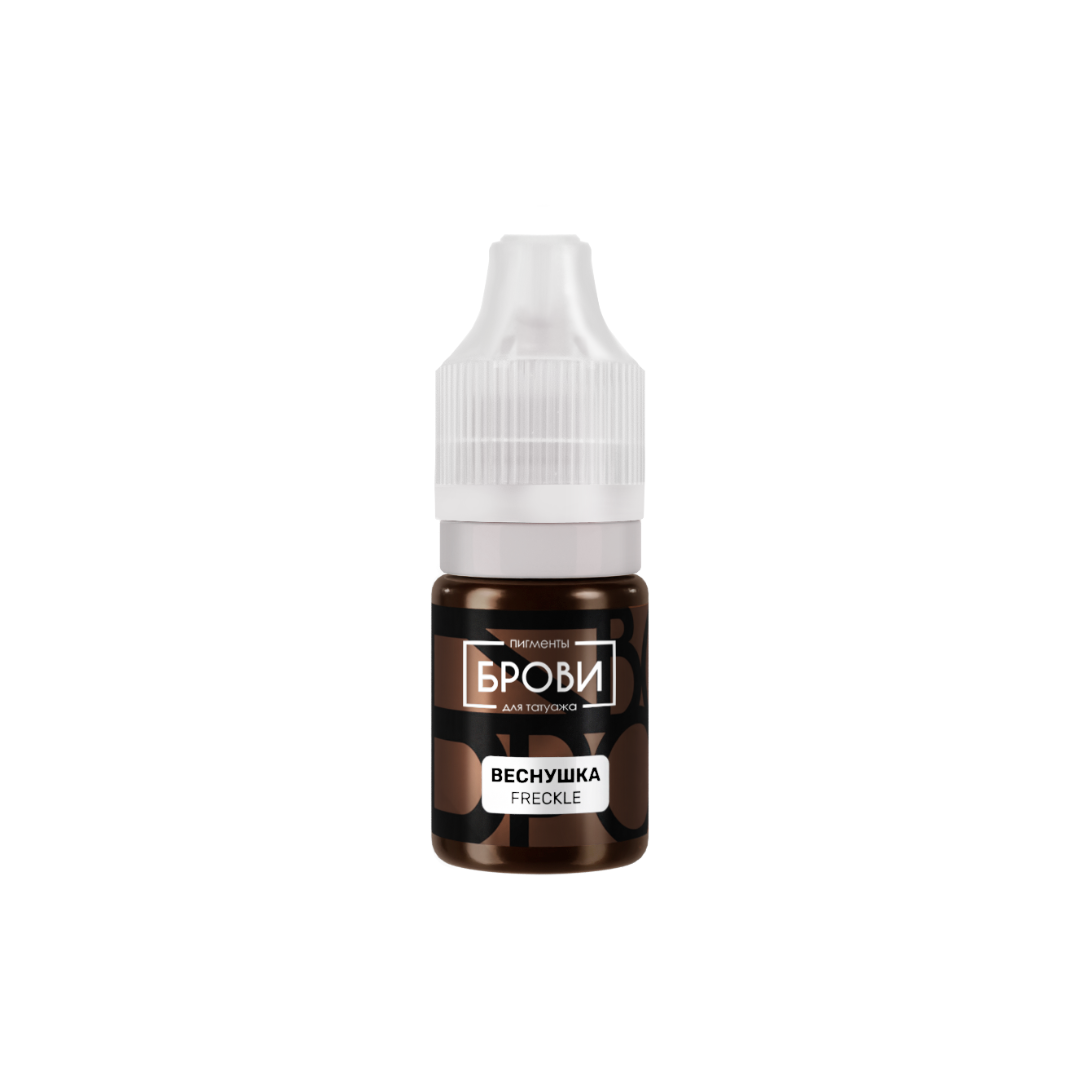
FRECKLE
The brown-red pigment created specifically for treatment of Fitzpatrick I. Suitable for very light / pale skin and pale skin with freckles. Perfect for red-haired girls. Can be used as a corrector.
Colour - Brown-Red
Area - Eyebrows
Retention - 80-90%
Type - Hybrid
Base - Red
Colour Temperature - Warm
INGREDIENTS (CI NUMBERS)
Aqua, Rosin, Glycerin, Hamamelis Virginiana Extract, Alcohol, CI 21160, CI 12477, CI 21108, CI 77266, CI 77891
WHAT IS THE DIFFERENCE BETWEEN THE BROVI & BROVI+ LINES?
All pigments from the basic Brovi brow line have aqua, Hamamelis virginiana extract, glycerin, and alcohol in their formulas. The only difference between the mixes is colorants.
In the Brovi+ line formula, there is no alcohol and no glycerin, only deionized water, Hamamelis extract, and various colorants.
Besides differences in ingredients, in the Brovi+ line, pigments have a warmer formula, and colour particles are much smaller than in the basic Brovi line.
The Brovi+ line pigments are more liquid than the regular Brovi line, which makes them perfect for the hair strokes technique and for the powder brows technique when you want to achieve natural and airy results.
HOW TO MIX COLORS FROM BROVI AND BROVI+ LINES
If regular Brovi pigments are too cool and saturated for your client, you can mix them with Brovi+ in a 50/50 proportion.
However, that rule doesn't apply to Gray Harbor and Freckle. These pigments won't change colour when mixed with their Brovi+ correspondent pigments.
If Brovi+ pigments are very light for your client, you can add a corresponding colour from the Brovi line and mix them together. For example, you can add 7 drops of regular Roasted Chestnut to 3 drops of Roasted Chestnut+ (you may adjust the proportions depending on the desired saturation).
You can mix the opposite colours from the Brovi+ line. For example, Gray Harbor+ & Bitter Chocolate+. When mixing these colours, you will receive a neutral brown colour that will look natural when healed.
There is no sense in mixing Roasted Chestnut+ & Bitter Chocolate+ because both colours have a warm orange base. Also, you shouldn’t mix any colour from Brovi+ line with Freckle+ or add the corrector, because this line is already very warm.
ORGANIC OR INORGANIC?
Brovi Regular Organic Hybrid pigments are a hybrid range. This means that they consist of both organic and inorganic components. It is wrong to think that organic is good and non-organic is bad, or vice versa. Organic components are produced as a result of organic synthesis, and inorganic components are natural and mineral components that are produced as a result of their processing and enrichment. Hybrid pigments are contemporary types of pigments that most pigment companies manufacture nowadays.
ARE THERE IRON OXIDES IN BROVI PIGMENTS?
Since Regular Organic Hybridpigments are hybrid (they have both organic and inorganic components ), iron oxides are present in them.
But don’t get scared of that! Iron oxides are absolutely safe and can be found in many other pigments, as well as in perfumes and some food. For example, yellow iron oxide is one of the ingredients in face foundations.
In Brovi pigments, we use red iron oxide CI7491.

BLACK SQUARE
Fine-particle black pigment for treatment of eyelid and waterline areas. Suitable for treatment of all Fitzpatrick phototypes. Should be used in a pure form; correctors are not required. To perform waterline filling or to draw a clear eyeliner, addition of diluent is not required. The manufacturer recommends adding 1 drop of diluent per 2 drops of pigment for shading on eyelids. For shading on eyelids, Black Square combines perfectly with the Roasted Chestnuts and Bitter Chocolate. When working with two colours on the eyes, do not mix the inks together: keep them in different caps.
Colour - Black colour for eyeliners and shading
Area - Eyeliner
Retention - 80-90%
Type - Hybrid
Base - Black
Colour Temperature - Cool
INGREDIENTS (CI NUMBERS)
Aqua, Hamamelis Virginiana Extract, CI77266
WHAT IS THE DIFFERENCE BETWEEN THE BROVI & BROVI+ LINES?
All pigments from the basic Brovi brow line have aqua, Hamamelis virginiana extract, glycerin, and alcohol in their formulas. The only difference between the mixes is colorants.
In the Brovi+ line formula, there is no alcohol and no glycerin, only deionized water, Hamamelis extract, and various colorants.
Besides differences in ingredients, in the Brovi+ line, pigments have a warmer formula, and colour particles are much smaller than in the basic Brovi line.
The Brovi+ line pigments are more liquid than the regular Brovi line, which makes them perfect for the hair strokes technique and for the powder brows technique when you want to achieve natural and airy results.
HOW TO MIX COLORS FROM BROVI AND BROVI+ LINES
If regular Brovi pigments are too cool and saturated for your client, you can mix them with Brovi+ in a 50/50 proportion.
However, that rule doesn't apply to Gray Harbor and Freckle. These pigments won't change colour when mixed with their Brovi+ correspondent pigments.
If Brovi+ pigments are very light for your client, you can add a corresponding colour from the Brovi line and mix them together. For example, you can add 7 drops of regular Roasted Chestnut to 3 drops of Roasted Chestnut+ (you may adjust the proportions depending on the desired saturation).
You can mix the opposite colours from the Brovi+ line. For example, Gray Harbor+ & Bitter Chocolate+. When mixing these colours, you will receive a neutral brown colour that will look natural when healed.
There is no sense in mixing Roasted Chestnut+ & Bitter Chocolate+ because both colours have a warm orange base. Also, you shouldn’t mix any colour from Brovi+ line with Freckle+ or add the corrector, because this line is already very warm.
ORGANIC OR INORGANIC?
Brovi Regular Organic Hybrid pigments are a hybrid range. This means that they consist of both organic and inorganic components. It is wrong to think that organic is good and non-organic is bad, or vice versa. Organic components are produced as a result of organic synthesis, and inorganic components are natural and mineral components that are produced as a result of their processing and enrichment. Hybrid pigments are contemporary types of pigments that most pigment companies manufacture nowadays.
ARE THERE IRON OXIDES IN BROVI PIGMENTS?
Since Regular Organic Hybridpigments are hybrid (they have both organic and inorganic components ), iron oxides are present in them.
But don’t get scared of that! Iron oxides are absolutely safe and can be found in many other pigments, as well as in perfumes and some food. For example, yellow iron oxide is one of the ingredients in face foundations.
In Brovi pigments, we use red iron oxide CI7491.
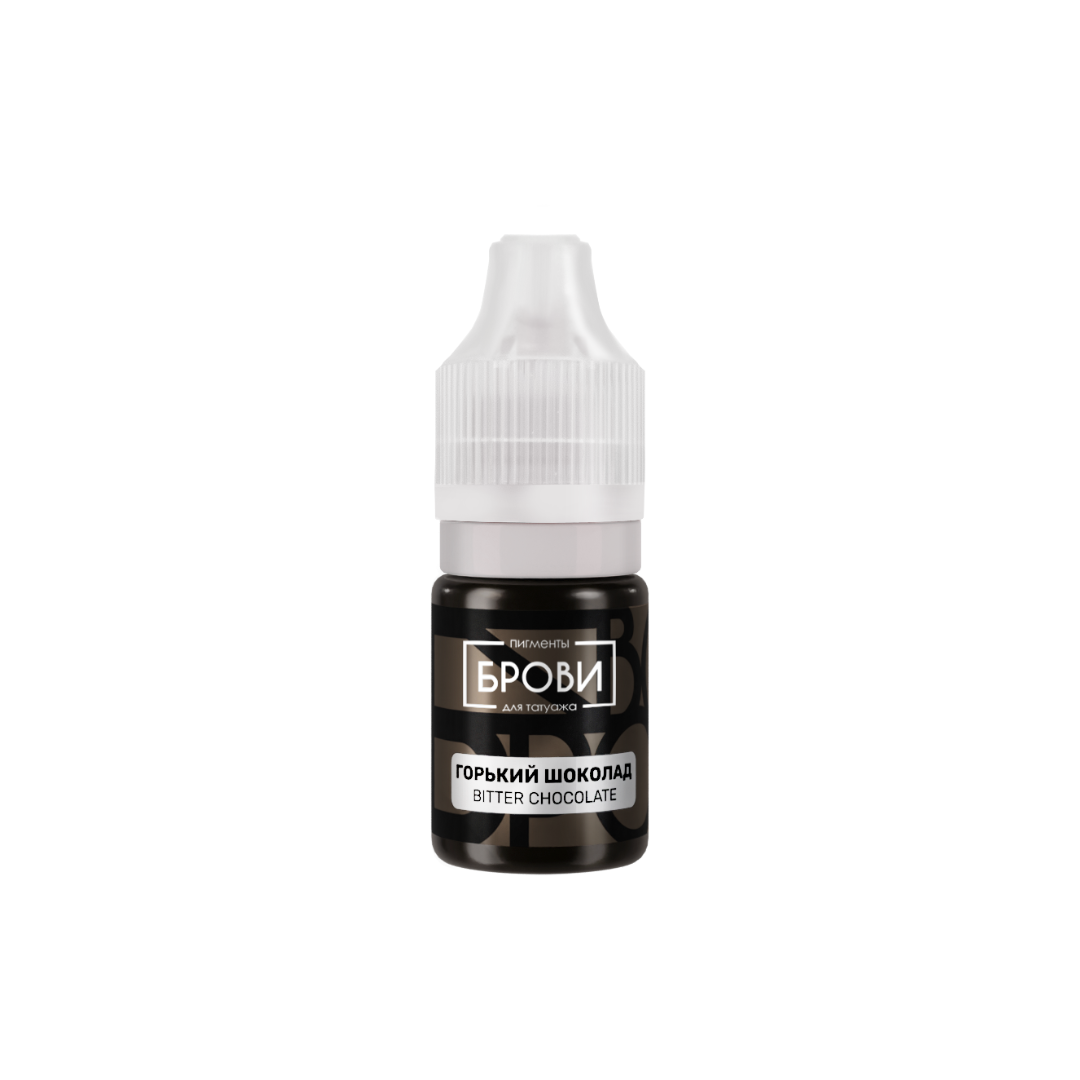
BITTER CHOCOLATE
A rich dark pigment temperature. Recommended for treatment of Fitzpatrick IV.
Colour - Rich Dark Brown
Area - Eyebrows
Retention - 60-80%
Type - Hybrid
Base - Yellow
Colour Temperature - Neutral
INGREDIENTS (CI NUMBERS)
Aqua, Rosin, Glycerin, Hamamelis Virginiana Extract, Alcohol, CI 21160, CI 12477, CI 21095, CI 77491, CI 77891, CI 21110, CI 77266
WHAT IS THE DIFFERENCE BETWEEN THE BROVI & BROVI+ LINES?
All pigments from the basic Brovi brow line have aqua, Hamamelis virginiana extract, glycerin, and alcohol in their formulas. The only difference between the mixes is colorants.
In the Brovi+ line formula, there is no alcohol and no glycerin, only deionized water, Hamamelis extract, and various colorants.
Besides differences in ingredients, in the Brovi+ line, pigments have a warmer formula, and colour particles are much smaller than in the basic Brovi line.
The Brovi+ line pigments are more liquid than the regular Brovi line, which makes them perfect for the hair strokes technique and for the powder brows technique when you want to achieve natural and airy results.
HOW TO MIX COLORS FROM BROVI AND BROVI+ LINES
If regular Brovi pigments are too cool and saturated for your client, you can mix them with Brovi+ in a 50/50 proportion.
However, that rule doesn't apply to Gray Harbor and Freckle. These pigments won't change colour when mixed with their Brovi+ correspondent pigments.
If Brovi+ pigments are very light for your client, you can add a corresponding colour from the Brovi line and mix them together. For example, you can add 7 drops of regular Roasted Chestnut to 3 drops of Roasted Chestnut+ (you may adjust the proportions depending on the desired saturation).
You can mix the opposite colours from the Brovi+ line. For example, Gray Harbor+ & Bitter Chocolate+. When mixing these colours, you will receive a neutral brown colour that will look natural when healed.
There is no sense in mixing Roasted Chestnut+ & Bitter Chocolate+ because both colours have a warm orange base. Also, you shouldn’t mix any colour from Brovi+ line with Freckle+ or add the corrector, because this line is already very warm.
ORGANIC OR INORGANIC?
Brovi Regular Organic Hybrid pigments are a hybrid range. This means that they consist of both organic and inorganic components. It is wrong to think that organic is good and non-organic is bad, or vice versa. Organic components are produced as a result of organic synthesis, and inorganic components are natural and mineral components that are produced as a result of their processing and enrichment. Hybrid pigments are contemporary types of pigments that most pigment companies manufacture nowadays.
ARE THERE IRON OXIDES IN BROVI PIGMENTS?
Since Regular Organic Hybridpigments are hybrid (they have both organic and inorganic components ), iron oxides are present in them.
But don’t get scared of that! Iron oxides are absolutely safe and can be found in many other pigments, as well as in perfumes and some food. For example, yellow iron oxide is one of the ingredients in face foundations.
In Brovi pigments, we use red iron oxide CI7491.

GRAY HARBOUR
Neutral blond pigment, for ash blondes. Handles ageing skin very well. Designed to treat Fitzpatrick II. Recommended for clients with cool hair colour.
Colour - cool blond for ash blondes, senior clients, and those who ask for grey eyebrows
Area - Eyebrows
Retention - 60-80%
Type - Hybrid
Base - Yellow
Colour Temperature - Neutral
INGREDIENTS (CI NUMBERS)
Aqua, Rosin, Glycerin, Hamamelis Virginiana Extract, Alcohol, CI 21095, CI 77891, CI 12477, CI 77266
WHAT IS THE DIFFERENCE BETWEEN THE BROVI & BROVI+ LINES?
All pigments from the basic Brovi brow line have aqua, Hamamelis virginiana extract, glycerin, and alcohol in their formulas. The only difference between the mixes is colorants.
In the Brovi+ line formula, there is no alcohol and no glycerin, only deionized water, Hamamelis extract, and various colorants.
Besides differences in ingredients, in the Brovi+ line, pigments have a warmer formula, and colour particles are much smaller than in the basic Brovi line.
The Brovi+ line pigments are more liquid than the regular Brovi line, which makes them perfect for the hair strokes technique and for the powder brows technique when you want to achieve natural and airy results.
HOW TO MIX COLORS FROM BROVI AND BROVI+ LINES
If regular Brovi pigments are too cool and saturated for your client, you can mix them with Brovi+ in a 50/50 proportion.
However, that rule doesn't apply to Gray Harbor and Freckle. These pigments won't change colour when mixed with their Brovi+ correspondent pigments.
If Brovi+ pigments are very light for your client, you can add a corresponding colour from the Brovi line and mix them together. For example, you can add 7 drops of regular Roasted Chestnut to 3 drops of Roasted Chestnut+ (you may adjust the proportions depending on the desired saturation).
You can mix the opposite colours from the Brovi+ line. For example, Gray Harbor+ & Bitter Chocolate+. When mixing these colours, you will receive a neutral brown colour that will look natural when healed.
There is no sense in mixing Roasted Chestnut+ & Bitter Chocolate+ because both colours have a warm orange base. Also, you shouldn’t mix any colour from Brovi+ line with Freckle+ or add the corrector, because this line is already very warm.
ORGANIC OR INORGANIC?
Brovi Regular Organic Hybrid pigments are a hybrid range. This means that they consist of both organic and inorganic components. It is wrong to think that organic is good and non-organic is bad, or vice versa. Organic components are produced as a result of organic synthesis, and inorganic components are natural and mineral components that are produced as a result of their processing and enrichment. Hybrid pigments are contemporary types of pigments that most pigment companies manufacture nowadays.
ARE THERE IRON OXIDES IN BROVI PIGMENTS?
Since Regular Organic Hybridpigments are hybrid (they have both organic and inorganic components ), iron oxides are present in them.
But don’t get scared of that! Iron oxides are absolutely safe and can be found in many other pigments, as well as in perfumes and some food. For example, yellow iron oxide is one of the ingredients in face foundations.
In Brovi pigments, we use red iron oxide CI7491.

CINNAMON STICKS
A light yellow-based blond shade. Warm in colour temperature. Make sure to add orange corrector when handling cool skin. It is used as the first, basic colour for the hair stroke technique on Fitzpatrick I. The pigment is suitable for the shading technique.
Colour - Light Warm Brown
Area - Eyebrows
Retention - 60-80%
Type - Hybrid
Base - Yellow-Orange
Colour Temperature - Warm
INGREDIENTS (CI NUMBERS)
Aqua, Rosin, Glycerin, Hamamelis Virginiana Extract, Alcohol, CI 21095, CI 12477, CI 77491, CI 21160, CI 77266, CI 77891
WHAT IS THE DIFFERENCE BETWEEN THE BROVI & BROVI+ LINES?
All pigments from the basic Brovi brow line have aqua, Hamamelis virginiana extract, glycerin, and alcohol in their formulas. The only difference between the mixes is colorants.
In the Brovi+ line formula, there is no alcohol and no glycerin, only deionized water, Hamamelis extract, and various colorants.
Besides differences in ingredients, in the Brovi+ line, pigments have a warmer formula, and colour particles are much smaller than in the basic Brovi line.
The Brovi+ line pigments are more liquid than the regular Brovi line, which makes them perfect for the hair strokes technique and for the powder brows technique when you want to achieve natural and airy results.
HOW TO MIX COLORS FROM BROVI AND BROVI+ LINES
If regular Brovi pigments are too cool and saturated for your client, you can mix them with Brovi+ in a 50/50 proportion.
However, that rule doesn't apply to Gray Harbor and Freckle. These pigments won't change colour when mixed with their Brovi+ correspondent pigments.
If Brovi+ pigments are very light for your client, you can add a corresponding colour from the Brovi line and mix them together. For example, you can add 7 drops of regular Roasted Chestnut to 3 drops of Roasted Chestnut+ (you may adjust the proportions depending on the desired saturation).
You can mix the opposite colours from the Brovi+ line. For example, Gray Harbor+ & Bitter Chocolate+. When mixing these colours, you will receive a neutral brown colour that will look natural when healed.
There is no sense in mixing Roasted Chestnut+ & Bitter Chocolate+ because both colours have a warm orange base. Also, you shouldn’t mix any colour from Brovi+ line with Freckle+ or add the corrector, because this line is already very warm.
ORGANIC OR INORGANIC?
Brovi Regular Organic Hybrid pigments are a hybrid range. This means that they consist of both organic and inorganic components. It is wrong to think that organic is good and non-organic is bad, or vice versa. Organic components are produced as a result of organic synthesis, and inorganic components are natural and mineral components that are produced as a result of their processing and enrichment. Hybrid pigments are contemporary types of pigments that most pigment companies manufacture nowadays.
ARE THERE IRON OXIDES IN BROVI PIGMENTS?
Since Regular Organic Hybridpigments are hybrid (they have both organic and inorganic components ), iron oxides are present in them.
But don’t get scared of that! Iron oxides are absolutely safe and can be found in many other pigments, as well as in perfumes and some food. For example, yellow iron oxide is one of the ingredients in face foundations.
In Brovi pigments, we use red iron oxide CI7491.

RIPE WHEAT
A warm blond pigment, designed for treatment of Fitzpatrick I. Recommended for clients with warm or neutral hair colour. It is not recommended to implant the pigment tightly to avoid cooler shades during healing.
Colour - Warm Blonde
Area - Eyebrows
Retention - 80-90%
Type - Hybrid
Base - Yellow
Colour Temperature - Warm
INGREDIENTS (CI NUMBERS)
Aqua, Rosin, Glycerin, Hamamelis Virginiana Extract, Alcohol, CI 21160, CI 12477, CI 21108, CI 77891, CI 21095, CI 77491, CI 77266
WHAT IS THE DIFFERENCE BETWEEN THE BROVI & BROVI+ LINES?
All pigments from the basic Brovi brow line have aqua, Hamamelis virginiana extract, glycerin, and alcohol in their formulas. The only difference between the mixes is colorants.
In the Brovi+ line formula, there is no alcohol and no glycerin, only deionized water, Hamamelis extract, and various colorants.
Besides differences in ingredients, in the Brovi+ line, pigments have a warmer formula, and colour particles are much smaller than in the basic Brovi line.
The Brovi+ line pigments are more liquid than the regular Brovi line, which makes them perfect for the hair strokes technique and for the powder brows technique when you want to achieve natural and airy results.
HOW TO MIX COLORS FROM BROVI AND BROVI+ LINES
If regular Brovi pigments are too cool and saturated for your client, you can mix them with Brovi+ in a 50/50 proportion.
However, that rule doesn't apply to Gray Harbor and Freckle. These pigments won't change colour when mixed with their Brovi+ correspondent pigments.
If Brovi+ pigments are very light for your client, you can add a corresponding colour from the Brovi line and mix them together. For example, you can add 7 drops of regular Roasted Chestnut to 3 drops of Roasted Chestnut+ (you may adjust the proportions depending on the desired saturation).
You can mix the opposite colours from the Brovi+ line. For example, Gray Harbor+ & Bitter Chocolate+. When mixing these colours, you will receive a neutral brown colour that will look natural when healed.
There is no sense in mixing Roasted Chestnut+ & Bitter Chocolate+ because both colours have a warm orange base. Also, you shouldn’t mix any colour from Brovi+ line with Freckle+ or add the corrector, because this line is already very warm.
ORGANIC OR INORGANIC?
Brovi Regular Organic Hybrid pigments are a hybrid range. This means that they consist of both organic and inorganic components. It is wrong to think that organic is good and non-organic is bad, or vice versa. Organic components are produced as a result of organic synthesis, and inorganic components are natural and mineral components that are produced as a result of their processing and enrichment. Hybrid pigments are contemporary types of pigments that most pigment companies manufacture nowadays.
ARE THERE IRON OXIDES IN BROVI PIGMENTS?
Since Regular Organic Hybridpigments are hybrid (they have both organic and inorganic components ), iron oxides are present in them.
But don’t get scared of that! Iron oxides are absolutely safe and can be found in many other pigments, as well as in perfumes and some food. For example, yellow iron oxide is one of the ingredients in face foundations.
In Brovi pigments, we use red iron oxide CI7491.

FLAT WHITE
Warm orange-based brown pigment. Used as the second, darker colour for accents when working with Fitzpatrick phototypes I; or as the first, primary colour when working with Fitzpatrick IV. When using it as the main colour, make sure to add orange or yellow corrector. Recommended to use with diluent.
Colour - Warm Brown
Area - Eyebrows
Retention - 80-90%
Type - Hybrid
Base - Yellow-Orange
Colour Temperature - Warm
INGREDIENTS (CI NUMBERS)
Aqua, Rosin, Glycerin, Hamamelis Virginiana Extract, Alcohol, CI 21160, CI 12477, CI 77891, CI 21095, CI 77491, CI 77266
WHAT IS THE DIFFERENCE BETWEEN THE BROVI & BROVI+ LINES?
All pigments from the basic Brovi brow line have aqua, Hamamelis virginiana extract, glycerin, and alcohol in their formulas. The only difference between the mixes is colorants.
In the Brovi+ line formula, there is no alcohol and no glycerin, only deionized water, Hamamelis extract, and various colorants.
Besides differences in ingredients, in the Brovi+ line, pigments have a warmer formula, and colour particles are much smaller than in the basic Brovi line.
The Brovi+ line pigments are more liquid than the regular Brovi line, which makes them perfect for the hair strokes technique and for the powder brows technique when you want to achieve natural and airy results.
HOW TO MIX COLORS FROM BROVI AND BROVI+ LINES
If regular Brovi pigments are too cool and saturated for your client, you can mix them with Brovi+ in a 50/50 proportion.
However, that rule doesn't apply to Gray Harbor and Freckle. These pigments won't change colour when mixed with their Brovi+ correspondent pigments.
If Brovi+ pigments are very light for your client, you can add a corresponding colour from the Brovi line and mix them together. For example, you can add 7 drops of regular Roasted Chestnut to 3 drops of Roasted Chestnut+ (you may adjust the proportions depending on the desired saturation).
You can mix the opposite colours from the Brovi+ line. For example, Gray Harbor+ & Bitter Chocolate+. When mixing these colours, you will receive a neutral brown colour that will look natural when healed.
There is no sense in mixing Roasted Chestnut+ & Bitter Chocolate+ because both colours have a warm orange base. Also, you shouldn’t mix any colour from Brovi+ line with Freckle+ or add the corrector, because this line is already very warm.
ORGANIC OR INORGANIC?
Brovi Regular Organic Hybrid pigments are a hybrid range. This means that they consist of both organic and inorganic components. It is wrong to think that organic is good and non-organic is bad, or vice versa. Organic components are produced as a result of organic synthesis, and inorganic components are natural and mineral components that are produced as a result of their processing and enrichment. Hybrid pigments are contemporary types of pigments that most pigment companies manufacture nowadays.
ARE THERE IRON OXIDES IN BROVI PIGMENTS?
Since Regular Organic Hybridpigments are hybrid (they have both organic and inorganic components ), iron oxides are present in them.
But don’t get scared of that! Iron oxides are absolutely safe and can be found in many other pigments, as well as in perfumes and some food. For example, yellow iron oxide is one of the ingredients in face foundations.
In Brovi pigments, we use red iron oxide CI7491.
BROVI CORRECTOR PIGMENTS - 10ml
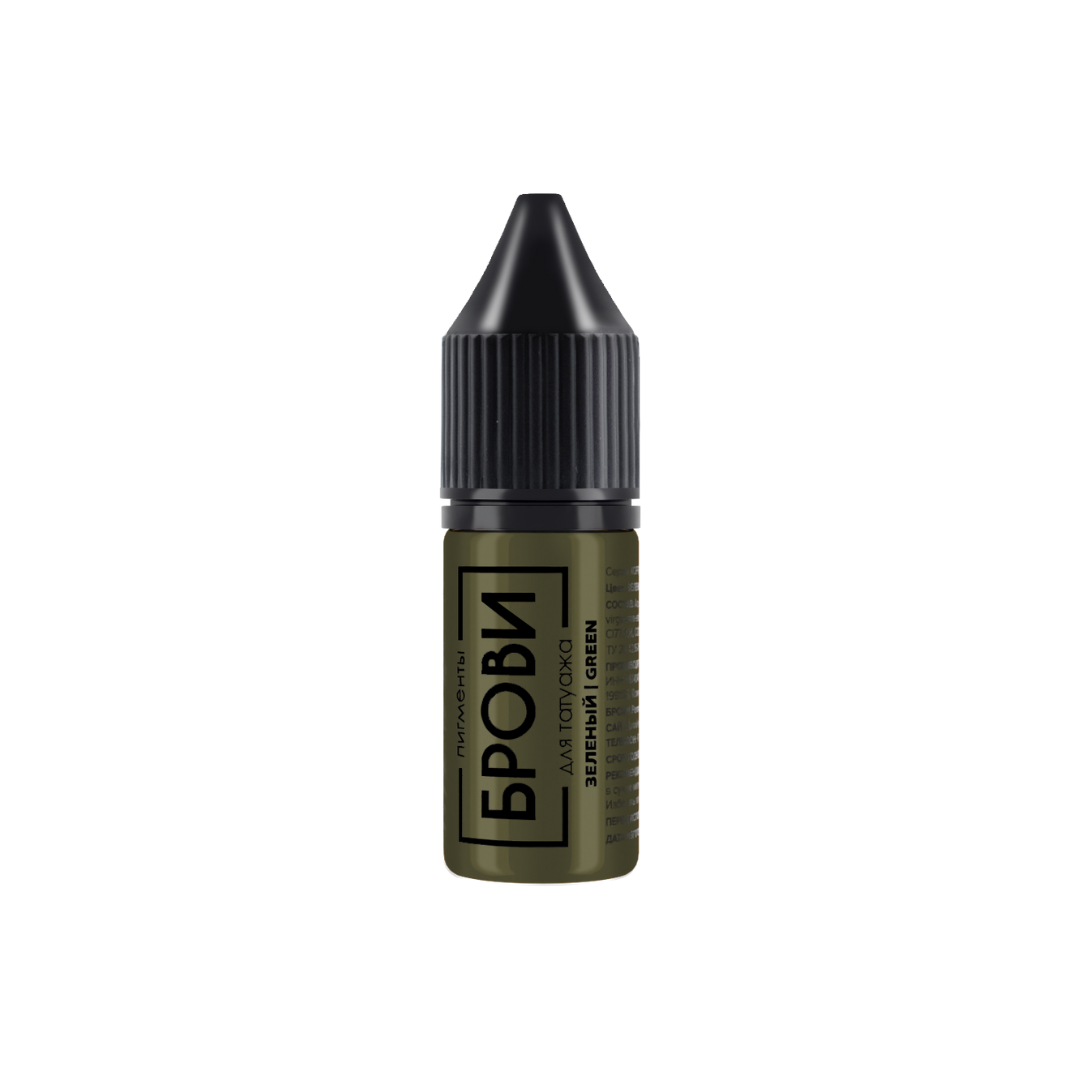
GREEN
Olive colour, designed to neutralize light red shades when covering old/low-quality permanent makeup.
Colour: olive green
Base: green
Colour temperature: cool
Designed to cover light red shades of eyebrows.
Mix green and yellow corrector in a 1:1 ratio to cover pink eyebrows.
Ingredients: Aqua, Rosin, Glycerin, Hamamelis Virginiana Extract, Alcohol, CI 11740, CI 77891, CI 77266, CI 21110
When to use Green Corrector?
Use it to go over light red shades of eyebrows.
It is recommended to use Green Corrector in pure colour without mixing it with the main pigment.
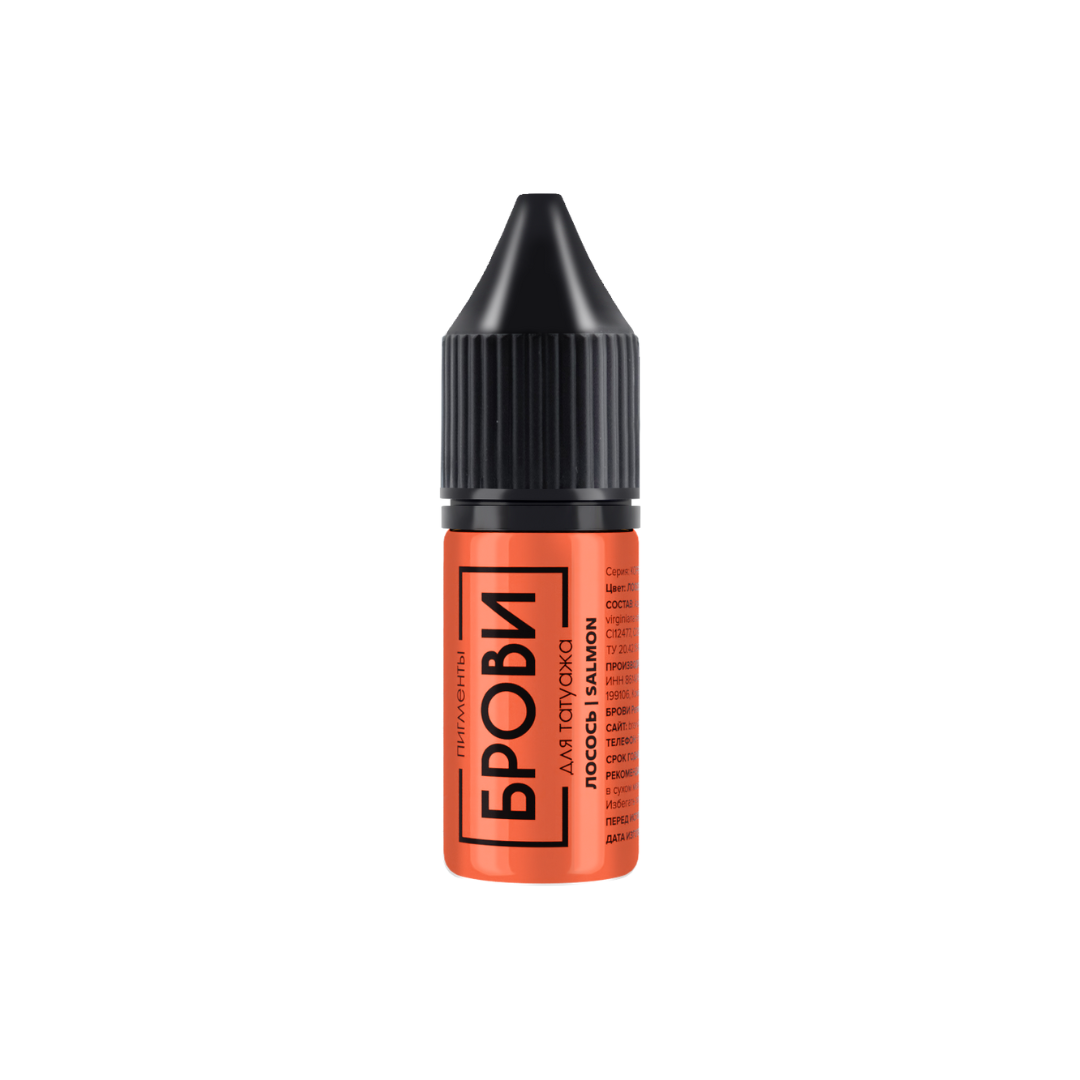
SALMON
Colour: light orange
Base colour: orange
Colour temperature: warm
Description:
Corrector for grey lips. Used for treatment of Fitzpatrick phototypes V (Asian) and VI (African). Recommended to implant in layers and tightly without mixing with the main color: correct the color of lips first, and then fill them with the main color. The corrector and the main color should be applied during one session.
Ingredients: Aqua, Rosin, Glycerin, Hamamelis Virginiana Extract, Alcohol, CI 77891, CI 21110, CI 12477, CI 21095
HOW TO USE SALMON CORRECTOR
How to use Salmon Corrector
Implant the colour in dense layers without mixing it with main lips pigment. First, you correct the colour with a Salmon modifier, and only after the correction, apply desired lip pigment colour. Correction and implanting of the main colour pigment are done in one procedure.

RED ORANGE
Designed to neutralize the blue tint of cool lips. Can be used to neutralize light green colour residue on the eyebrows.
Colour: rich dark orange
Base: red
Colour temperature: warm
Application: to neutralize cool/blue lips, we recommend to use pure red-orange corrector during the initial surface filling (1st pass)
Ingredients: Aqua, Rosin, Glycerin, Hamamelis Virginiana Extract, Alcohol, CI 21160, CI 12477, CI 77891, CI 21095
WHEN TO USE RED ORANGE CORRECTOR
When to use Red Orange Corrector
Use it to warm up the main pigment when working with lips that turn blue when exposed to cold temperatures and this is your go-to pigment for cold-toned lips of Asian and African phototype clients.
It can also be used to cover up old cool-toned permanent makeup on lips (purple or lilac shades).
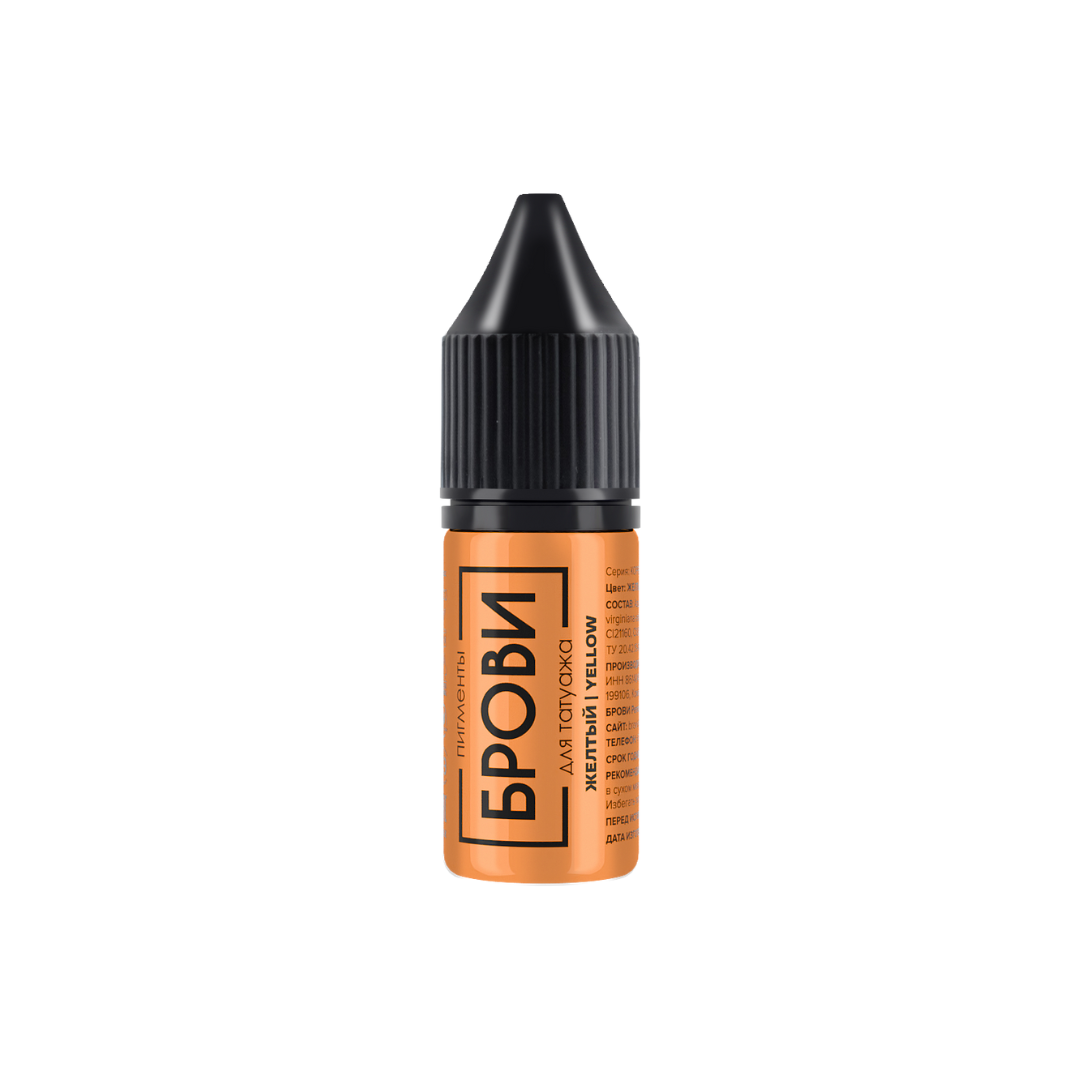
YELLOW
Used to neutralize lilac shades after poorly made permanent makeup. Designed to give a lighter tone to the main pigments when working with very light skin and white hair.
Colour: bright yellow
Base: yellow
Colour temperature: warm
Ingredients: Aqua, Rosin, Glycerin, Hamamelis Virginiana Extract, Alcohol, CI 21108, CI 77891, CI 21160, CI 12477
When to use Yellow Corrector
Recommended to use undiluted for covering.
You can mix orange and yellow corrector in 1:1 ratio to cover the grayish purple eyebrows.
When treating skin with an excess of red pheomelanin (freckles, red shades of type V skin by Fitzpatrick), we recommend to add 2 drops of corrector to the pigment.

ORANGE
Used to neutralize cool grey and blue shades when covering old/low-quality permanent makeup.
Colour: bright orange
Base: orange
Colour temperature: warm
Designed to add warms to the main pigment when working with very cool-toned skin on eyebrows and eyes.
Ingredients: Aqua, Rosin, Glycerin, Hamamelis Virginiana Extract, Alcohol, CI 21160, CI 12477
WHEN TO USE ORANGE CORRECTOR?
Use it to warm up the main pigment when working with very cool skin on brows and eyes.
It is also designed to colour correct old PMU of grey and bluish-grey shades.
When covering the old pigment, it is best to use Orange Corrector in its pure colour form without mixing it with the main pigment.
BROVI LIPS PIGMENTS - 10ml

DUSTY ROSE
The most popular pink pigment for permanent lip makeup. The colour temperature is neutral. The titanium dioxide content in the formula is minimized. Ideal for customers who want you to highlight the natural beauty of their lips.
Pure Dusty Rose is not recommended for treatment of cool-toned lips—in such cases, the manufacturer recommends blending it with Salted Caramel in the 1:1 proportions.
Can be used undiluted for dense filling.
It is recommended to add a few drops of diluent to achieve aquarelle lips effect.
Colour - Soft Pink
Area - Lips
Retention - 60-80%
Type - Organic Hybrid
Colour Temperature - Neutral
INGREDIENTS (CI NUMBERS)
Aqua, Glycerin, Hamamelis Virginiana Extract, Alcohol, CI 77491, CI 12477, CI 21095, CI 12466, CI 21110, CI 74160, CI 77891
ORGANIC OR INORGANIC?
Brovi Lip pigments are a hybrid range. This means that they consist of both organic and inorganic components. It is wrong to think that organic is good and non-organic is bad, or vice versa. Organic components are produced as a result of organic synthesis, and inorganic components are natural and mineral components that are produced as a result of their processing and enrichment. Hybrid pigments are contemporary types of pigments that most pigment companies manufacture nowadays.
ARE THERE IRON OXIDES IN BROVI PIGMENTS?
Since Brovi pigments are a hybrid (they have both organic and inorganic components ), iron oxides are present in them.
But don’t get scared of that! Iron oxides are absolutely safe and can be found in many other pigments, as well as in perfumes and some food. For example, yellow iron oxide is one of the ingredients in face foundations.
In Brovi pigments, we use red iron oxide CI7491.
IS THERE TITANIUM DIOXIDE IN BROVI PIGMENTS?
Titanium dioxide can be found in different amounts in all pigments on the market (except in black pigments, of course).
In Brovi pigments, titanium dioxide is found in minimal quantities (not more than 4.8%) and is in the last position in the formula.
Also, in Brovi pigments, titanium oxide particles are finely dispersed, which means that you can use them when working on faces (coarse particles cannot be used when working on face skin).
PINK OPAL
Neutral pink pigment, which provides colour retention of up to 85% after the first treatment. Great for treatment of ageing lip skin.
Pure Pink Opal is not recommended for treatment of cool-toned lips—in such cases, the manufacturer recommends blending it with Salted Caramel or Old Castle in the 1:1 proportions.
Can be used undiluted for dense filling. It is recommended to add a few drops of diluent to achieve aquarelle lips effect.
Colour - cool pink, neither dark nor light, neutral tone
Area - Lips
Retention - 60-80%
Type - Organic Hybrid
Colour Temperature - Cool
INGREDIENTS (CI NUMBERS)
Aqua, Glycerin, Hamamelis Virginiana Extract, Alcohol, CI 12475, CI 12466, CI 21095, CI 77891, CI 77491, CI 12477
ORGANIC OR INORGANIC?
Brovi Lip pigments are a hybrid range. This means that they consist of both organic and inorganic components. It is wrong to think that organic is good and non-organic is bad, or vice versa. Organic components are produced as a result of organic synthesis, and inorganic components are natural and mineral components that are produced as a result of their processing and enrichment. Hybrid pigments are contemporary types of pigments that most pigment companies manufacture nowadays.
ARE THERE IRON OXIDES IN BROVI PIGMENTS?
Since Brovi pigments are a hybrid (they have both organic and inorganic components ), iron oxides are present in them.
But don’t get scared of that! Iron oxides are absolutely safe and can be found in many other pigments, as well as in perfumes and some food. For example, yellow iron oxide is one of the ingredients in face foundations.
In Brovi pigments, we use red iron oxide CI7491.
IS THERE TITANIUM DIOXIDE IN BROVI PIGMENTS?
Titanium dioxide can be found in different amounts in all pigments on the market (except in black pigments, of course).
In Brovi pigments, titanium dioxide is found in minimal quantities (not more than 4.8%) and is in the last position in the formula.
Also, in Brovi pigments, titanium oxide particles are finely dispersed, which means that you can use them when working on faces (coarse particles cannot be used when working on face skin).
RED STRAWBERRY
Juicy, warm red pigment. One of the "boldest" colours in our line of permanent lip makeup pigments. It can be used undiluted, whether you are working on cool or warm lips. For aquarelle lips effect, the manufacturer recommends adding diluent.
Colour - Warm Red
Area - Lips
Retention - 60-80%
Type - Organic Hybrid
Colour Temperature - Warm
INGREDIENTS (CI NUMBERS)
Aqua, Glycerin, Hamamelis Virginiana Extract, Alcohol, CI 21095, CI 12477, CI 12475, CI 12466, CI 77891
ORGANIC OR INORGANIC?
Brovi Lip pigments are a hybrid range. This means that they consist of both organic and inorganic components. It is wrong to think that organic is good and non-organic is bad, or vice versa. Organic components are produced as a result of organic synthesis, and inorganic components are natural and mineral components that are produced as a result of their processing and enrichment. Hybrid pigments are contemporary types of pigments that most pigment companies manufacture nowadays.
ARE THERE IRON OXIDES IN BROVI PIGMENTS?
Since Brovi pigments are a hybrid (they have both organic and inorganic components ), iron oxides are present in them.
But don’t get scared of that! Iron oxides are absolutely safe and can be found in many other pigments, as well as in perfumes and some food. For example, yellow iron oxide is one of the ingredients in face foundations.
In Brovi pigments, we use red iron oxide CI7491.
IS THERE TITANIUM DIOXIDE IN BROVI PIGMENTS?
Titanium dioxide can be found in different amounts in all pigments on the market (except in black pigments, of course).
In Brovi pigments, titanium dioxide is found in minimal quantities (not more than 4.8%) and is in the last position in the formula.
Also, in Brovi pigments, titanium oxide particles are finely dispersed, which means that you can use them when working on faces (coarse particles cannot be used when working on face skin).

RASPBERRY TARTLET
A bright, red-pink pigment for clients who like bold looks. Anna Kutsevolova's go-to colour. The colour temperature is neutral. Can be used in a pure form on any type of lip skin. For aquarelle lips, the manufacturer recommends using diluent.
Colour - Natural Reddish Pink
Area - Lips
Retention - 60-80%
Type - Organic Hybrid
Colour Temperature - Neutral
INGREDIENTS (CI NUMBERS)
Aqua, Glycerin, Hamamelis Virginiana Extract, Alcohol, CI 21095, CI 12466, CI 77891, CI 77491, CI 12477
ORGANIC OR INORGANIC?
Brovi Lip pigments are a hybrid range. This means that they consist of both organic and inorganic components. It is wrong to think that organic is good and non-organic is bad, or vice versa. Organic components are produced as a result of organic synthesis, and inorganic components are natural and mineral components that are produced as a result of their processing and enrichment. Hybrid pigments are contemporary types of pigments that most pigment companies manufacture nowadays.
ARE THERE IRON OXIDES IN BROVI PIGMENTS?
Since Brovi pigments are a hybrid (they have both organic and inorganic components ), iron oxides are present in them.
But don’t get scared of that! Iron oxides are absolutely safe and can be found in many other pigments, as well as in perfumes and some food. For example, yellow iron oxide is one of the ingredients in face foundations.
In Brovi pigments, we use red iron oxide CI7491.
IS THERE TITANIUM DIOXIDE IN BROVI PIGMENTS?
Titanium dioxide can be found in different amounts in all pigments on the market (except in black pigments, of course).
In Brovi pigments, titanium dioxide is found in minimal quantities (not more than 4.8%) and is in the last position in the formula.
Also, in Brovi pigments, titanium oxide particles are finely dispersed, which means that you can use them when working on faces (coarse particles cannot be used when working on face skin).

JUICY WATERMELON
Light, warm red pigment for permanent lip makeup. Designed to create the brightest looks. This colour is favoured by many PMU artists and clients for its huge colour retention after the first treatment. Can be used undiluted for dense filling. It is recommended to add a few drops of diluent to achieve aquarelle lips effect.
Colour - Light Warm Red
Area - Lips
Retention - 60-80%
Type - Organic Hybrid
Colour Temperature - Warm
INGREDIENTS (CI NUMBERS)
Aqua, Glycerin, Hamamelis Virginiana Extract, Alcohol, CI 12466, CI 21095, CI 77891
ORGANIC OR INORGANIC?
Brovi Lip pigments are a hybrid range. This means that they consist of both organic and inorganic components. It is wrong to think that organic is good and non-organic is bad, or vice versa. Organic components are produced as a result of organic synthesis, and inorganic components are natural and mineral components that are produced as a result of their processing and enrichment. Hybrid pigments are contemporary types of pigments that most pigment companies manufacture nowadays.
ARE THERE IRON OXIDES IN BROVI PIGMENTS?
Since Brovi pigments are a hybrid (they have both organic and inorganic components ), iron oxides are present in them.
But don’t get scared of that! Iron oxides are absolutely safe and can be found in many other pigments, as well as in perfumes and some food. For example, yellow iron oxide is one of the ingredients in face foundations.
In Brovi pigments, we use red iron oxide CI7491.
IS THERE TITANIUM DIOXIDE IN BROVI PIGMENTS?
Titanium dioxide can be found in different amounts in all pigments on the market (except in black pigments, of course).
In Brovi pigments, titanium dioxide is found in minimal quantities (not more than 4.8%) and is in the last position in the formula.
Also, in Brovi pigments, titanium oxide particles are finely dispersed, which means that you can use them when working on faces (coarse particles cannot be used when working on face skin)
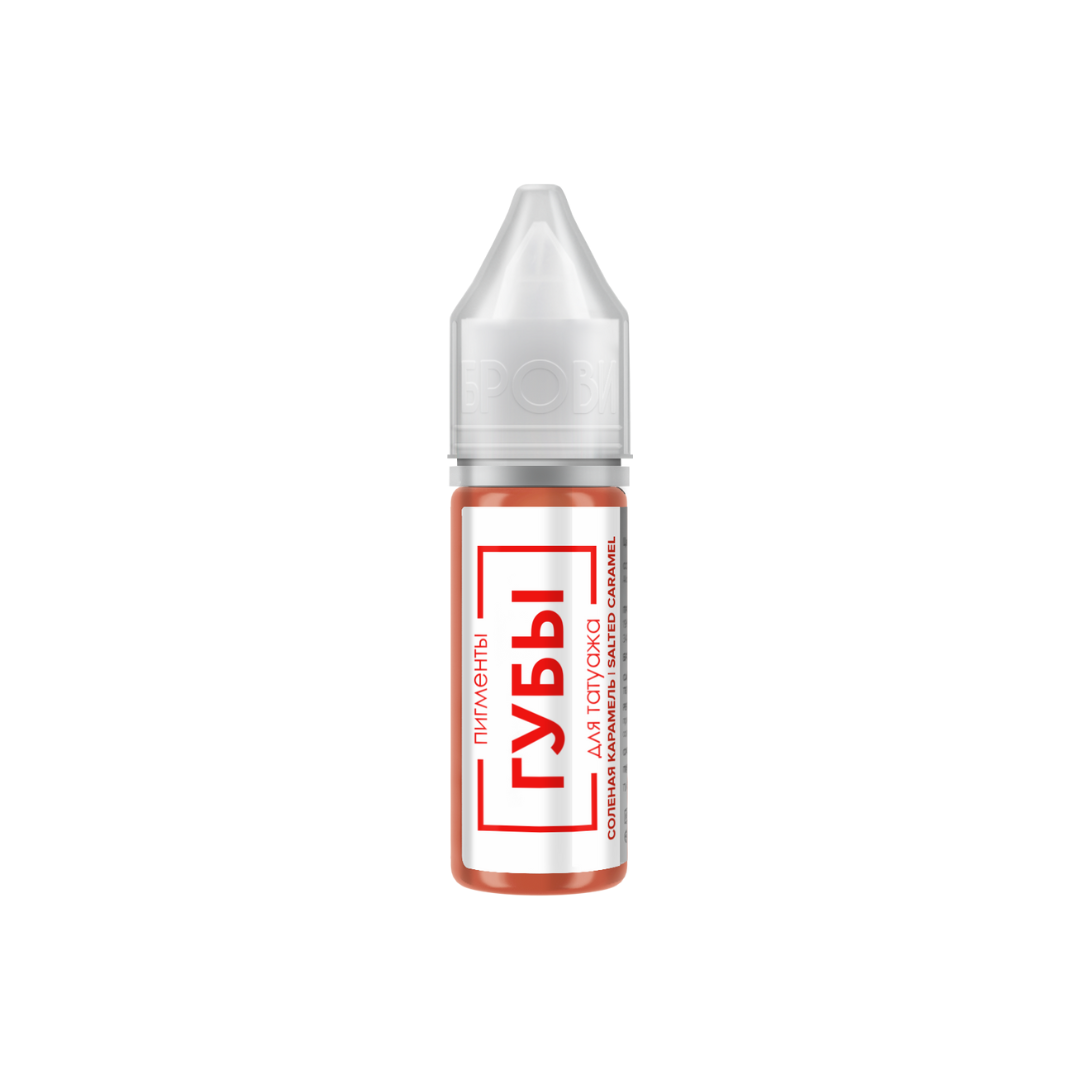
SALTED CARAMEL
Warm caramel shade, can be used on any lips. Contains minimal amounts of titanium dioxide. Suitable for clients who prefer a natural look. Can be used undiluted for dense filling. It is recommended to add a few drops of diluent to achieve aquarelle lips effect.
Colour - Warm Caramel
Area - Lips
Retention - 60-80%
Type - Organic Hybrid
Colour Temperature - Neutral
INGREDIENTS (CI NUMBERS)
Aqua, Glycerin, Hamamelis Virginiana Extract, Alcohol, CI 77491, CI 12477, CI 21095, CI 12466, CI 21110, CI 74160, CI 77891
ORGANIC OR INORGANIC?
Brovi Lip pigments are a hybrid range. This means that they consist of both organic and inorganic components. It is wrong to think that organic is good and non-organic is bad, or vice versa. Organic components are produced as a result of organic synthesis, and inorganic components are natural and mineral components that are produced as a result of their processing and enrichment. Hybrid pigments are contemporary types of pigments that most pigment companies manufacture nowadays.
ARE THERE IRON OXIDES IN BROVI PIGMENTS?
Since Brovi pigments are a hybrid (they have both organic and inorganic components ), iron oxides are present in them.
But don’t get scared of that! Iron oxides are absolutely safe and can be found in many other pigments, as well as in perfumes and some food. For example, yellow iron oxide is one of the ingredients in face foundations.
In Brovi pigments, we use red iron oxide CI7491.
IS THERE TITANIUM DIOXIDE IN BROVI PIGMENTS?
Titanium dioxide can be found in different amounts in all pigments on the market (except in black pigments, of course).
In Brovi pigments, titanium dioxide is found in minimal quantities (not more than 4.8%) and is in the last position in the formula.
Also, in Brovi pigments, titanium oxide particles are finely dispersed, which means that you can use them when working on faces (coarse particles cannot be used when working on face skin).
OLD CASTLE
Suitable for treatment of any type of lip skin. Ideal for dense colouring. By adding diluent you achieve a natural, realistic colour. The titanium dioxide content in the formula is minimized.
Colour - Warm Reddish Brown
Area - Lips
Retention - 60-80%
Type - Organic Hybrid
Colour Temperature - Warm
INGREDIENTS (CI NUMBERS)
Aqua, Glycerin, Hamamelis Virginiana Extract, Alcohol, CI 21095, CI 12477, CI 12466, CI 21110, CI 77491, CI 74160, CI 77891
ORGANIC OR INORGANIC?
Brovi Lip pigments are a hybrid range. This means that they consist of both organic and inorganic components. It is wrong to think that organic is good and non-organic is bad, or vice versa. Organic components are produced as a result of organic synthesis, and inorganic components are natural and mineral components that are produced as a result of their processing and enrichment. Hybrid pigments are contemporary types of pigments that most pigment companies manufacture nowadays.
ARE THERE IRON OXIDES IN BROVI PIGMENTS?
Since Brovi pigments are a hybrid (they have both organic and inorganic components ), iron oxides are present in them.
But don’t get scared of that! Iron oxides are absolutely safe and can be found in many other pigments, as well as in perfumes and some food. For example, yellow iron oxide is one of the ingredients in face foundations.
In Brovi pigments, we use red iron oxide CI7491.
IS THERE TITANIUM DIOXIDE IN BROVI PIGMENTS?
Titanium dioxide can be found in different amounts in all pigments on the market (except in black pigments, of course).
In Brovi pigments, titanium dioxide is found in minimal quantities (not more than 4.8%) and is in the last position in the formula.
Also, in Brovi pigments, titanium oxide particles are finely dispersed, which means that you can use them when working on faces (coarse particles cannot be used when working on face skin).
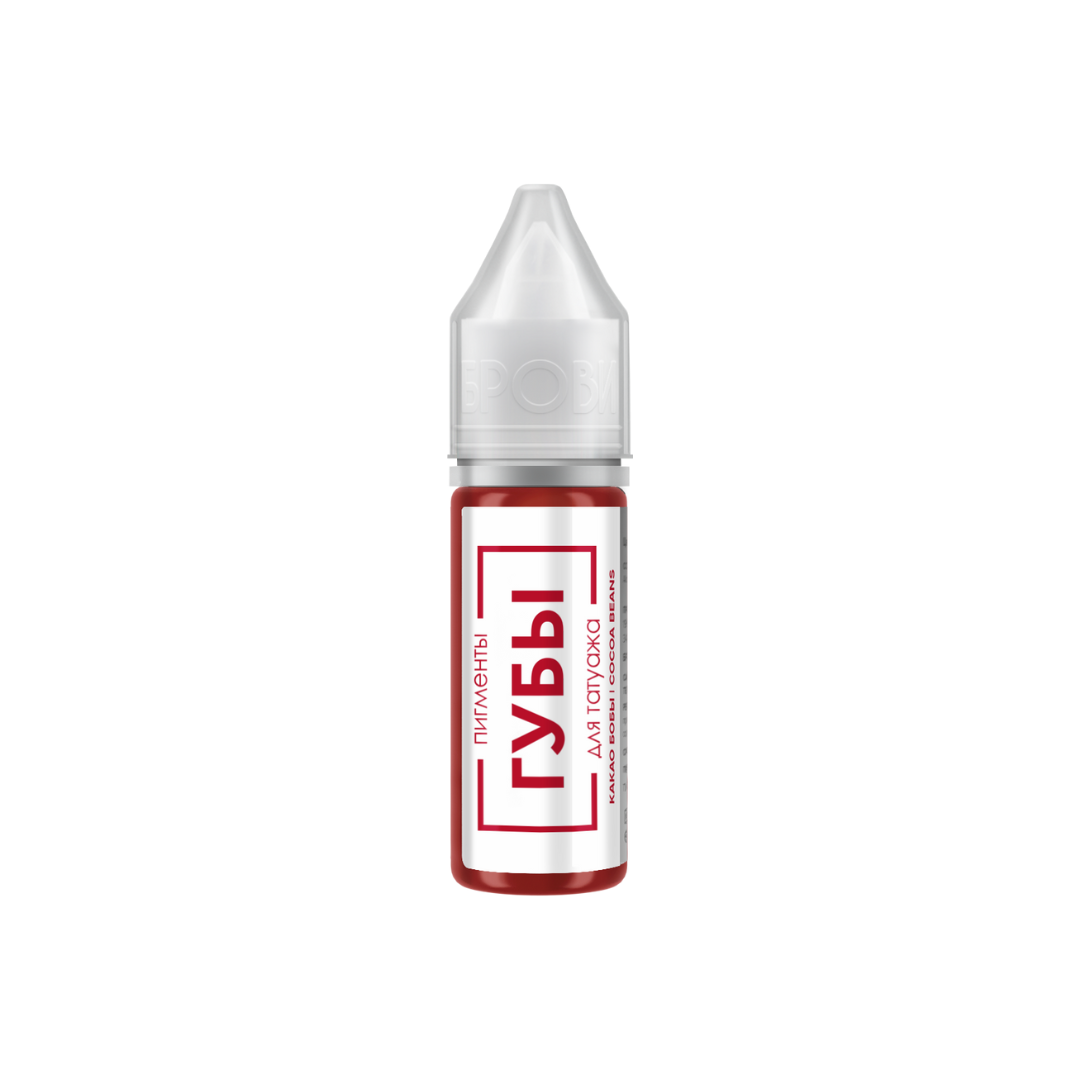
COCOA BEANS
A cool red-brown shade. Suitable for clients who prefer not to go beyond a natural look. Pure Cocoa Beans is not recommended for treatment of cool-toned lips—in such cases, the manufacturer recommends blending it with Salted Caramel or Old Castle in the 1:1 proportions. When implanted densely, it may stay quite dark after healing, so the manufacturer also recommends adding diluent.
Colour - Cool Reddish Brown
Area - Lips
Retention - 60-80%
Type - Organic Hybrid
Colour Temperature - Cool
INGREDIENTS (CI NUMBERS)
Aqua, Glycerin, Hamamelis Virginiana Extract, Alcohol, CI 77491, CI 12477, CI 21095, CI 12466, CI 21110, CI 74160, CI 77891
ORGANIC OR INORGANIC?
Brovi Lip pigments are a hybrid range. This means that they consist of both organic and inorganic components. It is wrong to think that organic is good and non-organic is bad, or vice versa. Organic components are produced as a result of organic synthesis, and inorganic components are natural and mineral components that are produced as a result of their processing and enrichment. Hybrid pigments are contemporary types of pigments that most pigment companies manufacture nowadays.
ARE THERE IRON OXIDES IN BROVI PIGMENTS?
Since Brovi pigments are a hybrid (they have both organic and inorganic components ), iron oxides are present in them.
But don’t get scared of that! Iron oxides are absolutely safe and can be found in many other pigments, as well as in perfumes and some food. For example, yellow iron oxide is one of the ingredients in face foundations.
In Brovi pigments, we use red iron oxide CI7491.
IS THERE TITANIUM DIOXIDE IN BROVI PIGMENTS?
Titanium dioxide can be found in different amounts in all pigments on the market (except in black pigments, of course).
In Brovi pigments, titanium dioxide is found in minimal quantities (not more than 4.8%) and is in the last position in the formula.
Also, in Brovi pigments, titanium oxide particles are finely dispersed, which means that you can use them when working on faces (coarse particles cannot be used when working on face skin.
BROVI LIPS PIGMENTS - 5ml

RASPBERRY TARTLET
A bright, red-pink pigment for clients who like bold looks. Anna Kutsevolova's go-to colour. The colour temperature is neutral. Can be used in a pure form on any type of lip skin. For aquarelle lips, the manufacturer recommends using diluent.
Colour - Natural Reddish Pink
Area - Lips
Retention - 60-80%
Type - Organic Hybrid
Colour Temperature - Neutral
INGREDIENTS (CI NUMBERS)
Aqua, Glycerin, Hamamelis Virginiana Extract, Alcohol, CI 21095, CI 12466, CI 77891, CI 77491, CI 12477
ORGANIC OR INORGANIC?
Brovi Lip pigments are a hybrid range. This means that they consist of both organic and inorganic components. It is wrong to think that organic is good and non-organic is bad, or vice versa. Organic components are produced as a result of organic synthesis, and inorganic components are natural and mineral components that are produced as a result of their processing and enrichment. Hybrid pigments are contemporary types of pigments that most pigment companies manufacture nowadays.
ARE THERE IRON OXIDES IN BROVI PIGMENTS?
Since Brovi pigments are a hybrid (they have both organic and inorganic components ), iron oxides are present in them.
But don’t get scared of that! Iron oxides are absolutely safe and can be found in many other pigments, as well as in perfumes and some food. For example, yellow iron oxide is one of the ingredients in face foundations.
In Brovi pigments, we use red iron oxide CI7491.
IS THERE TITANIUM DIOXIDE IN BROVI PIGMENTS?
Titanium dioxide can be found in different amounts in all pigments on the market (except in black pigments, of course).
In Brovi pigments, titanium dioxide is found in minimal quantities (not more than 4.8%) and is in the last position in the formula.
Also, in Brovi pigments, titanium oxide particles are finely dispersed, which means that you can use them when working on faces (coarse particles cannot be used when working on face skin).

SALTED CARAMEL
Warm caramel shade, can be used on any lips. Contains minimal amounts of titanium dioxide. Suitable for clients who prefer a natural look. Can be used undiluted for dense filling. It is recommended to add a few drops of diluent to achieve aquarelle lips effect.
Colour - Warm Caramel
Area - Lips
Retention - 60-80%
Type - Organic Hybrid
Colour Temperature - Neutral
INGREDIENTS (CI NUMBERS)
Aqua, Glycerin, Hamamelis Virginiana Extract, Alcohol, CI 77491, CI 12477, CI 21095, CI 12466, CI 21110, CI 74160, CI 77891
ORGANIC OR INORGANIC?
Brovi Lip pigments are a hybrid range. This means that they consist of both organic and inorganic components. It is wrong to think that organic is good and non-organic is bad, or vice versa. Organic components are produced as a result of organic synthesis, and inorganic components are natural and mineral components that are produced as a result of their processing and enrichment. Hybrid pigments are contemporary types of pigments that most pigment companies manufacture nowadays.
ARE THERE IRON OXIDES IN BROVI PIGMENTS?
Since Brovi pigments are a hybrid (they have both organic and inorganic components ), iron oxides are present in them.
But don’t get scared of that! Iron oxides are absolutely safe and can be found in many other pigments, as well as in perfumes and some food. For example, yellow iron oxide is one of the ingredients in face foundations.
In Brovi pigments, we use red iron oxide CI7491.
IS THERE TITANIUM DIOXIDE IN BROVI PIGMENTS?
Titanium dioxide can be found in different amounts in all pigments on the market (except in black pigments, of course).
In Brovi pigments, titanium dioxide is found in minimal quantities (not more than 4.8%) and is in the last position in the formula.
Also, in Brovi pigments, titanium oxide particles are finely dispersed, which means that you can use them when working on faces (coarse particles cannot be used when working on face skin).
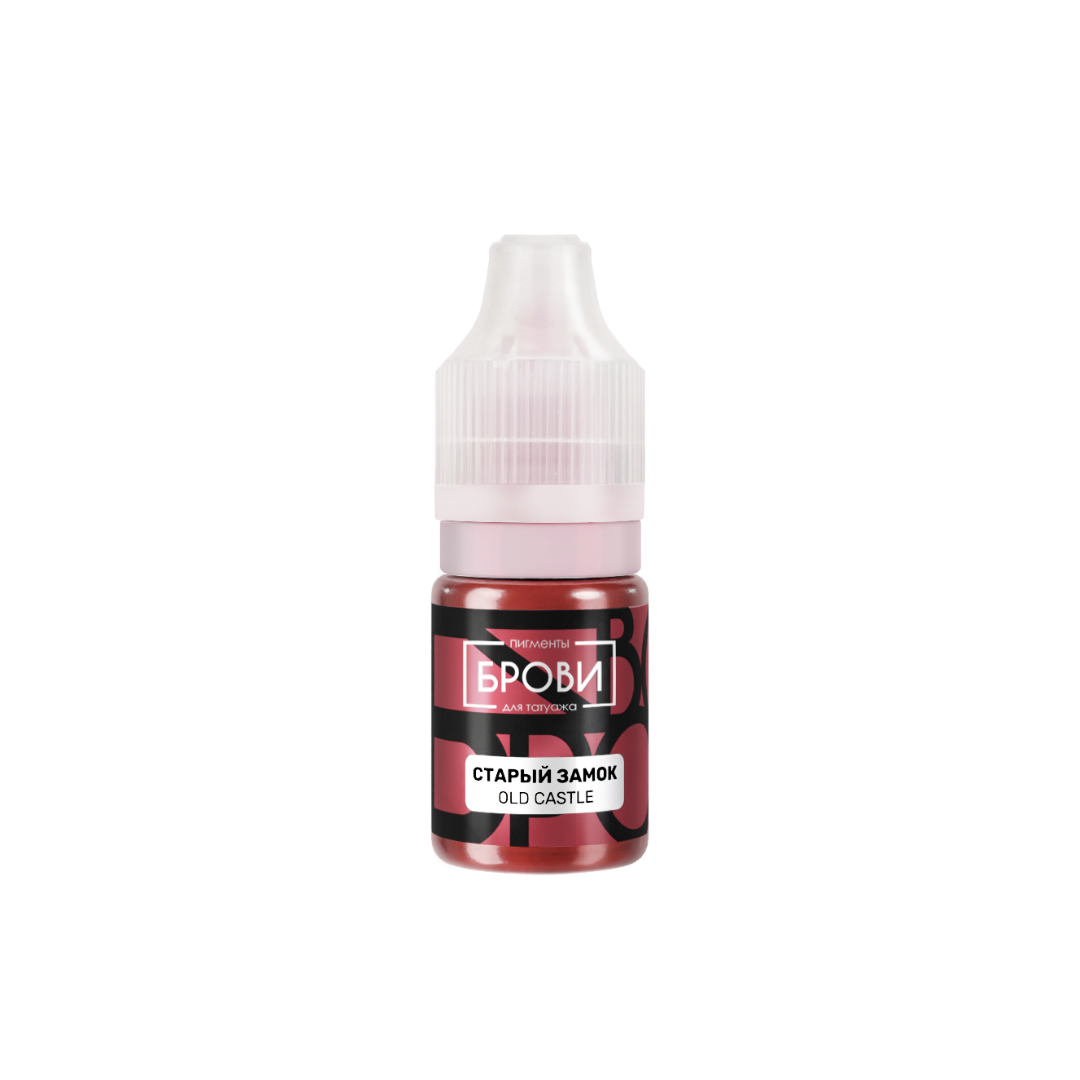
OLD CASTLE
Suitable for treatment of any type of lip skin. Ideal for dense colouring. By adding diluent you achieve a natural, realistic colour. The titanium dioxide content in the formula is minimized.
Colour - Warm Reddish Brown
Area - Lips
Retention - 60-80%
Type - Organic Hybrid
Colour Temperature - Warm
INGREDIENTS (CI NUMBERS)
Aqua, Glycerin, Hamamelis Virginiana Extract, Alcohol, CI 21095, CI 12477, CI 12466, CI 21110, CI 77491, CI 74160, CI 77891
ORGANIC OR INORGANIC?
Brovi Lip pigments are a hybrid range. This means that they consist of both organic and inorganic components. It is wrong to think that organic is good and non-organic is bad, or vice versa. Organic components are produced as a result of organic synthesis, and inorganic components are natural and mineral components that are produced as a result of their processing and enrichment. Hybrid pigments are contemporary types of pigments that most pigment companies manufacture nowadays.
ARE THERE IRON OXIDES IN BROVI PIGMENTS?
Since Brovi pigments are a hybrid (they have both organic and inorganic components ), iron oxides are present in them.
But don’t get scared of that! Iron oxides are absolutely safe and can be found in many other pigments, as well as in perfumes and some food. For example, yellow iron oxide is one of the ingredients in face foundations.
In Brovi pigments, we use red iron oxide CI7491.
IS THERE TITANIUM DIOXIDE IN BROVI PIGMENTS?
Titanium dioxide can be found in different amounts in all pigments on the market (except in black pigments, of course).
In Brovi pigments, titanium dioxide is found in minimal quantities (not more than 4.8%) and is in the last position in the formula.
Also, in Brovi pigments, titanium oxide particles are finely dispersed, which means that you can use them when working on faces (coarse particles cannot be used when working on face skin).

COCOA BEANS
A cool red-brown shade. Suitable for clients who prefer not to go beyond a natural look. Pure Cocoa Beans is not recommended for treatment of cool-toned lips—in such cases, the manufacturer recommends blending it with Salted Caramel or Old Castle in the 1:1 proportions. When implanted densely, it may stay quite dark after healing, so the manufacturer also recommends adding diluent.
Colour - Cool Reddish Brown
Area - Lips
Retention - 60-80%
Type - Organic Hybrid
Colour Temperature - Cool
INGREDIENTS (CI NUMBERS)
Aqua, Glycerin, Hamamelis Virginiana Extract, Alcohol, CI 77491, CI 12477, CI 21095, CI 12466, CI 21110, CI 74160, CI 77891
ORGANIC OR INORGANIC?
Brovi Lip pigments are a hybrid range. This means that they consist of both organic and inorganic components. It is wrong to think that organic is good and non-organic is bad, or vice versa. Organic components are produced as a result of organic synthesis, and inorganic components are natural and mineral components that are produced as a result of their processing and enrichment. Hybrid pigments are contemporary types of pigments that most pigment companies manufacture nowadays.
ARE THERE IRON OXIDES IN BROVI PIGMENTS?
Since Brovi pigments are a hybrid (they have both organic and inorganic components ), iron oxides are present in them.
But don’t get scared of that! Iron oxides are absolutely safe and can be found in many other pigments, as well as in perfumes and some food. For example, yellow iron oxide is one of the ingredients in face foundations.
In Brovi pigments, we use red iron oxide CI7491.
IS THERE TITANIUM DIOXIDE IN BROVI PIGMENTS?
Titanium dioxide can be found in different amounts in all pigments on the market (except in black pigments, of course).
In Brovi pigments, titanium dioxide is found in minimal quantities (not more than 4.8%) and is in the last position in the formula.
Also, in Brovi pigments, titanium oxide particles are finely dispersed, which means that you can use them when working on faces (coarse particles cannot be used when working on face skin.
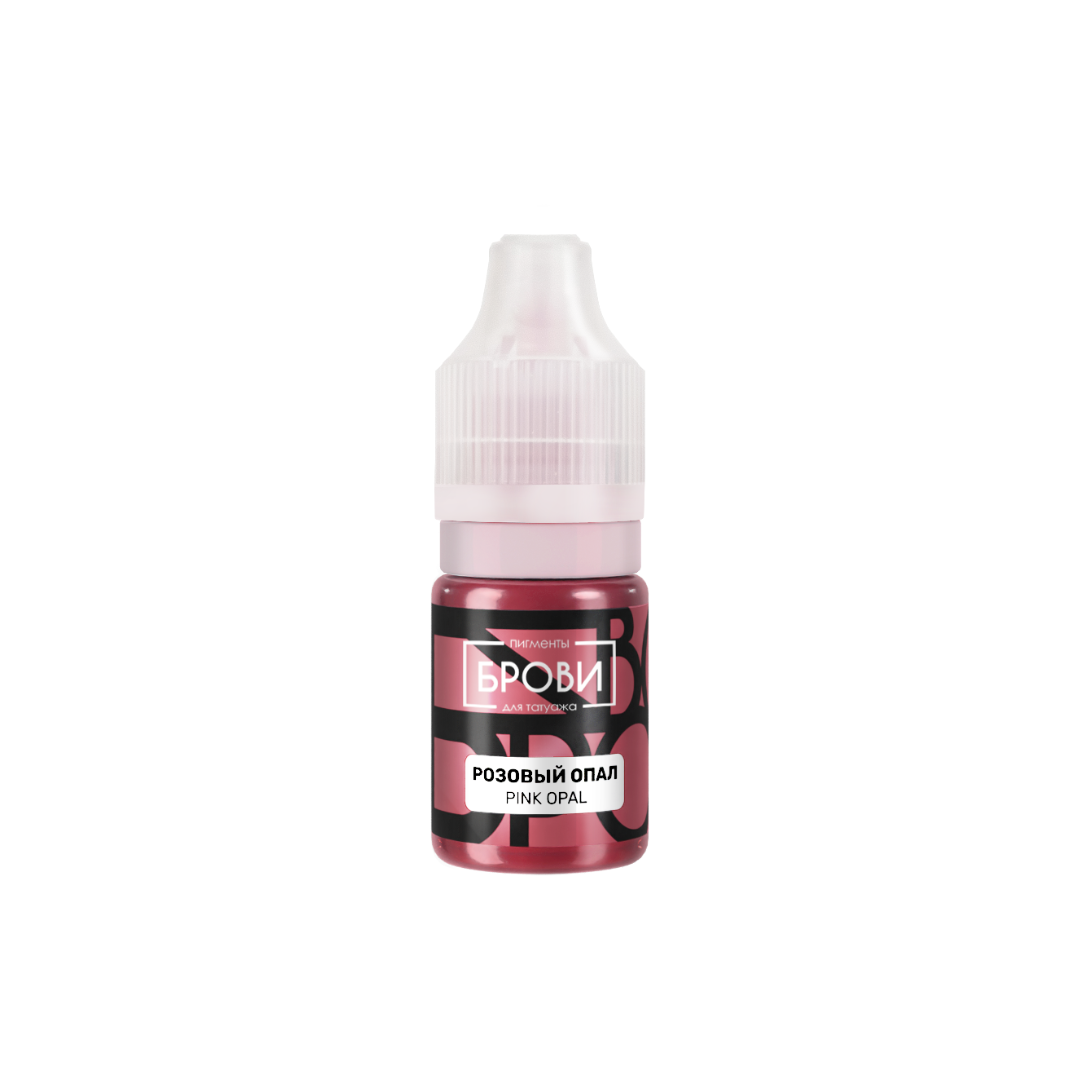
PINK OPAL
Neutral pink pigment, which provides colour retention of up to 85% after the first treatment. Great for treatment of ageing lip skin.
Pure Pink Opal is not recommended for treatment of cool-toned lips—in such cases, the manufacturer recommends blending it with Salted Caramel or Old Castle in the 1:1 proportions.
Can be used undiluted for dense filling. It is recommended to add a few drops of diluent to achieve aquarelle lips effect.
Colour - cool pink, neither dark nor light, neutral tone
Area - Lips
Retention - 60-80%
Type - Organic Hybrid
Colour Temperature - Cool
INGREDIENTS (CI NUMBERS)
Aqua, Glycerin, Hamamelis Virginiana Extract, Alcohol, CI 12475, CI 12466, CI 21095, CI 77891, CI 77491, CI 12477
ORGANIC OR INORGANIC?
Brovi Lip pigments are a hybrid range. This means that they consist of both organic and inorganic components. It is wrong to think that organic is good and non-organic is bad, or vice versa. Organic components are produced as a result of organic synthesis, and inorganic components are natural and mineral components that are produced as a result of their processing and enrichment. Hybrid pigments are contemporary types of pigments that most pigment companies manufacture nowadays.
ARE THERE IRON OXIDES IN BROVI PIGMENTS?
Since Brovi pigments are a hybrid (they have both organic and inorganic components ), iron oxides are present in them.
But don’t get scared of that! Iron oxides are absolutely safe and can be found in many other pigments, as well as in perfumes and some food. For example, yellow iron oxide is one of the ingredients in face foundations.
In Brovi pigments, we use red iron oxide CI7491.
IS THERE TITANIUM DIOXIDE IN BROVI PIGMENTS?
Titanium dioxide can be found in different amounts in all pigments on the market (except in black pigments, of course).
In Brovi pigments, titanium dioxide is found in minimal quantities (not more than 4.8%) and is in the last position in the formula.
Also, in Brovi pigments, titanium oxide particles are finely dispersed, which means that you can use them when working on faces (coarse particles cannot be used when working on face skin).

DUSTY ROSE
The most popular pink pigment for permanent lip makeup. The colour temperature is neutral. The titanium dioxide content in the formula is minimized. Ideal for customers who want you to highlight the natural beauty of their lips.
Pure Dusty Rose is not recommended for treatment of cool-toned lips—in such cases, the manufacturer recommends blending it with Salted Caramel in the 1:1 proportions.
Can be used undiluted for dense filling.
It is recommended to add a few drops of diluent to achieve aquarelle lips effect.
Colour - Soft Pink
Area - Lips
Retention - 60-80%
Type - Organic Hybrid
Colour Temperature - Neutral
INGREDIENTS (CI NUMBERS)
Aqua, Glycerin, Hamamelis Virginiana Extract, Alcohol, CI 77491, CI 12477, CI 21095, CI 12466, CI 21110, CI 74160, CI 77891
ORGANIC OR INORGANIC?
Brovi Lip pigments are a hybrid range. This means that they consist of both organic and inorganic components. It is wrong to think that organic is good and non-organic is bad, or vice versa. Organic components are produced as a result of organic synthesis, and inorganic components are natural and mineral components that are produced as a result of their processing and enrichment. Hybrid pigments are contemporary types of pigments that most pigment companies manufacture nowadays.
ARE THERE IRON OXIDES IN BROVI PIGMENTS?
Since Brovi pigments are a hybrid (they have both organic and inorganic components ), iron oxides are present in them.
But don’t get scared of that! Iron oxides are absolutely safe and can be found in many other pigments, as well as in perfumes and some food. For example, yellow iron oxide is one of the ingredients in face foundations.
In Brovi pigments, we use red iron oxide CI7491.
IS THERE TITANIUM DIOXIDE IN BROVI PIGMENTS?
Titanium dioxide can be found in different amounts in all pigments on the market (except in black pigments, of course).
In Brovi pigments, titanium dioxide is found in minimal quantities (not more than 4.8%) and is in the last position in the formula.
Also, in Brovi pigments, titanium oxide particles are finely dispersed, which means that you can use them when working on faces (coarse particles cannot be used when working on face skin).
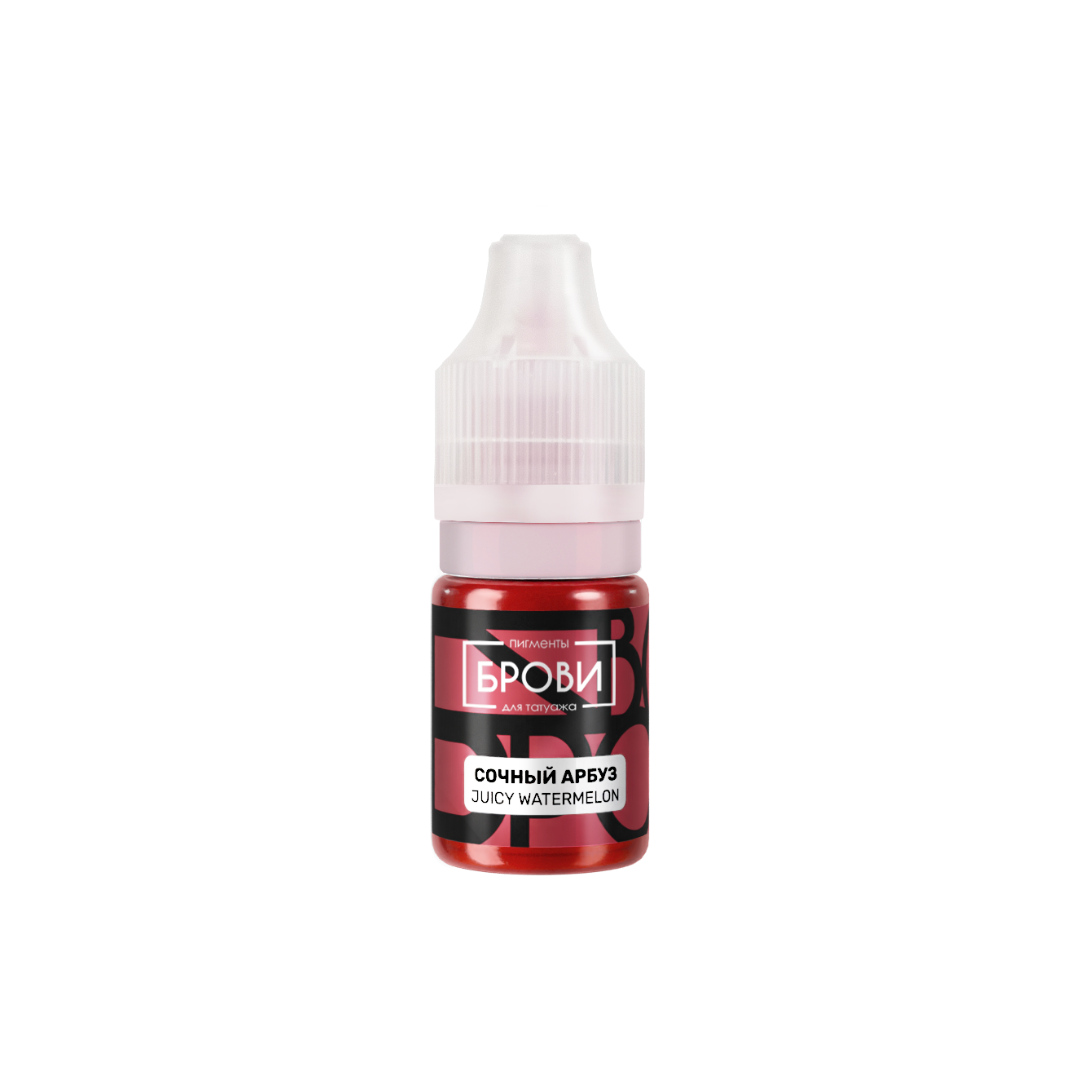
JUICY WATERMELON
Light, warm red pigment for permanent lip makeup. Designed to create the brightest looks. This colour is favoured by many PMU artists and clients for its huge colour retention after the first treatment. Can be used undiluted for dense filling. It is recommended to add a few drops of diluent to achieve aquarelle lips effect.
Colour - Light Warm Red
Area - Lips
Retention - 60-80%
Type - Organic Hybrid
Colour Temperature - Warm
INGREDIENTS (CI NUMBERS)
Aqua, Glycerin, Hamamelis Virginiana Extract, Alcohol, CI 12466, CI 21095, CI 77891
ORGANIC OR INORGANIC?
Brovi Lip pigments are a hybrid range. This means that they consist of both organic and inorganic components. It is wrong to think that organic is good and non-organic is bad, or vice versa. Organic components are produced as a result of organic synthesis, and inorganic components are natural and mineral components that are produced as a result of their processing and enrichment. Hybrid pigments are contemporary types of pigments that most pigment companies manufacture nowadays.
ARE THERE IRON OXIDES IN BROVI PIGMENTS?
Since Brovi pigments are a hybrid (they have both organic and inorganic components ), iron oxides are present in them.
But don’t get scared of that! Iron oxides are absolutely safe and can be found in many other pigments, as well as in perfumes and some food. For example, yellow iron oxide is one of the ingredients in face foundations.
In Brovi pigments, we use red iron oxide CI7491.
IS THERE TITANIUM DIOXIDE IN BROVI PIGMENTS?
Titanium dioxide can be found in different amounts in all pigments on the market (except in black pigments, of course).
In Brovi pigments, titanium dioxide is found in minimal quantities (not more than 4.8%) and is in the last position in the formula.
Also, in Brovi pigments, titanium oxide particles are finely dispersed, which means that you can use them when working on faces (coarse particles cannot be used when working on face skin)

RED STRAWBERRY
Juicy, warm red pigment. One of the "boldest" colours in our line of permanent lip makeup pigments. It can be used undiluted, whether you are working on cool or warm lips. For aquarelle lips effect, the manufacturer recommends adding diluent.
Colour - Warm Red
Area - Lips
Retention - 60-80%
Type - Organic Hybrid
Colour Temperature - Warm
INGREDIENTS (CI NUMBERS)
Aqua, Glycerin, Hamamelis Virginiana Extract, Alcohol, CI 21095, CI 12477, CI 12475, CI 12466, CI 77891
ORGANIC OR INORGANIC?
Brovi Lip pigments are a hybrid range. This means that they consist of both organic and inorganic components. It is wrong to think that organic is good and non-organic is bad, or vice versa. Organic components are produced as a result of organic synthesis, and inorganic components are natural and mineral components that are produced as a result of their processing and enrichment. Hybrid pigments are contemporary types of pigments that most pigment companies manufacture nowadays.
ARE THERE IRON OXIDES IN BROVI PIGMENTS?
Since Brovi pigments are a hybrid (they have both organic and inorganic components ), iron oxides are present in them.
But don’t get scared of that! Iron oxides are absolutely safe and can be found in many other pigments, as well as in perfumes and some food. For example, yellow iron oxide is one of the ingredients in face foundations.
In Brovi pigments, we use red iron oxide CI7491.
IS THERE TITANIUM DIOXIDE IN BROVI PIGMENTS?
Titanium dioxide can be found in different amounts in all pigments on the market (except in black pigments, of course).
In Brovi pigments, titanium dioxide is found in minimal quantities (not more than 4.8%) and is in the last position in the formula.
Also, in Brovi pigments, titanium oxide particles are finely dispersed, which means that you can use them when working on faces (coarse particles cannot be used when working on face skin).
BROVI LIPS KOREA SET - 5ml

MORE CORAL
A warm, almost caramel shade suitable for use on any lips. Can be used as a base for future decorative shades.
INGREDIENTS (CI NUMBERS)
Aqua, Rosin, Glycerin, Hamamelis Virginiana Extract, Alcohol, CI 12477, CI 77891, CI 21095, CI 21110, CI 12475
ORGANIC OR INORGANIC?
Brovi Lip pigments are a hybrid range. This means that they consist of both organic and inorganic components. It is wrong to think that organic is good and non-organic is bad, or vice versa. Organic components are produced as a result of organic synthesis, and inorganic components are natural and mineral components that are produced as a result of their processing and enrichment. Hybrid pigments are contemporary types of pigments that most pigment companies manufacture nowadays.
ARE THERE IRON OXIDES IN BROVI PIGMENTS?
Since Brovi pigments are a hybrid (they have both organic and inorganic components ), iron oxides are present in them.
But don’t get scared of that! Iron oxides are absolutely safe and can be found in many other pigments, as well as in perfumes and some food. For example, yellow iron oxide is one of the ingredients in face foundations.
In Brovi pigments, we use red iron oxide CI7491.
IS THERE TITANIUM DIOXIDE IN BROVI PIGMENTS?
Titanium dioxide can be found in different amounts in all pigments on the market (except in black pigments, of course).
In Brovi pigments, titanium dioxide is found in minimal quantities (not more than 4.8%) and is in the last position in the formula.
Also, in Brovi pigments, titanium oxide particles are finely dispersed, which means that you can use them when working on faces (coarse particles cannot be used when working on face skin).

ORANGE SUNSET
A bright, slightly bleached orange corrector. Designed for the initial filling of cool-toned lips. Fill in the lips with the corrector before applying a decorative shade
INGREDIENTS (CI NUMBERS)
Aqua, Rosin, Glycerin, Hamamelis Virginiana Extract, Alcohol, CI 21110, CI 21095, CI 77891, CI 12477
ORGANIC OR INORGANIC?
Brovi Lip pigments are a hybrid range. This means that they consist of both organic and inorganic components. It is wrong to think that organic is good and non-organic is bad, or vice versa. Organic components are produced as a result of organic synthesis, and inorganic components are natural and mineral components that are produced as a result of their processing and enrichment. Hybrid pigments are contemporary types of pigments that most pigment companies manufacture nowadays.
ARE THERE IRON OXIDES IN BROVI PIGMENTS?
Since Brovi pigments are a hybrid (they have both organic and inorganic components ), iron oxides are present in them.
But don’t get scared of that! Iron oxides are absolutely safe and can be found in many other pigments, as well as in perfumes and some food. For example, yellow iron oxide is one of the ingredients in face foundations.
In Brovi pigments, we use red iron oxide CI7491.
IS THERE TITANIUM DIOXIDE IN BROVI PIGMENTS?
Titanium dioxide can be found in different amounts in all pigments on the market (except in black pigments, of course).
In Brovi pigments, titanium dioxide is found in minimal quantities (not more than 4.8%) and is in the last position in the formula.
Also, in Brovi pigments, titanium oxide particles are finely dispersed, which means that you can use them when working on faces (coarse particles cannot be used when working on face skin).
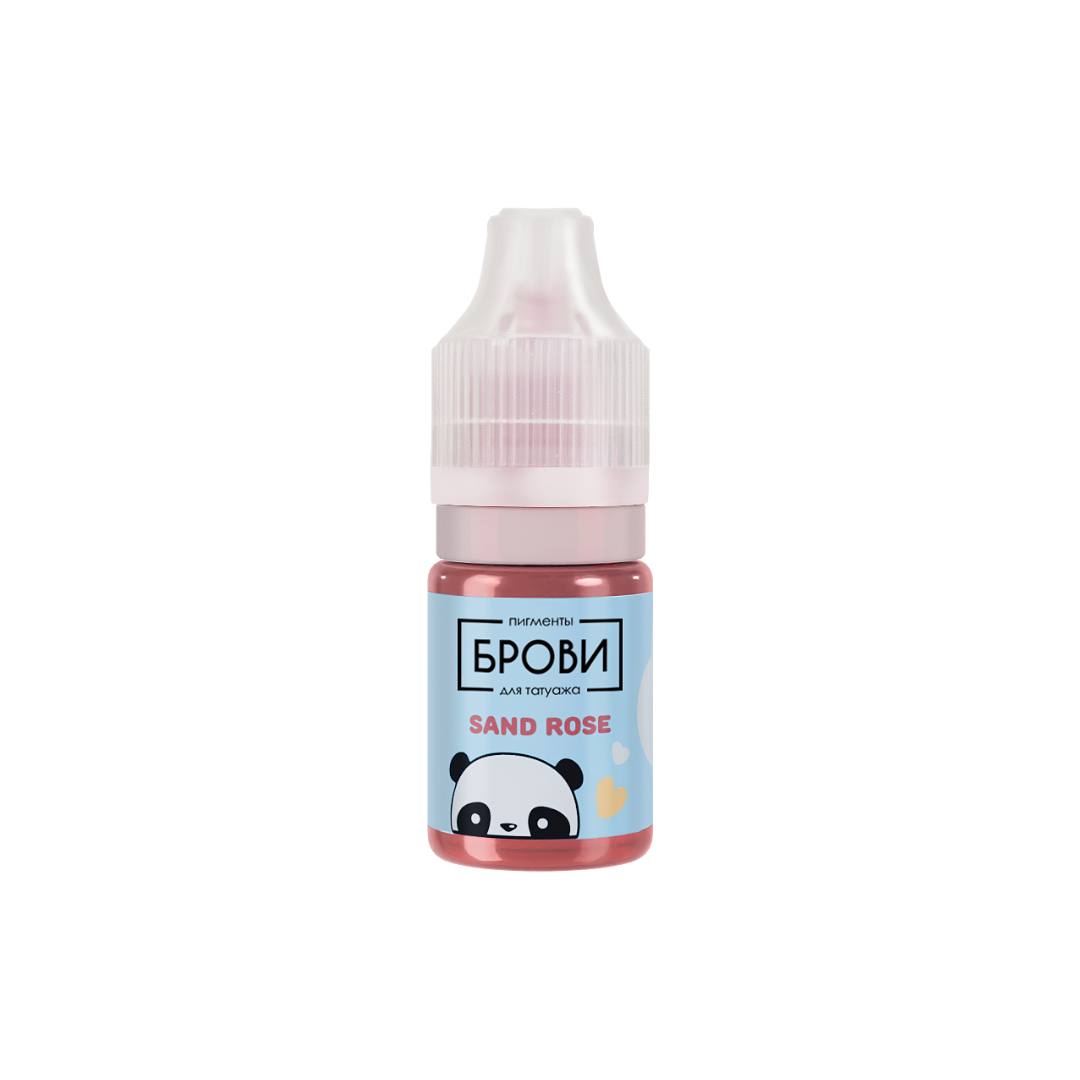
SAND ROSE
Soft pink ink with a neutral colour temperature is designed for clients who want to enhance the natural beauty of their lips. It is not recommended to use this ink undiluted on cool lips. For a watercolour effect, you can add Orange Sunset corrector or a drop of More Coral. It is recommended to use a diluent.
INGREDIENTS (CI NUMBERS)
Aqua, Rosin, Glycerin, Hamamelis Virginiana Extract, Alcohol, CI 77891, CI 77491, CI 210951, CI 12477
ORGANIC OR INORGANIC?
Brovi Lip pigments are a hybrid range. This means that they consist of both organic and inorganic components. It is wrong to think that organic is good and non-organic is bad, or vice versa. Organic components are produced as a result of organic synthesis, and inorganic components are natural and mineral components that are produced as a result of their processing and enrichment. Hybrid pigments are contemporary types of pigments that most pigment companies manufacture nowadays.
ARE THERE IRON OXIDES IN BROVI PIGMENTS?
Since Brovi pigments are a hybrid (they have both organic and inorganic components ), iron oxides are present in them.
But don’t get scared of that! Iron oxides are absolutely safe and can be found in many other pigments, as well as in perfumes and some food. For example, yellow iron oxide is one of the ingredients in face foundations.
In Brovi pigments, we use red iron oxide CI7491.
IS THERE TITANIUM DIOXIDE IN BROVI PIGMENTS?
Titanium dioxide can be found in different amounts in all pigments on the market (except in black pigments, of course).
In Brovi pigments, titanium dioxide is found in minimal quantities (not more than 4.8%) and is in the last position in the formula.
Also, in Brovi pigments, titanium oxide particles are finely dispersed, which means that you can use them when working on faces (coarse particles cannot be used when working on face skin).

PINK DAHILA
Neutral pink for subtle yet natural coverage. Just like Sand Rose, not recommended to use undiluted on cool-toned lips.
INGREDIENTS (CI NUMBERS)
Aqua, Rosin, Glycerin, Hamamelis Virginiana Extract, Alcohol, CI 77891, CI 12477, CI 74160
ORGANIC OR INORGANIC?
Brovi Lip pigments are a hybrid range. This means that they consist of both organic and inorganic components. It is wrong to think that organic is good and non-organic is bad, or vice versa. Organic components are produced as a result of organic synthesis, and inorganic components are natural and mineral components that are produced as a result of their processing and enrichment. Hybrid pigments are contemporary types of pigments that most pigment companies manufacture nowadays.
ARE THERE IRON OXIDES IN BROVI PIGMENTS?
Since Brovi pigments are a hybrid (they have both organic and inorganic components ), iron oxides are present in them.
But don’t get scared of that! Iron oxides are absolutely safe and can be found in many other pigments, as well as in perfumes and some food. For example, yellow iron oxide is one of the ingredients in face foundations.
In Brovi pigments, we use red iron oxide CI7491.
IS THERE TITANIUM DIOXIDE IN BROVI PIGMENTS?
Titanium dioxide can be found in different amounts in all pigments on the market (except in black pigments, of course).
In Brovi pigments, titanium dioxide is found in minimal quantities (not more than 4.8%) and is in the last position in the formula.
Also, in Brovi pigments, titanium oxide particles are finely dispersed, which means that you can use them when working on faces (coarse particles cannot be used when working on face skin).
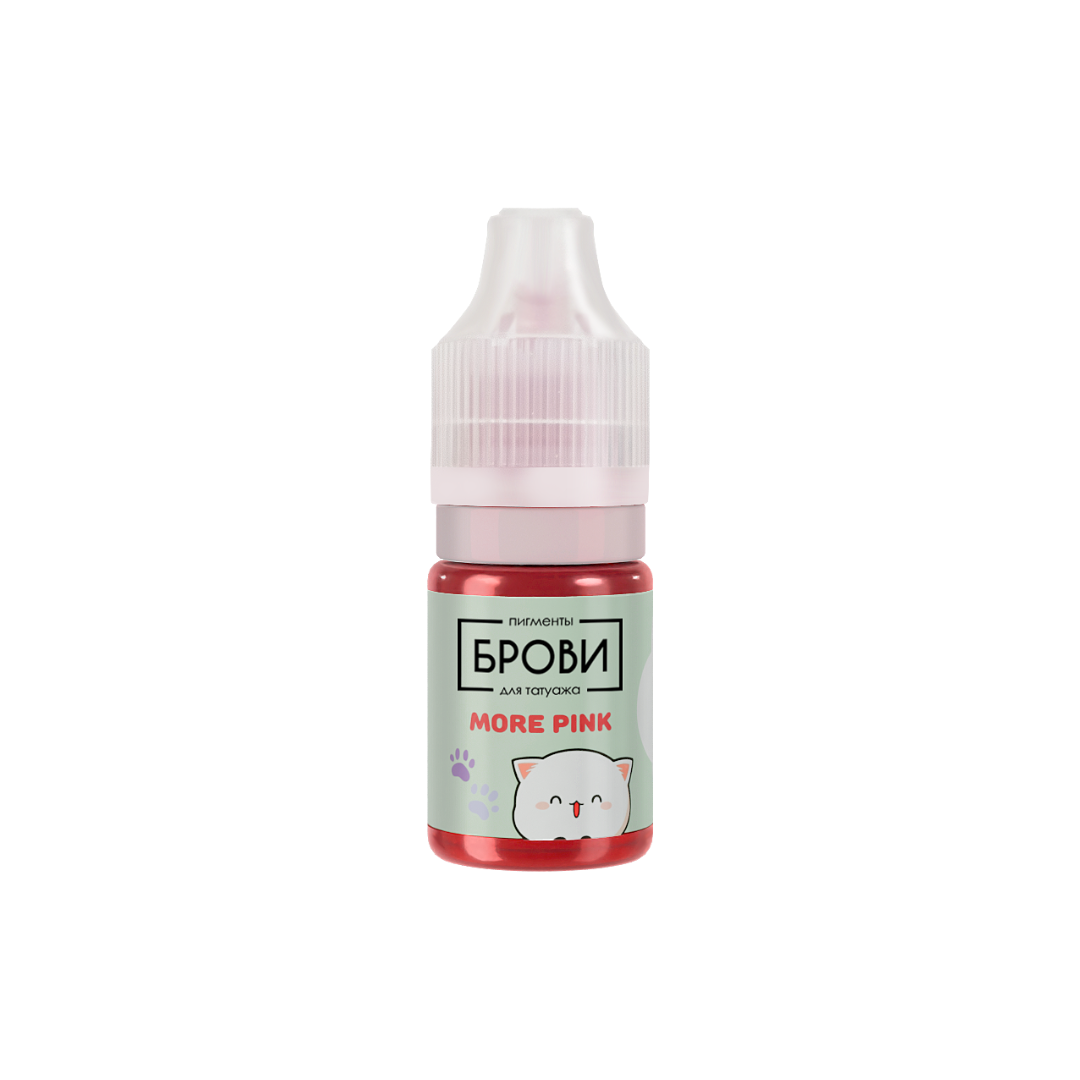
MORE PINK
A warm peach-pink ink for giving lips a fresh effect. Suitable for use on any lips.
INGREDIENTS (CI NUMBERS)
Aqua, Rosin, Glycerin, Hamamelis Virginiana Extract, Alcohol, CI 77891, CI 12477, CI 21110, CI 12466
ORGANIC OR INORGANIC?
Brovi Lip pigments are a hybrid range. This means that they consist of both organic and inorganic components. It is wrong to think that organic is good and non-organic is bad, or vice versa. Organic components are produced as a result of organic synthesis, and inorganic components are natural and mineral components that are produced as a result of their processing and enrichment. Hybrid pigments are contemporary types of pigments that most pigment companies manufacture nowadays.
ARE THERE IRON OXIDES IN BROVI PIGMENTS?
Since Brovi pigments are a hybrid (they have both organic and inorganic components ), iron oxides are present in them.
But don’t get scared of that! Iron oxides are absolutely safe and can be found in many other pigments, as well as in perfumes and some food. For example, yellow iron oxide is one of the ingredients in face foundations.
In Brovi pigments, we use red iron oxide CI7491.
IS THERE TITANIUM DIOXIDE IN BROVI PIGMENTS?
Titanium dioxide can be found in different amounts in all pigments on the market (except in black pigments, of course).
In Brovi pigments, titanium dioxide is found in minimal quantities (not more than 4.8%) and is in the last position in the formula.
Also, in Brovi pigments, titanium oxide particles are finely dispersed, which means that you can use them when working on faces (coarse particles cannot be used when working on face skin).
ALCOHOLIC PIGMENT COLLECTION

COSMOPOLITAN
Anna Taranko Alcoholic Set — for bold decisions and vivid ideas.
The Alcoholic Set comprises three juicy, acidic colours.
It is recommended to implant these alcohol-based colours superficially and not densely.
Cosmopolitan
Cool bright pink
Can be used even on cool lips. Due to its brightness, it will look beautiful on any skin type. Use as the main colour in the aquarelle technique or as an additional layer (one pass over any colour from the LIPS series for a brighter pink colour.
Cosmopolitan
Cool bright pink
Can be used even on cool lips. Due to its brightness, it will look beautiful on any skin type. Use as the main colour in the aquarelle technique or as an additional layer (one pass over any colour from the LIPS series for a brighter pink colour.
Colour temperature: warm, cold
Retention rate: 60-80%
Mixes: All alcohol-based colours can be mixed.
Recommended proportions:
1:1 Mai Tai + Cosmopolitan — for a neutral colour
1:1 Cosmopolitan + Moulin Rouge — for something even more saturated
Application method: The maximum number of passes: 2.
Avoid securing the lip contours excessively and going beyond the natural lip contour, to avoid excessively bright healed results.
Application of dilutor: Always dilute the ink with the proprietary Brovi Dilutor 1 drop of diluent to 5 drops of ink.
Do not dilute the ink with water!
Volume: 5ml
Ingredients:
Cosmopolitan: Aqua, Rosin, Glycerin, Hamamelis Virginiana Extract, Alcohol, CI 77891, CI 12477, CI 73915
ORGANIC OR INORGANIC?
Brovi Lip pigments are a hybrid range. This means that they consist of both organic and inorganic components. It is wrong to think that organic is good and non-organic is bad, or vice versa. Organic components are produced as a result of organic synthesis, and inorganic components are natural and mineral components that are produced as a result of their processing and enrichment. Hybrid pigments are contemporary types of pigments that most pigment companies manufacture nowadays.
ARE THERE IRON OXIDES IN BROVI PIGMENTS?
Since Brovi pigments are a hybrid (they have both organic and inorganic components ), iron oxides are present in them.
But don’t get scared of that! Iron oxides are absolutely safe and can be found in many other pigments, as well as in perfumes and some food. For example, yellow iron oxide is one of the ingredients in face foundations.
In Brovi pigments, we use red iron oxide CI7491.
IS THERE TITANIUM DIOXIDE IN BROVI PIGMENTS?
Titanium dioxide can be found in different amounts in all pigments on the market (except in black pigments, of course).
In Brovi pigments, titanium dioxide is found in minimal quantities (not more than 4.8%) and is in the last position in the formula.
Also, in Brovi pigments, titanium oxide particles are finely dispersed, which means that you can use them when working on faces (coarse particles cannot be used when working on face skin).
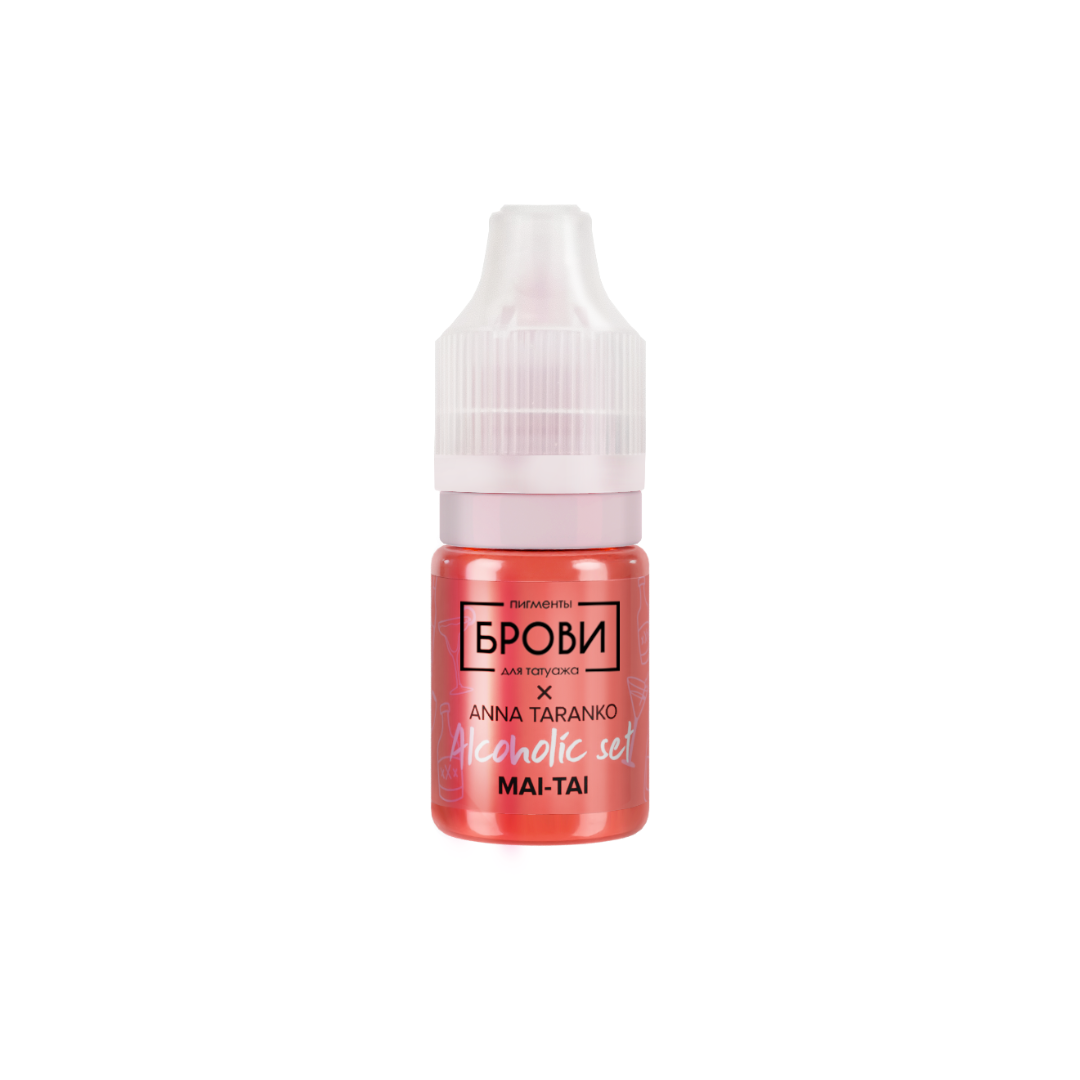
MAI TAI
Anna Taranko Alcoholic Set — for bold decisions and vivid ideas.
The Alcoholic Set comprises three juicy, acidic colours.
It is recommended to implant these alcohol-based colours superficially and not densely.
Cosmopolitan
Cool bright pink
Can be used even on cool lips. Due to its brightness, it will look beautiful on any skin type. Use as the main colour in the aquarelle technique or as an additional layer (one pass over any colour from the LIPS series for a brighter pink colour.
Mai Tai
Warm, acidic, peachy pink
Use as the main colour in the aquarelle technique or as an additional colour to add freshness to the lips.
Colour temperature: warm, cold
Retention rate: 60-80%
Mixes: All alcohol-based colours can be mixed.
Recommended proportions:
1:1Mai Tai+Cosmopolitan— for a neutral colour
1:1Cosmopolitan+Moulin Rouge— for something even more saturated
Application method: The maximum number of passes:2.
Avoid securing the lip contours excessively and going beyond the natural lip contour, to avoid excessively bright healed results.
Application of dilutor: Always dilute the ink with the proprietary Brovi Dilutor 1 drop of diluent to 5 drops of ink.
Do not dilute the ink with water!
Volume: 5ml
Ingredients:
Mai Tai:Aqua, Rosin, Glycerin, Hamamelis Virginiana Extract, Alcohol, CI 12477, CI 77891, CI 73915, CI 21095, CI 21110
ORGANIC OR INORGANIC?
Brovi Lip pigments are a hybrid range. This means that they consist of both organic and inorganic components. It is wrong to think that organic is good and non-organic is bad, or vice versa. Organic components are produced as a result of organic synthesis, and inorganic components are natural and mineral components that are produced as a result of their processing and enrichment. Hybrid pigments are contemporary types of pigments that most pigment companies manufacture nowadays.
ARE THERE IRON OXIDES IN BROVI PIGMENTS?
Since Brovi pigments are a hybrid (they have both organic and inorganic components ), iron oxides are present in them.
But don’t get scared of that! Iron oxides are absolutely safe and can be found in many other pigments, as well as in perfumes and some food. For example, yellow iron oxide is one of the ingredients in face foundations.
In Brovi pigments, we use red iron oxide CI7491.
IS THERE TITANIUM DIOXIDE IN BROVI PIGMENTS?
Titanium dioxide can be found in different amounts in all pigments on the market (except in black pigments, of course).
In Brovi pigments, titanium dioxide is found in minimal quantities (not more than 4.8%) and is in the last position in the formula.
Also, in Brovi pigments, titanium oxide particles are finely dispersed, which means that you can use them when working on faces (coarse particles cannot be used when working on face skin).
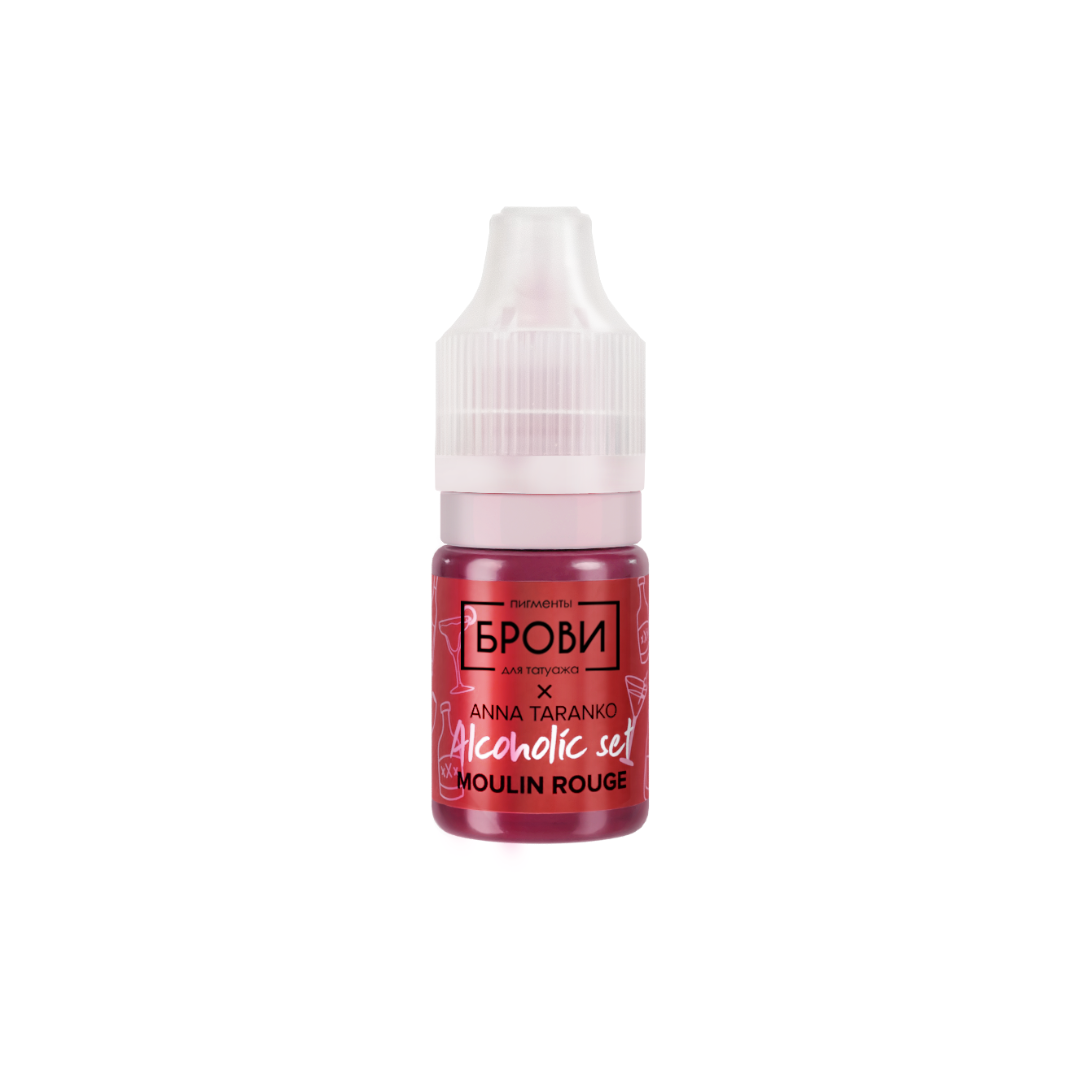
MOULIN ROUGE
Anna Taranko Alcoholic Set — for bold decisions and vivid ideas.
The Alcoholic Set comprises three juicy, acidic colours.
It is recommended to implant these alcohol-based colours superficially and not densely.
Cosmopolitan
Cool bright pink
Can be used even on cool lips. Due to its brightness, it will look beautiful on any skin type. Use as the main colour in the aquarelle technique or as an additional layer (one pass over any colour from the LIPS series for a brighter pink colour.
Moulin Rouge
Cool dark cherry
Perfect for creating an ombre effect. After applying any colour from the LIPS series, we recommend applying Moulin Rouge densely closer to the mucous membrane of the lips to emphasize it. This colour can also be used undiluted.
Colour temperature: warm, cold
Retention rate: 60-80%
Mixes: All alcohol-based colours can be mixed.
Recommended proportions:
1:1 Mai Tai + Cosmopolitan — for a neutral colour
1:1 Cosmopolitan + Moulin Rouge — for something even more saturated
Application method: The maximum number of passes: 2.
Avoid securing the lip contours excessively and going beyond the natural lip contour, to avoid excessively bright healed results.
Application of dilutor: Always dilute the ink with the proprietary Brovi Dilutor 1 drop of diluent to 5 drops of ink.
Do not dilute the ink with water!
Volume: 5ml
Ingredients:
Moulin Rouge: Aqua, Rosin, Glycerin, Hamamelis Virginiana Extract, Alcohol, CI 12466, CI 12477, CI 21110, CI 77891, CI 77266
ORGANIC OR INORGANIC?
Brovi Lip pigments are a hybrid range. This means that they consist of both organic and inorganic components. It is wrong to think that organic is good and non-organic is bad, or vice versa. Organic components are produced as a result of organic synthesis, and inorganic components are natural and mineral components that are produced as a result of their processing and enrichment. Hybrid pigments are contemporary types of pigments that most pigment companies manufacture nowadays.
ARE THERE IRON OXIDES IN BROVI PIGMENTS?
Since Brovi pigments are a hybrid (they have both organic and inorganic components ), iron oxides are present in them.
But don’t get scared of that! Iron oxides are absolutely safe and can be found in many other pigments, as well as in perfumes and some food. For example, yellow iron oxide is one of the ingredients in face foundations.
In Brovi pigments, we use red iron oxide CI7491.
IS THERE TITANIUM DIOXIDE IN BROVI PIGMENTS?
Titanium dioxide can be found in different amounts in all pigments on the market (except in black pigments, of course).
In Brovi pigments, titanium dioxide is found in minimal quantities (not more than 4.8%) and is in the last position in the formula.
Also, in Brovi pigments, titanium oxide particles are finely dispersed, which means that you can use them when working on faces (coarse particles cannot be used when working on face skin).
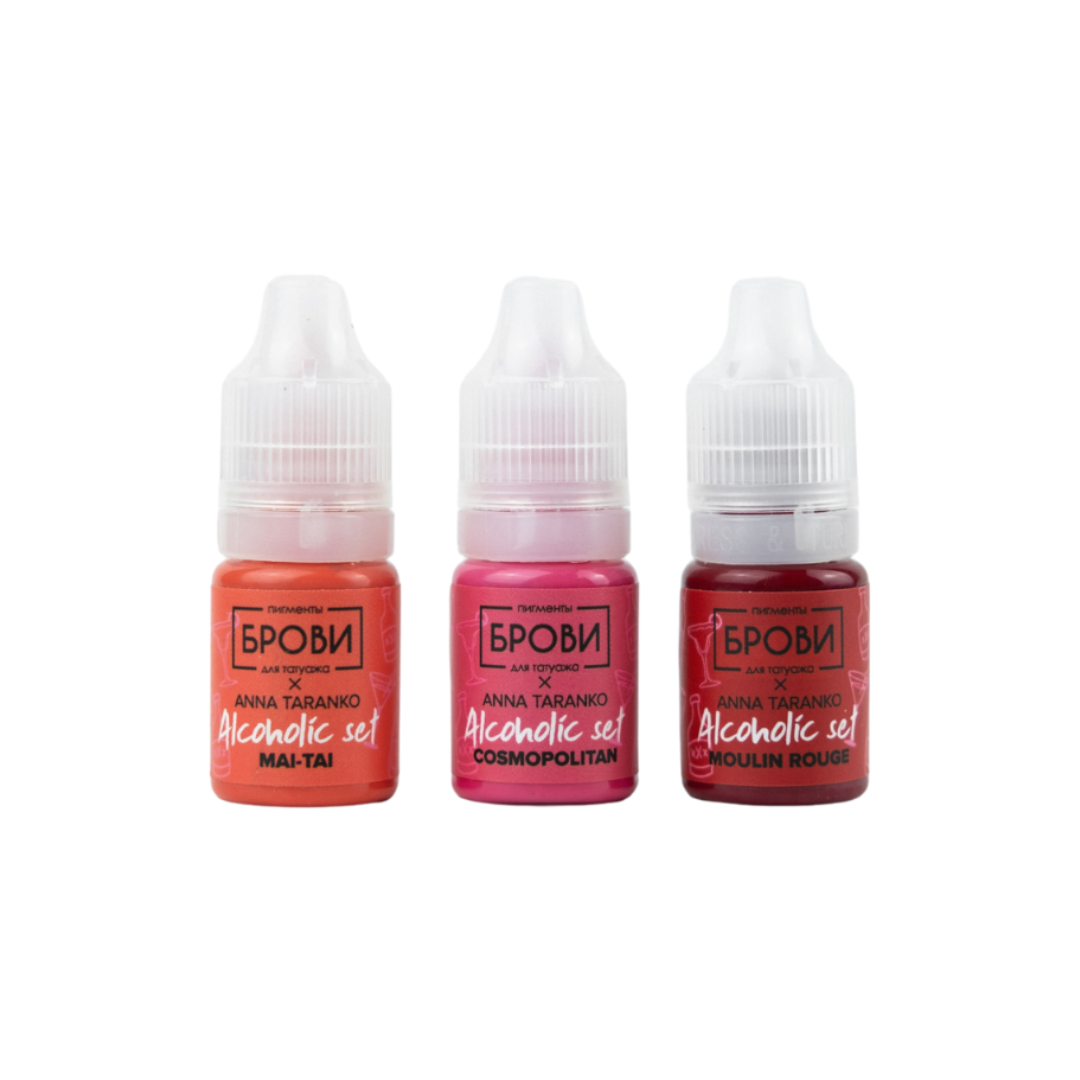
DESCRIPTION
Anna Taranko Alcoholic Set — for bold decisions and vivid ideas.
The Alcoholic Set comprises three juicy, acidic colours.
It is recommended to implant these alcohol-based colours superficially and not densely.
Cosmopolitan
Cool bright pink
Can be used even on cool lips. Due to its brightness, it will look beautiful on any skin type. Use as the main colour in the aquarelle technique or as an additional layer (one pass over any colour from the LIPS series for a brighter pink colour.
Mai Tai
Warm, acidic, peachy pink
Use as the main colour in the aquarelle technique or as an additional colour to add freshness to the lips.
Moulin Rouge
Cool dark cherry
Perfect for creating an ombre effect. After applying any colour from the LIPS series, we recommend applying Moulin Rouge densely closer to the mucous membrane of the lips to emphasize it. This colour can also be used undiluted.
Colour: 3 colours
Colour temperature: warm, cold
Retention rate: 60-80%
Mixes: All alcohol-based colours can be mixed.
Recommended proportions:
1:1 Mai Tai + Cosmopolitan — for a neutral colour
1:1 Cosmopolitan + Moulin Rouge — for something even more saturated
Application method: The maximum number of passes: 2.
Avoid securing the lip contours excessively and going beyond the natural lip contour, to avoid excessively bright healed results.
Application of dilutor: Always dilute the ink with the proprietary Brovi Dilutor 1 drop of diluent to 5 drops of ink.
Do not dilute the ink with water!
Volume: 3 x 5ml
Ingredients:
Mai Tai: Aqua, Rosin, Glycerin, Hamamelis Virginiana Extract, Alcohol, CI 12477, CI 77891, CI 73915, CI 21095, CI 21110
Cosmopolitan: Aqua, Rosin, Glycerin, Hamamelis Virginiana Extract, Alcohol, CI 77891, CI 12477, CI 73915
Moulin Rouge: Aqua, Rosin, Glycerin, Hamamelis Virginiana Extract, Alcohol, CI 12466, CI 12477, CI 21110, CI 77891, CI 77266
ORGANIC OR INORGANIC?
Organic or inorganic?
Brovi pigments are a hybrid. This means that they consist of both organic and inorganic components. It is wrong to think that organic is good and non-organic is bad, or vice versa. Organic components are produced as a result of organic synthesis, and inorganic components are natural and mineral components that are produced as a result of their processing and enrichment. Hybrid pigments are contemporary types of pigments that most of the pigment companies manufacture nowadays.
ARE THERE IRON OXIDES IN BROVI PIGMENTS?
Are there iron oxides in Brovi pigments?
Since Brovi pigments are a hybrid (they have both organic and inorganic components ), iron oxides are present in them.
But don’t get scared of that! Iron oxides are absolutely safe and can be found in many other pigments, as well as in perfumes and some food. For example, yellow iron oxide is one of the ingredients in face foundations.
In Brovi pigments, we use red iron oxide CI7491.
IS THERE TITANIUM DIOXIDE IN BROVI PIGMENTS?
Is there titanium dioxide in Brovi pigments?
Titanium dioxide can be found in different amounts in all pigments on the market (except in black pigments, of course).
In Brovi pigments, titanium dioxide is found in minimal quantities (not more than 4.8%) and is in the last position in the formula.
Also, in Brovi pigments, titanium oxide particles are finely dispersed, which means that you can use them when working on faces (coarse particles cannot be used when working on face skin).
BROVI ONE INORGANIC PIGMENTS - 10ml

ULTRA BLACK (EYELINER)
Fine-particle black ink for working in the eyelid and lash line area. Suitable for working with all Fitzpatrick phototypes.
Should be used pure. Contains iron oxide red (CI#77492) in an extremely low concentration to prevent the ink from turning brown, and also for the iron oxide red to act as a corrector. Thanks to this additive, the healed result will always be black, and the low concentration of inorganic red pigment will not make the color cooler over time.
No diluent is required for filling the lash line or for making a clear eyeliner. For the eyelid shading, the manufacturer recommends adding 1 drop of diluent to 5 drops of ink.
Area - Eyeliner
Retention - 90%
Type - Inorganic
Base - Black
INGREDIENTS (CI NUMBERS)
Aqua, Glycerin, Isopropyl alcohol, Benzyl alcohol, copolymer compounds, CI#77266 (Pigment Black 7), CI#77491 (Pigment Red 102)
BROVI ONE INORGANIC
Inorganic BROVI ONE contains 50% less black pigment than other inks.
A unique homogenization (mixing) technology allows us to get stable brown ink with significantly less use of carbon black (Carbon Black CI#77266).
Modern, purified from benzo[a]pyrene and safe Carbon Black (CI#77266 — Pigment Black 7) and pure, micronized iron oxides are used in production.
The cosmetic base is assembled on purified water (without salts and impurities) with the addition of isopropyl and benzyl alcohols — in such a mixture no bacteria can survive. These alcohols increase the sterility of the ink, prevent inflammatory processes in the skin and make it extremely safe for the human body.
The ink does not dry out. This property is provided by copolymer compounds. Suspension property modifiers ensure ease of working with ink and improve the penetration of pigment particles into the skin.
The ink is easy to wash off the skin and easy to implant into the skin. It does not cause excessive irritation. The sedimentation process of pigment particles (their settling to the bottom of the bottle) is minimized, but not excluded. After a light shake of the bottle, the ink is normalized and is ready to be used.

COOL DARK BROWN
A rich dark ink with a cool colour temperature, based on yellow. Recommended for working with Fitzpatrick V.
Area - Eyebrows
Retention - 75%
Type - Inorganic
Base - Yellow
Colour Temperature - Cold
INGREDIENTS (CI NUMBERS)
Aqua, Glycerin, Isopropyl alcohol, Benzyl alcohol, copolymer compounds, CI#77491 (Pigment Red 102), CI#77266 (Pigment Black 7), CI#77492 (Pigment Yellow 43)
BROVI ONE INORGANIC
Inorganic BROVI ONE contains 50% less black pigment than other inks.
A unique homogenization (mixing) technology allows us to get stable brown ink with significantly less use of carbon black (Carbon Black CI#77266).
Modern, purified from benzo[a]pyrene and safe Carbon Black (CI#77266 — Pigment Black 7) and pure, micronized iron oxides are used in production.
The cosmetic base is assembled on purified water (without salts and impurities) with the addition of isopropyl and benzyl alcohols — in such a mixture no bacteria can survive. These alcohols increase the sterility of the ink, prevent inflammatory processes in the skin and make it extremely safe for the human body.
The ink does not dry out. This property is provided by copolymer compounds. Suspension property modifiers ensure ease of working with ink and improve the penetration of pigment particles into the skin.
The ink is easy to wash off the skin and easy to implant into the skin. It does not cause excessive irritation. The sedimentation process of pigment particles (their settling to the bottom of the bottle) is minimized, but not excluded. After a light shake of the bottle, the ink is normalized and is ready to be used.

DARK BROWN
Universal brown ink with a neutral colour temperature. Suitable for working with Fitzpatrick III.
Area - Eyebrows
Retention - 75%
Type - Inorganic
Base - Yellow
Colour Temperature - Neutral
INGREDIENTS (CI NUMBERS)
Aqua, Glycerin, Isopropyl alcohol, Benzyl alcohol, copolymer compounds, CI#77491 (Pigment Red 102), CI#77492 (Pigment Yellow 43), CI#77266 (Pigment Black 7)
BROVI ONE INORGANIC
Inorganic BROVI ONE contains 50% less black pigment than other inks.
A unique homogenization (mixing) technology allows us to get stable brown ink with significantly less use of carbon black (Carbon Black CI#77266).
Modern, purified from benzo[a]pyrene and safe Carbon Black (CI#77266 — Pigment Black 7) and pure, micronized iron oxides are used in production.
The cosmetic base is assembled on purified water (without salts and impurities) with the addition of isopropyl and benzyl alcohols — in such a mixture no bacteria can survive. These alcohols increase the sterility of the ink, prevent inflammatory processes in the skin and make it extremely safe for the human body.
The ink does not dry out. This property is provided by copolymer compounds. Suspension property modifiers ensure ease of working with ink and improve the penetration of pigment particles into the skin.
The ink is easy to wash off the skin and easy to implant into the skin. It does not cause excessive irritation. The sedimentation process of pigment particles (their settling to the bottom of the bottle) is minimized, but not excluded. After a light shake of the bottle, the ink is normalized and is ready to be used.
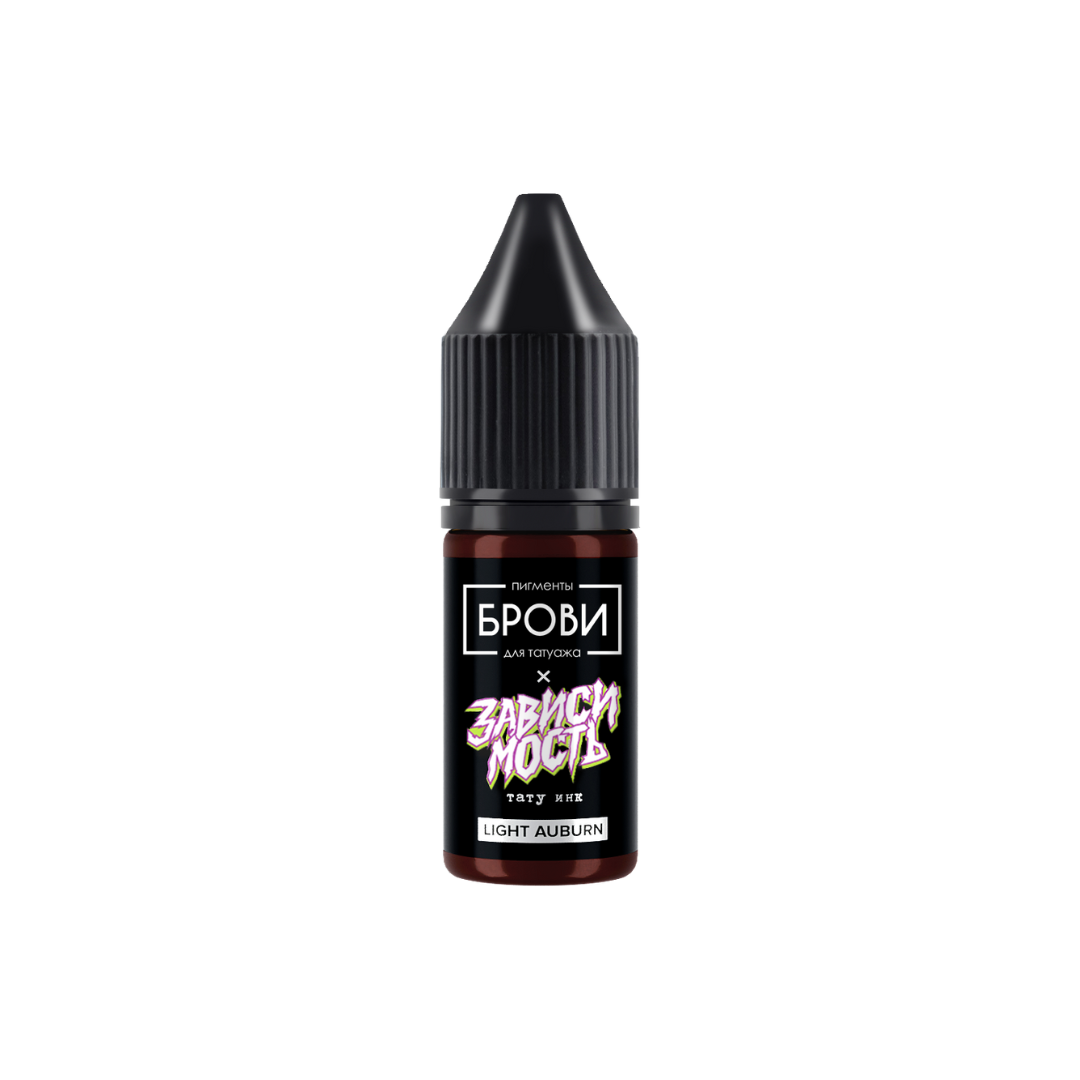
LIGHT AUBURN
Red ink, designed specifically for working with Fitzpatrick I. Suitable for very light/white skin and white skin with freckles. Ideal for girls with red hair.
Area - Eyebrows
Retention - 75%
Type - Inorganic
Base - Red
Colour Temperature - Warm
INGREDIENTS (CI NUMBERS)
Aqua, Glycerin, Isopropyl alcohol, Benzyl alcohol, copolymer compounds, CI#77492 (Pigment Yellow 43), CI#77491 (Pigment Red 102), CI#77266 (Pigment Black 7)
BROVI ONE INORGANIC
Inorganic BROVI ONE contains 50% less black pigment than other inks.
A unique homogenization (mixing) technology allows us to get stable brown ink with significantly less use of carbon black (Carbon Black CI#77266).
Modern, purified from benzo[a]pyrene and safe Carbon Black (CI#77266 — Pigment Black 7) and pure, micronized iron oxides are used in production.
The cosmetic base is assembled on purified water (without salts and impurities) with the addition of isopropyl and benzyl alcohols — in such a mixture no bacteria can survive. These alcohols increase the sterility of the ink, prevent inflammatory processes in the skin and make it extremely safe for the human body.
The ink does not dry out. This property is provided by copolymer compounds. Suspension property modifiers ensure ease of working with ink and improve the penetration of pigment particles into the skin.
The ink is easy to wash off the skin and easy to implant into the skin. It does not cause excessive irritation. The sedimentation process of pigment particles (their settling to the bottom of the bottle) is minimized, but not excluded. After a light shake of the bottle, the ink is normalized and is ready to be used.

COOL LIGHT BROWN
A light brown ink with a cool colour temperature, based on yellow. Designed for working with Fitzpatrick II.
Area - Eyebrows
Retention - 75%
Type - Inorganic
Base - Yellow
Colour Temperature - Cold
INGREDIENTS (CI NUMBERS)
Aqua, Glycerin, Isopropyl alcohol, Benzyl alcohol, copolymer compounds, CI#77491 (Pigment Red 102), CI#77492 (Pigment Yellow 43), CI#77266 (Pigment Black 7)
BROVI ONE INORGANIC
Inorganic BROVI ONE contains 50% less black pigment than other inks.
A unique homogenization (mixing) technology allows us to get stable brown ink with significantly less use of carbon black (Carbon Black CI#77266).
Modern, purified from benzo[a]pyrene and safe Carbon Black (CI#77266 — Pigment Black 7) and pure, micronized iron oxides are used in production.
The cosmetic base is assembled on purified water (without salts and impurities) with the addition of isopropyl and benzyl alcohols — in such a mixture no bacteria can survive. These alcohols increase the sterility of the ink, prevent inflammatory processes in the skin and make it extremely safe for the human body.
The ink does not dry out. This property is provided by copolymer compounds. Suspension property modifiers ensure ease of working with ink and improve the penetration of pigment particles into the skin.
The ink is easy to wash off the skin and easy to implant into the skin. It does not cause excessive irritation. The sedimentation process of pigment particles (their settling to the bottom of the bottle) is minimized, but not excluded. After a light shake of the bottle, the ink is normalized and is ready to be used.

WARM LIGHT BROWN
A light brown ink with a warm colour temperature, designed for working with Fitzpatrick I. Recommended for clients with warm or neutral hair colour.
Area - Eyebrows
Retention - 75%
Type - Inorganic
Base - Red
Colour Temperature - Warm
INGREDIENTS (CI NUMBERS)
Aqua, Glycerin, Isopropyl alcohol, Benzyl alcohol, copolymer compounds, CI#77492 (Pigment Yellow 43), CI#77491 (Pigment Red 102), CI#77266 (Pigment Black 7)
BROVI ONE INORGANIC
Inorganic BROVI ONE contains 50% less black pigment than other inks.
A unique homogenization (mixing) technology allows us to get stable brown ink with significantly less use of carbon black (Carbon Black CI#77266).
Modern, purified from benzo[a]pyrene and safe Carbon Black (CI#77266 — Pigment Black 7) and pure, micronized iron oxides are used in production.
The cosmetic base is assembled on purified water (without salts and impurities) with the addition of isopropyl and benzyl alcohols — in such a mixture no bacteria can survive. These alcohols increase the sterility of the ink, prevent inflammatory processes in the skin and make it extremely safe for the human body.
The ink does not dry out. This property is provided by copolymer compounds. Suspension property modifiers ensure ease of working with ink and improve the penetration of pigment particles into the skin.
The ink is easy to wash off the skin and easy to implant into the skin. It does not cause excessive irritation. The sedimentation process of pigment particles (their settling to the bottom of the bottle) is minimized, but not excluded. After a light shake of the bottle, the ink is normalized and is ready to be used.

LIGHT BROWN
A light brown ink with a neutral colour temperature, based on yellow. Suitable for working with aged skin. Designed for working with Fitzpatrick II. Recommended for clients with cool hair colour.
Area - Eyebrows
Retention - 75%
Type - Inorganic
Base - Yellow
Colour Temperature - Neutral
INGREDIENTS (CI NUMBERS)
Aqua, Glycerin, Isopropyl alcohol, Benzyl alcohol, copolymer compounds, CI#77491 (Pigment Red 102), CI#77492 (Pigment Yellow 43), CI#77266 (Pigment Black 7)
BROVI ONE INORGANIC
Inorganic BROVI ONE contains 50% less black pigment than other inks.
A unique homogenization (mixing) technology allows us to get stable brown ink with significantly less use of carbon black (Carbon Black CI#77266).
Modern, purified from benzo[a]pyrene and safe Carbon Black (CI#77266 — Pigment Black 7) and pure, micronized iron oxides are used in production.
The cosmetic base is assembled on purified water (without salts and impurities) with the addition of isopropyl and benzyl alcohols — in such a mixture no bacteria can survive. These alcohols increase the sterility of the ink, prevent inflammatory processes in the skin and make it extremely safe for the human body.
The ink does not dry out. This property is provided by copolymer compounds. Suspension property modifiers ensure ease of working with ink and improve the penetration of pigment particles into the skin.
The ink is easy to wash off the skin and easy to implant into the skin. It does not cause excessive irritation. The sedimentation process of pigment particles (their settling to the bottom of the bottle) is minimized, but not excluded. After a light shake of the bottle, the ink is normalized and is ready to be used.

WARM DARK BROWN
Warm dark brown ink on an red base. Recommended for working with Fitzpatrick IV.
Area - Eyebrows
Retention - 75%
Type - Inorganic
Base - Red
Colour Temperature - Warm
INGREDIENTS (CI NUMBERS)
Aqua, Glycerin, Isopropyl alcohol, Benzyl alcohol, copolymer compounds, CI#77492 (Pigment Yellow 43), CI#77266 (Pigment Black 7), CI#77491 (Pigment Red 102)
BROVI ONE INORGANIC
Inorganic BROVI ONE contains 50% less black pigment than other inks.
A unique homogenization (mixing) technology allows us to get stable brown ink with significantly less use of carbon black (Carbon Black CI#77266).
Modern, purified from benzo[a]pyrene and safe Carbon Black (CI#77266 — Pigment Black 7) and pure, micronized iron oxides are used in production.
The cosmetic base is assembled on purified water (without salts and impurities) with the addition of isopropyl and benzyl alcohols — in such a mixture no bacteria can survive. These alcohols increase the sterility of the ink, prevent inflammatory processes in the skin and make it extremely safe for the human body.
The ink does not dry out. This property is provided by copolymer compounds. Suspension property modifiers ensure ease of working with ink and improve the penetration of pigment particles into the skin.
The ink is easy to wash off the skin and easy to implant into the skin. It does not cause excessive irritation. The sedimentation process of pigment particles (their settling to the bottom of the bottle) is minimized, but not excluded. After a light shake of the bottle, the ink is normalized and is ready to be used.
BROVI ONE INORGANIC MINI PIGMENTS - 5ml

DARK BROWN
Universal brown ink with a neutral colour temperature. Suitable for working with Fitzpatrick III.
Area - Eyebrows
Retention - 75%
Type - Inorganic
Base - Yellow
Colour Temperature - Neutral
INGREDIENTS (CI NUMBERS)
Aqua, Glycerin, Isopropyl alcohol, Benzyl alcohol, copolymer compounds, CI#77491 (Pigment Red 102), CI#77492 (Pigment Yellow 43), CI#77266 (Pigment Black 7)
BROVI ONE INORGANIC
Inorganic BROVI ONE contains 50% less black pigment than other inks.
A unique homogenization (mixing) technology allows us to get stable brown ink with significantly less use of carbon black (Carbon Black CI#77266).
Modern, purified from benzo[a]pyrene and safe Carbon Black (CI#77266 — Pigment Black 7) and pure, micronized iron oxides are used in production.
The cosmetic base is assembled on purified water (without salts and impurities) with the addition of isopropyl and benzyl alcohols — in such a mixture no bacteria can survive. These alcohols increase the sterility of the ink, prevent inflammatory processes in the skin and make it extremely safe for the human body.
The ink does not dry out. This property is provided by copolymer compounds. Suspension property modifiers ensure ease of working with ink and improve the penetration of pigment particles into the skin.
The ink is easy to wash off the skin and easy to implant into the skin. It does not cause excessive irritation. The sedimentation process of pigment particles (their settling to the bottom of the bottle) is minimized, but not excluded. After a light shake of the bottle, the ink is normalized and is ready to be used.
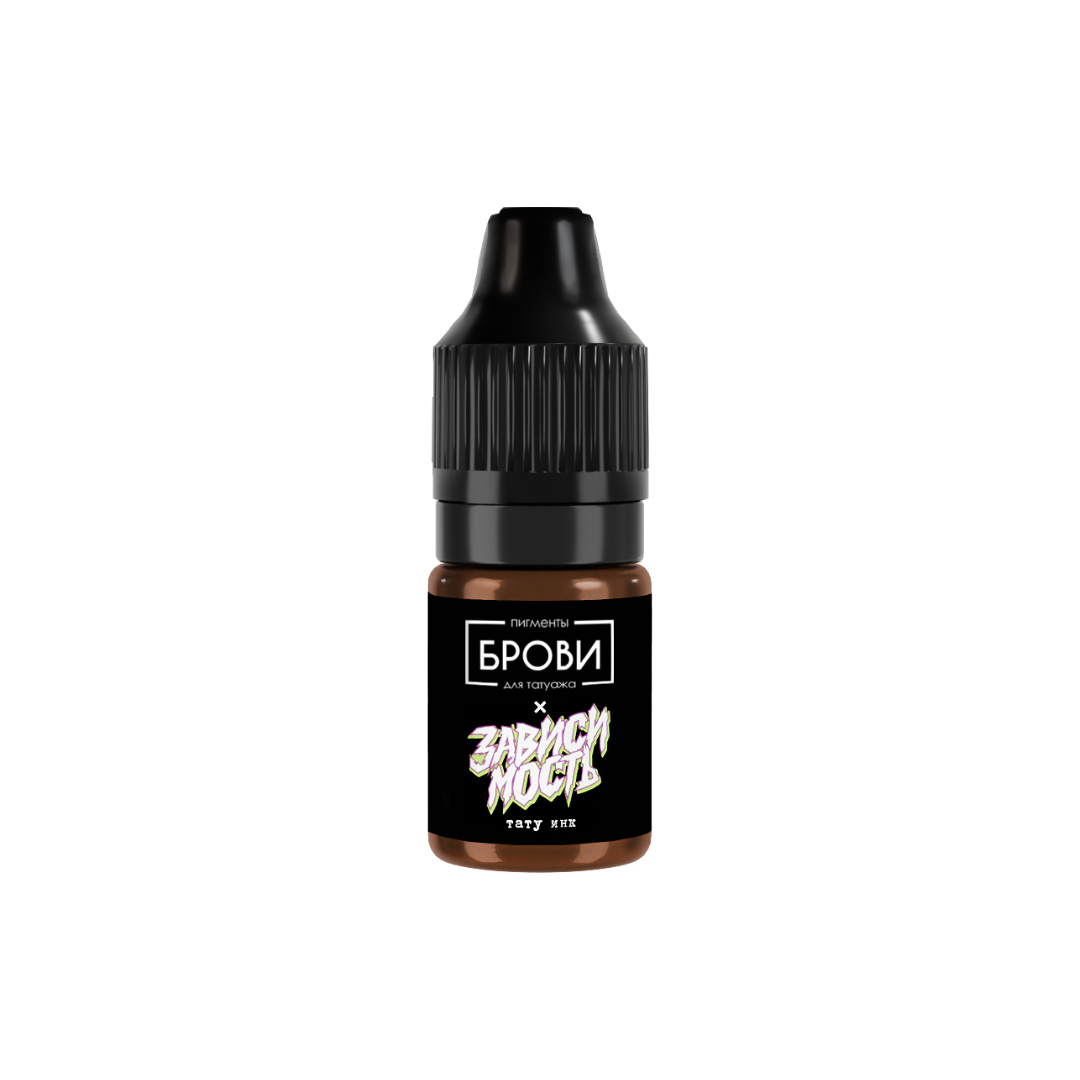
WARM LIGHT BROWN
A light brown ink with a warm colour temperature, designed for working with Fitzpatrick I. Recommended for clients with warm or neutral hair colour.
Area - Eyebrows
Retention - 75%
Type - Inorganic
Base - Red
Colour Temperature - Warm
INGREDIENTS (CI NUMBERS)
Aqua, Glycerin, Isopropyl alcohol, Benzyl alcohol, copolymer compounds, CI#77492 (Pigment Yellow 43), CI#77491 (Pigment Red 102), CI#77266 (Pigment Black 7)
BROVI ONE INORGANIC
Inorganic BROVI ONE contains 50% less black pigment than other inks.
A unique homogenization (mixing) technology allows us to get stable brown ink with significantly less use of carbon black (Carbon Black CI#77266).
Modern, purified from benzo[a]pyrene and safe Carbon Black (CI#77266 — Pigment Black 7) and pure, micronized iron oxides are used in production.
The cosmetic base is assembled on purified water (without salts and impurities) with the addition of isopropyl and benzyl alcohols — in such a mixture no bacteria can survive. These alcohols increase the sterility of the ink, prevent inflammatory processes in the skin and make it extremely safe for the human body.
The ink does not dry out. This property is provided by copolymer compounds. Suspension property modifiers ensure ease of working with ink and improve the penetration of pigment particles into the skin.
The ink is easy to wash off the skin and easy to implant into the skin. It does not cause excessive irritation. The sedimentation process of pigment particles (their settling to the bottom of the bottle) is minimized, but not excluded. After a light shake of the bottle, the ink is normalized and is ready to be used.

COOL DARK BROWN
A rich dark ink with a cool colour temperature, based on yellow. Recommended for working with Fitzpatrick V.
Area - Eyebrows
Retention - 75%
Type - Inorganic
Base - Yellow
Colour Temperature - Cold
INGREDIENTS (CI NUMBERS)
Aqua, Glycerin, Isopropyl alcohol, Benzyl alcohol, copolymer compounds, CI#77491 (Pigment Red 102), CI#77266 (Pigment Black 7), CI#77492 (Pigment Yellow 43)
BROVI ONE INORGANIC
Inorganic BROVI ONE contains 50% less black pigment than other inks.
A unique homogenization (mixing) technology allows us to get stable brown ink with significantly less use of carbon black (Carbon Black CI#77266).
Modern, purified from benzo[a]pyrene and safe Carbon Black (CI#77266 — Pigment Black 7) and pure, micronized iron oxides are used in production.
The cosmetic base is assembled on purified water (without salts and impurities) with the addition of isopropyl and benzyl alcohols — in such a mixture no bacteria can survive. These alcohols increase the sterility of the ink, prevent inflammatory processes in the skin and make it extremely safe for the human body.
The ink does not dry out. This property is provided by copolymer compounds. Suspension property modifiers ensure ease of working with ink and improve the penetration of pigment particles into the skin.
The ink is easy to wash off the skin and easy to implant into the skin. It does not cause excessive irritation. The sedimentation process of pigment particles (their settling to the bottom of the bottle) is minimized, but not excluded. After a light shake of the bottle, the ink is normalized and is ready to be used.

LIGHT AUBURN
Red ink, designed specifically for working with Fitzpatrick I. Suitable for very light/white skin and white skin with freckles. Ideal for girls with red hair.
Area - Eyebrows
Retention - 75%
Type - Inorganic
Base - Red
Colour Temperature - Warm
INGREDIENTS (CI NUMBERS)
Aqua, Glycerin, Isopropyl alcohol, Benzyl alcohol, copolymer compounds, CI#77492 (Pigment Yellow 43), CI#77491 (Pigment Red 102), CI#77266 (Pigment Black 7)
BROVI ONE INORGANIC
Inorganic BROVI ONE contains 50% less black pigment than other inks.
A unique homogenization (mixing) technology allows us to get stable brown ink with significantly less use of carbon black (Carbon Black CI#77266).
Modern, purified from benzo[a]pyrene and safe Carbon Black (CI#77266 — Pigment Black 7) and pure, micronized iron oxides are used in production.
The cosmetic base is assembled on purified water (without salts and impurities) with the addition of isopropyl and benzyl alcohols — in such a mixture no bacteria can survive. These alcohols increase the sterility of the ink, prevent inflammatory processes in the skin and make it extremely safe for the human body.
The ink does not dry out. This property is provided by copolymer compounds. Suspension property modifiers ensure ease of working with ink and improve the penetration of pigment particles into the skin.
The ink is easy to wash off the skin and easy to implant into the skin. It does not cause excessive irritation. The sedimentation process of pigment particles (their settling to the bottom of the bottle) is minimized, but not excluded. After a light shake of the bottle, the ink is normalized and is ready to be used.

WARM DARK BROWN
Warm dark brown ink on an red base. Recommended for working with Fitzpatrick IV.
Area - Eyebrows
Retention - 75%
Type - Inorganic
Base - Red
Colour Temperature - Warm
INGREDIENTS (CI NUMBERS)
Aqua, Glycerin, Isopropyl alcohol, Benzyl alcohol, copolymer compounds, CI#77492 (Pigment Yellow 43), CI#77266 (Pigment Black 7), CI#77491 (Pigment Red 102)
BROVI ONE INORGANIC
Inorganic BROVI ONE contains 50% less black pigment than other inks.
A unique homogenization (mixing) technology allows us to get stable brown ink with significantly less use of carbon black (Carbon Black CI#77266).
Modern, purified from benzo[a]pyrene and safe Carbon Black (CI#77266 — Pigment Black 7) and pure, micronized iron oxides are used in production.
The cosmetic base is assembled on purified water (without salts and impurities) with the addition of isopropyl and benzyl alcohols — in such a mixture no bacteria can survive. These alcohols increase the sterility of the ink, prevent inflammatory processes in the skin and make it extremely safe for the human body.
The ink does not dry out. This property is provided by copolymer compounds. Suspension property modifiers ensure ease of working with ink and improve the penetration of pigment particles into the skin.
The ink is easy to wash off the skin and easy to implant into the skin. It does not cause excessive irritation. The sedimentation process of pigment particles (their settling to the bottom of the bottle) is minimized, but not excluded. After a light shake of the bottle, the ink is normalized and is ready to be used.

ULTRA BLACK (EYELINER)
Fine-particle black ink for working in the eyelid and lash line area. Suitable for working with all Fitzpatrick phototypes.
Should be used pure. Contains iron oxide red (CI#77492) in an extremely low concentration to prevent the ink from turning brown, and also for the iron oxide red to act as a corrector. Thanks to this additive, the healed result will always be black, and the low concentration of inorganic red pigment will not make the color cooler over time.
No diluent is required for filling the lash line or for making a clear eyeliner. For the eyelid shading, the manufacturer recommends adding 1 drop of diluent to 5 drops of ink.
Area - Eyeliner
Retention - 90%
Type - Inorganic
Base - Black
INGREDIENTS (CI NUMBERS)
Aqua, Glycerin, Isopropyl alcohol, Benzyl alcohol, copolymer compounds, CI#77266 (Pigment Black 7), CI#77491 (Pigment Red 102)
BROVI ONE INORGANIC
Inorganic BROVI ONE contains 50% less black pigment than other inks.
A unique homogenization (mixing) technology allows us to get stable brown ink with significantly less use of carbon black (Carbon Black CI#77266).
Modern, purified from benzo[a]pyrene and safe Carbon Black (CI#77266 — Pigment Black 7) and pure, micronized iron oxides are used in production.
The cosmetic base is assembled on purified water (without salts and impurities) with the addition of isopropyl and benzyl alcohols — in such a mixture no bacteria can survive. These alcohols increase the sterility of the ink, prevent inflammatory processes in the skin and make it extremely safe for the human body.
The ink does not dry out. This property is provided by copolymer compounds. Suspension property modifiers ensure ease of working with ink and improve the penetration of pigment particles into the skin.
The ink is easy to wash off the skin and easy to implant into the skin. It does not cause excessive irritation. The sedimentation process of pigment particles (their settling to the bottom of the bottle) is minimized, but not excluded. After a light shake of the bottle, the ink is normalized and is ready to be used.

COOL LIGHT BROWN
A light brown ink with a cool colour temperature, based on yellow. Designed for working with Fitzpatrick II.
Area - Eyebrows
Retention - 75%
Type - Inorganic
Base - Yellow
Colour Temperature - Cold
INGREDIENTS (CI NUMBERS)
Aqua, Glycerin, Isopropyl alcohol, Benzyl alcohol, copolymer compounds, CI#77491 (Pigment Red 102), CI#77492 (Pigment Yellow 43), CI#77266 (Pigment Black 7)
BROVI ONE INORGANIC
Inorganic BROVI ONE contains 50% less black pigment than other inks.
A unique homogenization (mixing) technology allows us to get stable brown ink with significantly less use of carbon black (Carbon Black CI#77266).
Modern, purified from benzo[a]pyrene and safe Carbon Black (CI#77266 — Pigment Black 7) and pure, micronized iron oxides are used in production.
The cosmetic base is assembled on purified water (without salts and impurities) with the addition of isopropyl and benzyl alcohols — in such a mixture no bacteria can survive. These alcohols increase the sterility of the ink, prevent inflammatory processes in the skin and make it extremely safe for the human body.
The ink does not dry out. This property is provided by copolymer compounds. Suspension property modifiers ensure ease of working with ink and improve the penetration of pigment particles into the skin.
The ink is easy to wash off the skin and easy to implant into the skin. It does not cause excessive irritation. The sedimentation process of pigment particles (their settling to the bottom of the bottle) is minimized, but not excluded. After a light shake of the bottle, the ink is normalized and is ready to be used.
DARK BROWN
Universal brown ink with a neutral colour temperature. Suitable for working with Fitzpatrick III.
Area - Eyebrows
Retention - 75%
Type - Inorganic
Base - Yellow
Colour Temperature - Neutral
INGREDIENTS (CI NUMBERS)
Aqua, Glycerin, Isopropyl alcohol, Benzyl alcohol, copolymer compounds, CI#77491 (Pigment Red 102), CI#77492 (Pigment Yellow 43), CI#77266 (Pigment Black 7)
BROVI ONE INORGANIC
Inorganic BROVI ONE contains 50% less black pigment than other inks.
A unique homogenization (mixing) technology allows us to get stable brown ink with significantly less use of carbon black (Carbon Black CI#77266).
Modern, purified from benzo[a]pyrene and safe Carbon Black (CI#77266 — Pigment Black 7) and pure, micronized iron oxides are used in production.
The cosmetic base is assembled on purified water (without salts and impurities) with the addition of isopropyl and benzyl alcohols — in such a mixture no bacteria can survive. These alcohols increase the sterility of the ink, prevent inflammatory processes in the skin and make it extremely safe for the human body.
The ink does not dry out. This property is provided by copolymer compounds. Suspension property modifiers ensure ease of working with ink and improve the penetration of pigment particles into the skin.
The ink is easy to wash off the skin and easy to implant into the skin. It does not cause excessive irritation. The sedimentation process of pigment particles (their settling to the bottom of the bottle) is minimized, but not excluded. After a light shake of the bottle, the ink is normalized and is ready to be used.
INORGANIC CORRECTORS - 10ml & 5ml

RED
Recommended for correcting brown shades towards a warmer tone. Used for neutralizing cold gray and blue residues when covering old / poorly done permanent makeup.
Application: For Eyebrows
Color: Red
Base: Red
Type: Inorganic
Retention rate: 90%
Volume: 10ml
Ingredients: Aqua, Glycerin, Isopropyl alcohol, Benzyl alcohol, copolymer compounds, CI#77491 (Pigment Red 102)
ABOUT BROVI ONE
Inorganic BROVI ONE contains 50% less black pigment than other inks.
A unique homogenization (mixing) technology allows us to get stable brown ink with significantly less use of carbon black (Carbon Black CI#77266).
Modern, purified from benzo[a]pyrene and safe Carbon Black (CI#77266 — Pigment Black 7) and pure, micronized iron oxides are used in production.
The cosmetic base is assembled on purified water (without salts and impurities) with the addition of isopropyl and benzyl alcohols — in such a mixture no bacteria can survive. These alcohols increase the sterility of the ink, prevent inflammatory processes in the skin and make it extremely safe for the human body.
The ink does not dry out. This property is provided by copolymer compounds. Suspension property modifiers ensure ease of working with ink and improve the penetration of pigment particles into the skin.
The ink is easy to wash off the skin and easy to implant into the skin. It does not cause excessive irritation. The sedimentation process of pigment particles (their settling to the bottom of the bottle) is minimized, but not excluded. After a light shake of the bottle, the ink is normalized and is ready to be used.

RED
Recommended for correcting brown shades towards a warmer tone. Used for neutralizing cold gray and blue residues when covering old / poorly done permanent makeup.
Application: For Eyebrows
Color: Red
Base: Red
Type: Inorganic
Retention rate: 90%
Volume: 10ml
Ingredients: Aqua, Glycerin, Isopropyl alcohol, Benzyl alcohol, copolymer compounds, CI#77491 (Pigment Red 102)
ABOUT BROVI ONE
Inorganic BROVI ONE contains 50% less black pigment than other inks.
A unique homogenization (mixing) technology allows us to get stable brown ink with significantly less use of carbon black (Carbon Black CI#77266).
Modern, purified from benzo[a]pyrene and safe Carbon Black (CI#77266 — Pigment Black 7) and pure, micronized iron oxides are used in production.
The cosmetic base is assembled on purified water (without salts and impurities) with the addition of isopropyl and benzyl alcohols — in such a mixture no bacteria can survive. These alcohols increase the sterility of the ink, prevent inflammatory processes in the skin and make it extremely safe for the human body.
The ink does not dry out. This property is provided by copolymer compounds. Suspension property modifiers ensure ease of working with ink and improve the penetration of pigment particles into the skin.
The ink is easy to wash off the skin and easy to implant into the skin. It does not cause excessive irritation. The sedimentation process of pigment particles (their settling to the bottom of the bottle) is minimized, but not excluded. After a light shake of the bottle, the ink is normalized and is ready to be used.

YELLOW OCHRE
Recommended for lightening brown shades. Also used for neutralizing lilac shades resulting from old / poorly done permanent makeup.
Application - For Eyebrows
Color: Yellow Ochre
Base: Yellow
Type: Inorganic
Retention rate: 90%
Volume: 10ml
Ingredients: Aqua, Glycerin, Isopropyl alcohol, Benzyl alcohol, copolymer compounds, CI#77492 (Pigment Yellow 43)
ABOUT BROVI ONE
Inorganic BROVI ONE contains 50% less black pigment than other inks.
A unique homogenization (mixing) technology allows us to get stable brown ink with significantly less use of carbon black (Carbon Black CI#77266).
Modern, purified from benzo[a]pyrene and safe Carbon Black (CI#77266 — Pigment Black 7) and pure, micronized iron oxides are used in production.
The cosmetic base is assembled on purified water (without salts and impurities) with the addition of isopropyl and benzyl alcohols — in such a mixture no bacteria can survive. These alcohols increase the sterility of the ink, prevent inflammatory processes in the skin and make it extremely safe for the human body.
The ink does not dry out. This property is provided by copolymer compounds. Suspension property modifiers ensure ease of working with ink and improve the penetration of pigment particles into the skin.
The ink is easy to wash off the skin and easy to implant into the skin. It does not cause excessive irritation. The sedimentation process of pigment particles (their settling to the bottom of the bottle) is minimized, but not excluded. After a light shake of the bottle, the ink is normalized and is ready to be used.
SVETA SCHWARZ - 10ml & 5ml
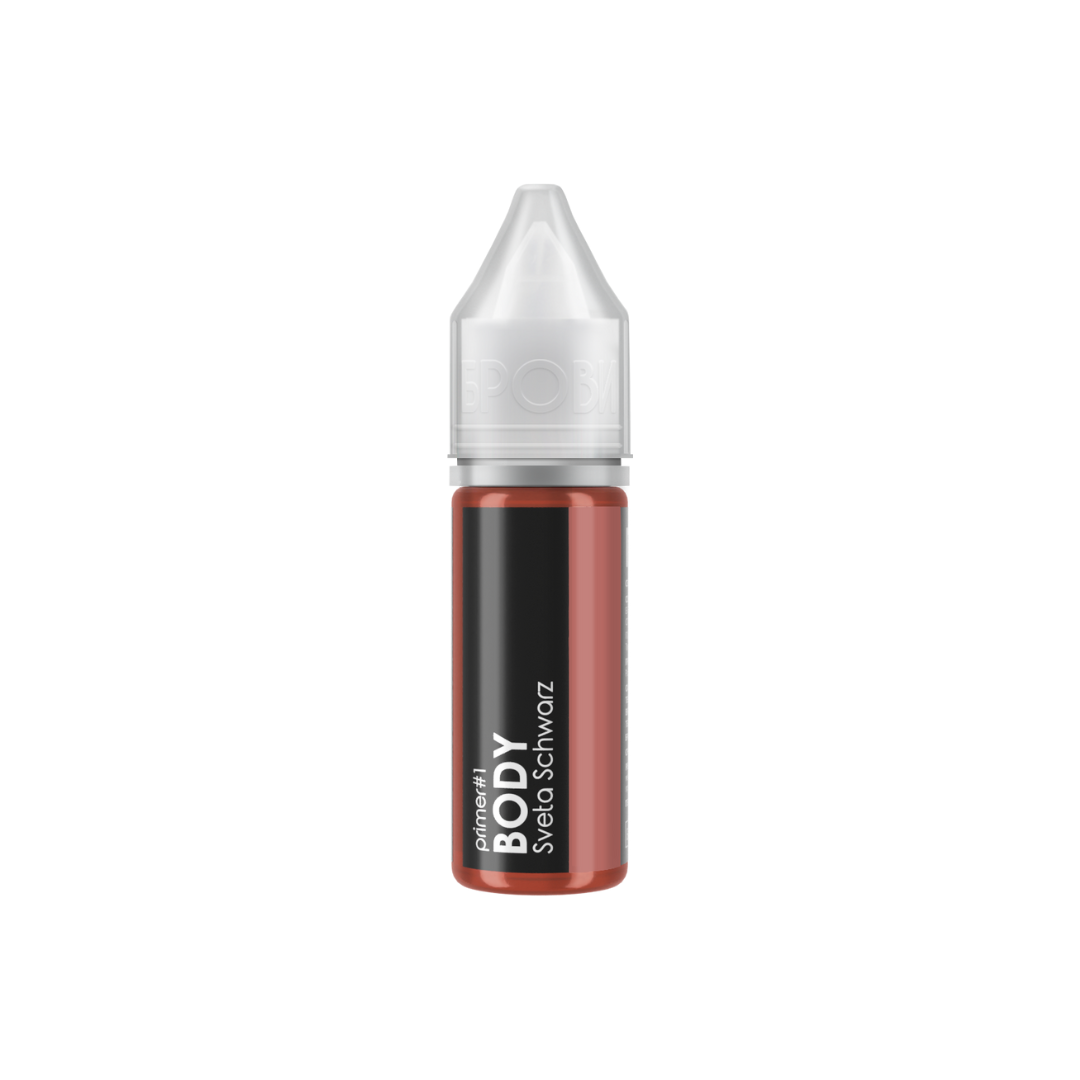
1 BODY BY SVETA SCHWARZ
is the warmest shade; it has colors from peach pink to warm pink. It is used on cold lips with contouring technique, or to neutralize cold pink residues of old permanent makeup. The percentage of this shade should not exceed 30% of the client's natural lip colour.
WHY PRIMERS?
PRIMER literally translates as BASE PAINT.
It is designed to even out the tone of the lips that have scars, irregularities, lack of contour or too "cold" natural color. Quite often, this is enough for the client and there is no need to use decorative colors in future procedures. The lips look fresh and their color is even and natural. It is also possible to visually increase the lips volume to their own possible boundaries - in case the lips don’t have their own pigmentation along the contour.
HOW TO WORK WITH PRIMERS?
You should work with primers superficially, without much pressure, and preferably at a low voltage.
The recommended needle diameter is 0.25-0.30. It should be sharpened well.
Always use diluent in the ratio: 1 drop of diluent to 2-3 drops of primer. We advise doing a maximum of 2.5 passes during the initial procedure, as it is important to understand the product and not use it as a regular pigment.
All primers can be mixed together. For example, Body primer can be excellently warmed up with Noir, which in turn can give depth to Body or Nude.
Primers can be mixed with other lip pigments, but we recommend applying different colors in two separate procedures: apply primer during the first procedure, and decorative color during the second one.
Ingredients:
#1 Body: Aqua, Rosin, Glycerin, Hamamelis Virginiana Extract, Alcohol, CI 77491, CI 21110, CI 12477, CI 12466, CI 77891, CI 74160

2 NUDE BY SVETA SCHWARZ
is an optimally balanced natural shade, pastel pink or beige pink. You can work with or without a contour. It’s versatile. You can use it not only as a base but also as an independent shade. It is important to apply it superficially and not fill the lips too much. You will get a uniform natural colour and form the shape so that no one will guess that it is permanent makeup. We don’t recommend using it to get a lipstick effect on mature lips.
WHY PRIMERS?
PRIMER literally translates as BASE PAINT.
It is designed to even out the tone of the lips that have scars, irregularities, lack of contour or too "cold" natural color. Quite often, this is enough for the client and there is no need to use decorative colors in future procedures. The lips look fresh and their color is even and natural. It is also possible to visually increase the lips volume to their own possible boundaries - in case the lips don’t have their own pigmentation along the contour.
HOW TO WORK WITH PRIMERS?
You should work with primers superficially, without much pressure, and preferably at a low voltage.
The recommended needle diameter is 0.25-0.30. It should be sharpened well.
Always use diluent in the ratio: 1 drop of diluent to 2-3 drops of primer. We advise doing a maximum of 2.5 passes during the initial procedure, as it is important to understand the product and not use it as a regular pigment.
All primers can be mixed together. For example, Body primer can be excellently warmed up with Noir, which in turn can give depth to Body or Nude.
Primers can be mixed with other lip pigments, but we recommend applying different colors in two separate procedures: apply primer during the first procedure, and decorative color during the second one.
Ingredients:
#1 Body: Aqua, Rosin, Glycerin, Hamamelis Virginiana Extract, Alcohol, CI 77491, CI 21110, CI 12477, CI 12466, CI 77891, CI 74160

3 NOIR BY SVETA SCHWARZ
is the deepest and most distinctive color in the palette. In the hands of different artists, it gives different results. Magic? No, it’s just that this color is multifaceted. Ideal for contouring, masking lip scars, and creating 3D effects. It can be used as a decorative shade. It can be used to add depth to other shades.
WHY PRIMERS?
PRIMER literally translates as BASE PAINT.
It is designed to even out the tone of the lips that have scars, irregularities, lack of contour or too "cold" natural color. Quite often, this is enough for the client and there is no need to use decorative colors in future procedures. The lips look fresh and their color is even and natural. It is also possible to visually increase the lips volume to their own possible boundaries - in case the lips don’t have their own pigmentation along the contour.
HOW TO WORK WITH PRIMERS?
You should work with primers superficially, without much pressure, and preferably at a low voltage.
The recommended needle diameter is 0.25-0.30. It should be sharpened well.
Always use diluent in the ratio: 1 drop of diluent to 2-3 drops of primer. We advise doing a maximum of 2.5 passes during the initial procedure, as it is important to understand the product and not use it as a regular pigment.
All primers can be mixed together. For example, Body primer can be excellently warmed up with Noir, which in turn can give depth to Body or Nude.
Primers can be mixed with other lip pigments, but we recommend applying different colors in two separate procedures: apply primer during the first procedure, and decorative color during the second one.
Ingredients:
#1 Body: Aqua, Rosin, Glycerin, Hamamelis Virginiana Extract, Alcohol, CI 77491, CI 21110, CI 12477, CI 12466, CI 77891, CI 74160

2 NUDE BY SVETA SCHWARZ
is an optimally balanced natural shade, pastel pink or beige pink. You can work with or without a contour. It’s versatile. You can use it not only as a base but also as an independent shade. It is important to apply it superficially and not fill the lips too much. You will get a uniform natural colour and form the shape so that no one will guess that it is permanent makeup. We don’t recommend using it to get a lipstick effect on mature lips.
WHY PRIMERS?
PRIMER literally translates as BASE PAINT.
It is designed to even out the tone of the lips that have scars, irregularities, lack of contour or too "cold" natural color. Quite often, this is enough for the client and there is no need to use decorative colors in future procedures. The lips look fresh and their color is even and natural. It is also possible to visually increase the lips volume to their own possible boundaries - in case the lips don’t have their own pigmentation along the contour.
HOW TO WORK WITH PRIMERS?
You should work with primers superficially, without much pressure, and preferably at a low voltage.
The recommended needle diameter is 0.25-0.30. It should be sharpened well.
Always use diluent in the ratio: 1 drop of diluent to 2-3 drops of primer. We advise doing a maximum of 2.5 passes during the initial procedure, as it is important to understand the product and not use it as a regular pigment.
All primers can be mixed together. For example, Body primer can be excellently warmed up with Noir, which in turn can give depth to Body or Nude.
Primers can be mixed with other lip pigments, but we recommend applying different colors in two separate procedures: apply primer during the first procedure, and decorative color during the second one.
Ingredients:
#1 Body: Aqua, Rosin, Glycerin, Hamamelis Virginiana Extract, Alcohol, CI 77491, CI 21110, CI 12477, CI 12466, CI 77891, CI 74160

1 BODY BY SVETA SCHWARZ
is the warmest shade; it has colors from peach pink to warm pink. It is used on cold lips with contouring technique, or to neutralize cold pink residues of old permanent makeup. The percentage of this shade should not exceed 30% of the client's natural lip colour.
WHY PRIMERS?
PRIMER literally translates as BASE PAINT.
It is designed to even out the tone of the lips that have scars, irregularities, lack of contour or too "cold" natural color. Quite often, this is enough for the client and there is no need to use decorative colors in future procedures. The lips look fresh and their color is even and natural. It is also possible to visually increase the lips volume to their own possible boundaries - in case the lips don’t have their own pigmentation along the contour.
HOW TO WORK WITH PRIMERS?
You should work with primers superficially, without much pressure, and preferably at a low voltage.
The recommended needle diameter is 0.25-0.30. It should be sharpened well.
Always use diluent in the ratio: 1 drop of diluent to 2-3 drops of primer. We advise doing a maximum of 2.5 passes during the initial procedure, as it is important to understand the product and not use it as a regular pigment.
All primers can be mixed together. For example, Body primer can be excellently warmed up with Noir, which in turn can give depth to Body or Nude.
Primers can be mixed with other lip pigments, but we recommend applying different colors in two separate procedures: apply primer during the first procedure, and decorative color during the second one.
Ingredients:
#1 Body: Aqua, Rosin, Glycerin, Hamamelis Virginiana Extract, Alcohol, CI 77491, CI 21110, CI 12477, CI 12466, CI 77891, CI 74160

3 NOIR BY SVETA SCHWARZ
is the deepest and most distinctive color in the palette. In the hands of different artists, it gives different results. Magic? No, it’s just that this color is multifaceted. Ideal for contouring, masking lip scars, and creating 3D effects. It can be used as a decorative shade. It can be used to add depth to other shades.
WHY PRIMERS?
PRIMER literally translates as BASE PAINT.
It is designed to even out the tone of the lips that have scars, irregularities, lack of contour or too "cold" natural color. Quite often, this is enough for the client and there is no need to use decorative colors in future procedures. The lips look fresh and their color is even and natural. It is also possible to visually increase the lips volume to their own possible boundaries - in case the lips don’t have their own pigmentation along the contour.
HOW TO WORK WITH PRIMERS?
You should work with primers superficially, without much pressure, and preferably at a low voltage.
The recommended needle diameter is 0.25-0.30. It should be sharpened well.
Always use diluent in the ratio: 1 drop of diluent to 2-3 drops of primer. We advise doing a maximum of 2.5 passes during the initial procedure, as it is important to understand the product and not use it as a regular pigment.
All primers can be mixed together. For example, Body primer can be excellently warmed up with Noir, which in turn can give depth to Body or Nude.
Primers can be mixed with other lip pigments, but we recommend applying different colors in two separate procedures: apply primer during the first procedure, and decorative color during the second one.
Ingredients:
#1 Body: Aqua, Rosin, Glycerin, Hamamelis Virginiana Extract, Alcohol, CI 77491, CI 21110, CI 12477, CI 12466, CI 77891, CI 74160